The coordination framework proposes a package of 4 items to address the effects of the exchange rate change.
The coordination framework proposes a package of 4 items to address the effects of the exchange rate change.
2026-10-09
 Shafaq News – Baghdad
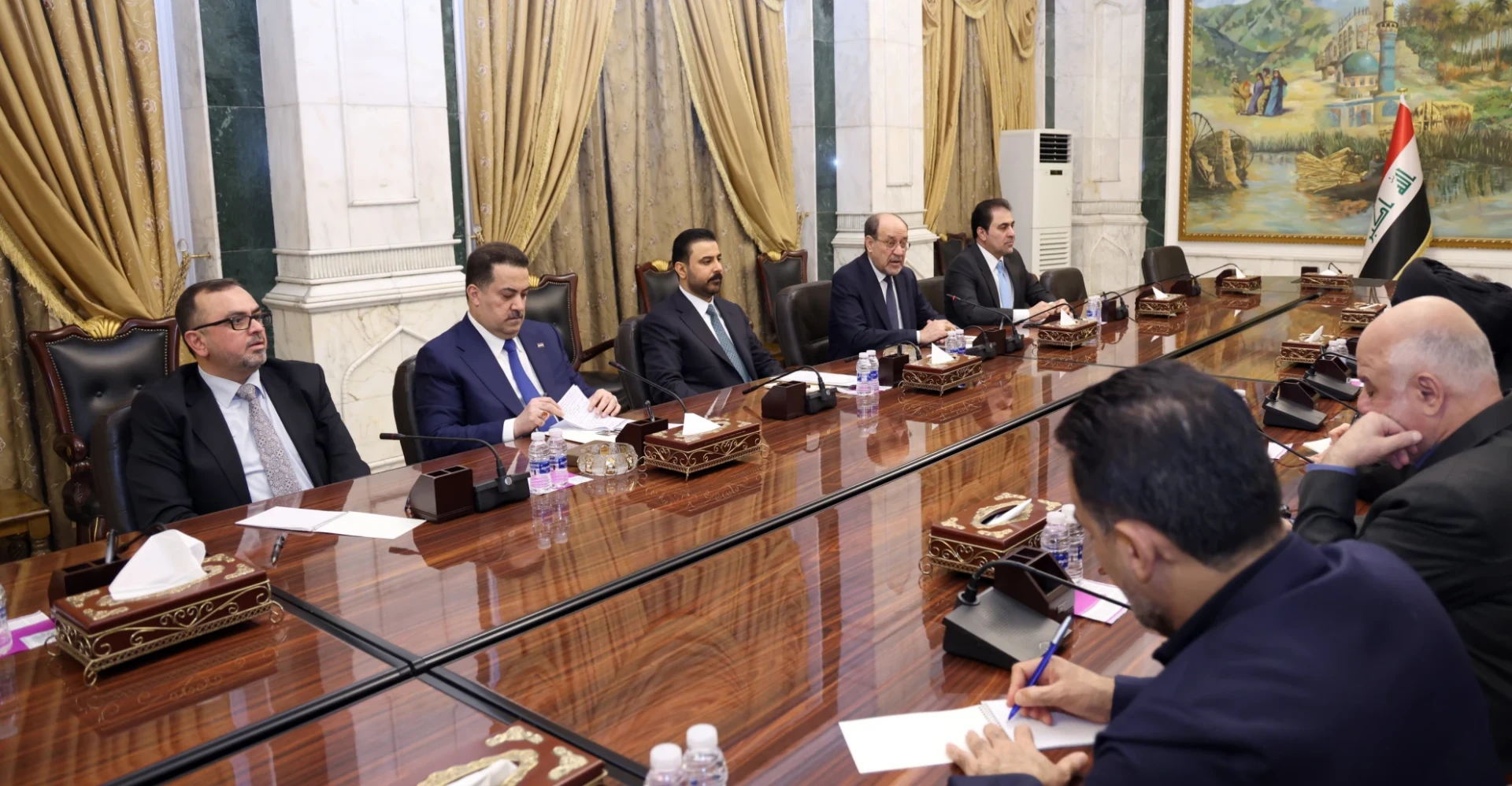
On Thursday evening, the Coordination Framework (which brings together the ruling Shiite political forces in Iraq) put forward a package of proposals following the increase in the exchange rate of the dollar against the Iraqi dinar, calling on the government and the Central Bank to start implementing them immediately.
According to a statement issued by the framework and received by Shafaq News Agency, the demands include that the government and the central bank commit to controlling the parallel market (market price) and limiting currency speculation, in order to ensure the stability of the exchange rate and prevent manipulation and exploitation of the decision to raise the prices of goods and services.
He stressed the need to adopt a protected price basket that includes basic commodities of food, medicine and construction materials, which are exempt from customs duties for a period of six months from the date of issuance of the Cabinet decision, and whose reference prices are published periodically on a public platform, with the obligation of the competent regulatory authorities to deal immediately with any manipulation or unjustified increase in them.
He also called for obligating the government to require private and public educational institutions, including schools, universities, private colleges, evening and parallel studies, to reduce tuition fees by 15% for the current academic year, as a direct compensatory measure for families due to the impact of the exchange rate adjustment, with the Ministries of Education and Higher Education following up on its implementation.
He called for an alternative revenue stream: full tax accounting with telecommunications companies, banks, and large corporations, and the publication of a public list of those who comply and those who fail to comply every three months.
Establishing an exchange rate stabilization fund financed by the difference in oil prices when they rise above the price estimated in the budget, and used exclusively to protect the dinar and strengthen the reserve in the future, instead of resorting to reducing its value whenever resources become tight.
Likewise, the commitment to convert part of the exchange rate difference that the treasury will gain into interest-free soft loans for agricultural and industrial projects that replace imports, because imports are what drain hard currency in the first place, and to produce the dollar that we need inside Iraq, taking into account allocating part of it to appointing graduates.
He stressed the need to review the contracts of contractors and government projects affected by the exchange rate adjustment, and to address its financial implications in a way that ensures the continued implementation of projects and does not burden the state or the citizen with unjustified burdens, as well as to address the implications for suppliers and investors who adopted the previous rate in their commitments.
For this purpose, the Prime Minister shall form a committee of relevant ministries and authorities, with a transitional period ending on December 31, 2026, as the final date for completing the process by adopting the previous price, and thereafter subject the new price.
Earlier today, Iraqi Prime Minister Ali Faleh al-Zaidi explained the details and necessities of changing the dollar exchange rate before the House of Representatives.
Al-Zaydi said before Parliament during his attendance at the meeting with the Presidency Board, “The government had three options: the first was to resort to mandatory savings and leave the employee to live on promises, the second was to distribute salaries every 45 days, and the third was to resort to borrowing and drown the country in debt, which it is already burdened with.”
For his part, Speaker of Parliament Hebat al-Halbousi affirmed that “the decision to change the exchange rate is irreversible, and the heads of the political blocs support the decision.”
The Cabinet had decided in its session last Tuesday, October 6, that the price of buying dollars from the Ministry of Finance would be 1,500 dinars, and selling them to banks at 1,510, and to the end beneficiary at 1,520 dinars, compared to 1,320 dinars previously, i.e. an increase of 20,000 dinars per 100 dollars.
The sudden rise in the exchange rate led to confusion in the markets, with difficulty in determining buying and selling prices and repricing goods.
shafaq.com
