Doubts and caution surround Al-Zaidi’s campaign… Is it a small-time affair or a cosmetic display?
Doubts and caution surround Al-Zaidi’s campaign… Is it a small-time affair or a cosmetic display?
2026-07-09
 Shafaq News – Translation
The British website Middle East Eye observed hesitation and caution among Iraqis and analysts in assessing the campaign carried out by the Iraqi authorities against dozens of people suspected of involvement in corruption cases, as they expressed their fear that it was merely a “scratch on the surface” of corruption.
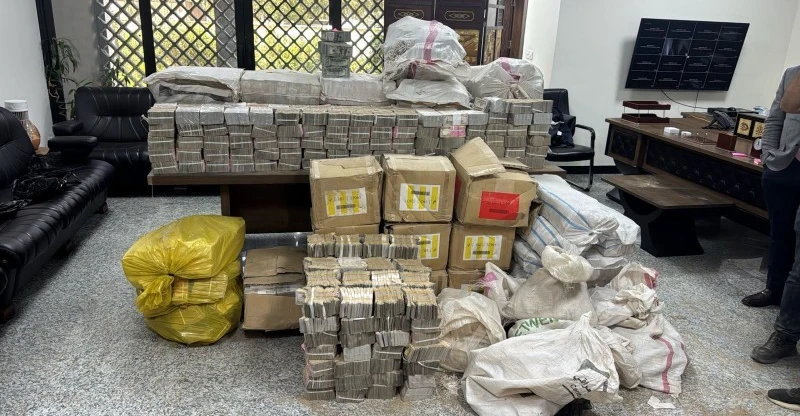
According to the British website’s report , translated by Shafaq News Agency, many Iraqis remain unconvinced that some of the country’s most powerful figures will actually face justice, following the arrest campaign that the website said quickly dominated television stations and social media, with comparisons being made between scenes of the raids and more famous scenes from Hollywood movies.
The website continued in its report, stating that for many Iraqis, what happened was an unprecedented show of force against a political class long accused of enriching itself at the expense of the state.
The report quoted Mohammed Bashir, from Basra, as saying, “It is truly shocking to see millions of dollars hidden in politicians’ gardens, and to find gold bars and women’s underwear made of gold that they use to indulge themselves with our money.”
Despite welcoming the arrests, the report quoted Bashir as saying that its credibility would depend on whether it would ultimately target the most powerful figures in Iraq, explaining that he was looking forward to seeing if Prime Minister Ali al-Zaidi would “go after the big bosses… If he doesn’t, it will be a shame, and what happened will be just like a TV series.”
According to Bashir, as reported, given that previous prime ministers have conducted almost identical campaigns, “I need to know where this will end, and how seriously they take it when it comes to holding senior officials accountable.”
The report also quoted Jassim Mohammed, from Baghdad, expressing the same skepticism, saying: “Let’s wait and see how serious this campaign is. If it is, that would be great, and if not, it’s just a bubble,” adding that “taking corrupt politicians to prison would be a good lesson for others to avoid following their path of stealing people’s money.”
The report noted that the raids came just weeks before al-Zaidi’s scheduled visit to Washington, and that the campaign was aimed at reassuring Iraqis, and also signaling to the United States that Baghdad is serious about targeting officials affiliated with parties close to Iran.
The report quoted Renad Mansour, a researcher at the British Chatham House Institute, as saying that al-Zaidi is looking to “market his administration, not only to the Iraqi public, but also to the United States and its allies in the region,” explaining that this comes especially “because of the threat that the United States poses to Iraq with sanctions, and because Iraq is caught in the middle of this war between Israel, the United States and Iran.”
According to Mansour, the anti-corruption campaign will only be effective to the extent that it allows the prosecution of some middle-ranking officials, adding that “the theatrical scene is definitely present in that,” and that this was not a coincidence. He added that because of this, al-Zaidi is pursuing the anti-corruption campaign, and this motivation is largely directed towards those who are easy to arrest, i.e., middle-ranking officials, and not the leaders, and not the leaders of the regime who sit above it, because it is impossible to prosecute them.
The report quoted Mansour as saying that this limits the campaign’s ability to address the structural causes of corruption, explaining that “this does not change how the political system largely feeds corruption. It only changes the composition of the form of this corruption and who is part of it,” adding that the entire system is not being prosecuted nor is it being structurally reformed, noting that the system is already facing enormous challenges with the closure of the Strait of Hormuz and the ongoing conflict in the region.
According to the report, Mansour said, “It is difficult to see this cosmetic display as a structural solution to the corruption that prevents Iraqis from accessing basic services, electricity, and a functioning economy.”
Political analyst Raad Hashim asserted that the campaign’s credibility will ultimately depend on whether it goes beyond mid-level officials and targets the most powerful political actors in Iraq. The report quoted him as saying, “In this campaign, the small fish have been caught, while everyone is waiting for the big fish—the main targets among the corrupt—to be caught.”
According to Hashim, although he described the arrests as unprecedented by Iraqi standards, he also believed that such operations would be considered routine elsewhere, explaining that “by comparing al-Zaidi’s campaign to global efforts to combat corruption, his campaign is just a drop in the ocean, because what al-Zaidi did was routine work. Yet, only in Iraq are they all seen as a big campaign, simply because we are not used to seeing such actions.”
According to the report, Hashem questioned why the campaign did not target militia leaders or other influential figures associated with armed factions, arguing that avoiding them “represents a blow to the entire campaign, its seriousness, and its credibility.”
The report quoted former MP Sarkawt Shams al-Din as saying that he believes the campaign fits with the anti-corruption rhetoric that the Sadr movement has long championed, and that it could help create political momentum ahead of next year’s parliamentary elections, noting that regardless of the motives behind the operation, al-Zaidi is taking a political risk that few Iraqi leaders are willing to take.
Shamsuddin described the campaign as a “warning” against larger corruption groups, noting that he does not rule out an external push behind the campaign, but he said that the matter “requires someone in the position of prime minister who is willing to take risks and reduce the bleeding of public resources that are being looted with impunity.”
However, Shams El-Din noted the need to avoid exaggerating the importance of the raids, explaining that what they did was merely “a scratch on the surface”.
shafaq.com
