An American perspective: Al-Zaydi invokes the “Godfather” to dismantle the deep state in Iraq.
An American perspective: Al-Zaydi invokes the “Godfather” to dismantle the deep state in Iraq.
2026-07-07
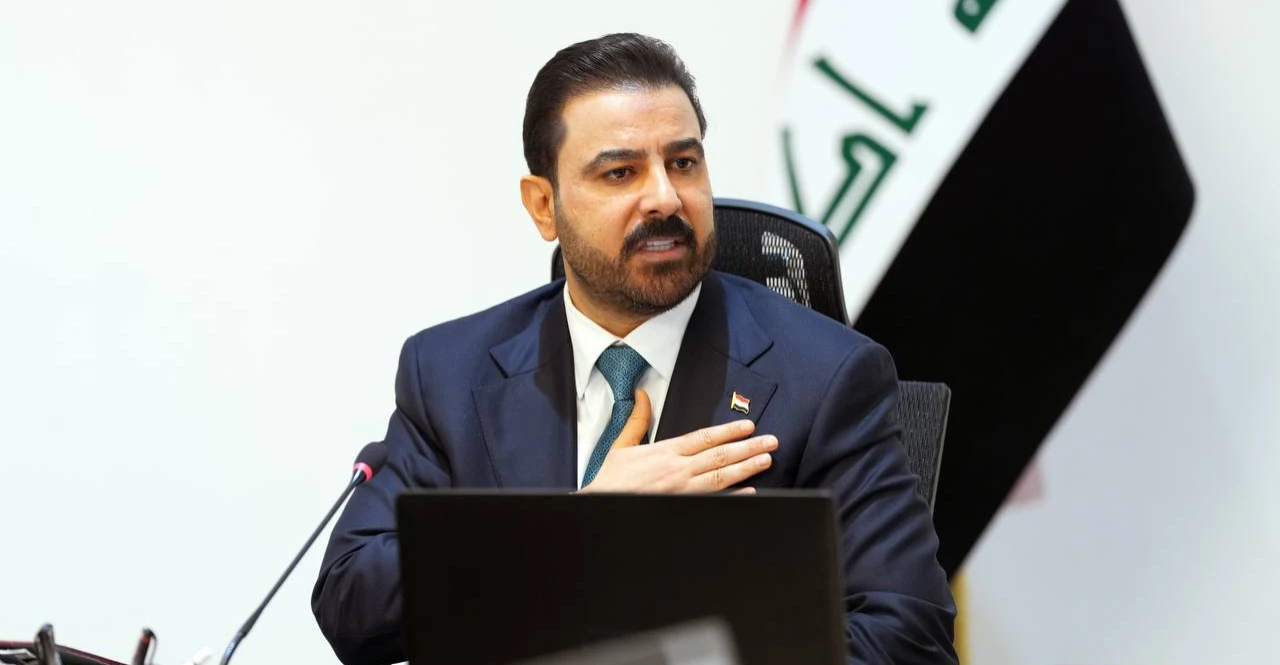 Shafaq News – Special Translation
An American report likened Iraqi Prime Minister Ali Faleh al-Zaidi’s anti-corruption campaign to what is known as “Michael Corleone’s moment” in the movie “The Godfather,” questioning whether the ongoing measures represent the beginning of dismantling the entire corruption system, or whether they will be limited to eliminating political opponents.
The Quincy Institute, in its report entitled “The Iraqi Prime Minister Embraces His Inner Michael Corleone,” translated by Shafaq News Agency, recalled the cinematic scene, which it described as one of the most convincing scenes in cinema about power and consolidating control, and how a new system is forged by destroying the old one.
More than half a century after the film “The Godfather,” the report argued that Iraq is experiencing its own Godfather moment, explaining that since taking office last May, al-Zaidi has launched an unprecedented campaign targeting figures in various aspects of the political and administrative establishment, including investigations into billions of dollars of money suspected of being misused, and has reached deep into the networks of officials, bureaucrats, and political actors who have benefited from Iraq’s patronage and quota system.
According to the report, external powers largely supported Operation Dawn Charge, with US officials and segments of the international community viewing it as a sign that Baghdad may finally have decided to confront the corruption that has undermined governance for two decades. The report also notes that China, one of Iraq’s largest economic partners, has reasons to welcome greater institutional stability.
The report continued that even former Prime Minister Nouri al-Maliki, who has long been associated with the political system that emerged after 2003, praised al-Zaidi’s campaign against “those who squandered the money of the Iraqi people,” while the leader of the Shiite national movement, Muqtada al-Sadr, expressed his support for the “heroic reform campaign,” as he put it.
After describing what al-Zaidi did as a major political victory for him, the report noted that his supporters described the campaign against corruption as the great national battle, compared to the war against ISIS, with the leader of the Services Alliance, Shibl al-Zaidi, describing “the war on corruption as no less important or dangerous than the fight against terrorism.”
While the report addressed the rise of the corruption system in Iraq after the 2003 invasion, and its transformation into a complex patronage system fueled by billions of US dollars allocated for reconstruction, it quoted Abu Bakr Jamai, a researcher at the American College of the Mediterranean based in Morocco, as saying that “corruption comes from the absence of law enforcement,” adding that corruption, in this context, supports the erosion of the rule of law.
The report stated that more than a decade ago, anti-government and anti-party protests erupted, including in the capital Baghdad, Basra, Najaf, Karbala and Hilla, driven by corruption, lack of electricity, unemployment and poor public services. It added that the protests challenged the assumption that Shiites would automatically support Shiite political elites, but that shared religious identity proved insufficient when citizens were facing temperatures of up to 50 degrees Celsius, without constant electricity or basic services.
According to the report, for then-Prime Minister Haider al-Abadi, these protests represented a major embarrassment, especially since ISIS boasted about providing services such as electricity in the city of Mosul, while al-Abadi responded by launching a series of anti-corruption initiatives, including the establishment of a High Commission for Combating Corruption.
However, the report noted that these measures were seen as cosmetic reforms that added another layer of bureaucracy without addressing the deep-rooted structural problems.
According to the report, al-Zaydi’s approach is markedly different, indicating that he appears ready to meet the challenge of reforming a political system that rewards Iraqi politicians with positions because of their ethnic and sectarian backgrounds.
The report continued that while al-Zaidi’s government targeted its political rivals, it also faced pressure from “Baghdad’s banker,” namely US Special Envoy Tom Barrack, who the report noted also faced accusations in the United States, but considered Barrack to be the model of the US mediator for power who understands where financial influence lies.
The report recalled the famous American bank robber Willie Sutton’s saying, when asked why he robbed banks, “Because that’s where the money is.”
According to the American Institute’s report, there is no doubt that international intelligence and financial monitoring mechanisms played a role in uncovering illicit financial networks in Iraq, as it is difficult to move piles of US dollars without leaving a trace, and it is possible that the US Treasury Department and financial tracking systems contributed to identifying suspicious transactions.
However, the report considered that the biggest challenge facing al-Zaydi is that corruption is embedded in the structure of the state itself, and that Iraq’s system is similar to the sectarian power-sharing system in Lebanon, explaining that this model was designed to prevent a recurrence of conflict by ensuring representation, but it has largely failed to achieve effective governance.
The report concluded by saying that ultimately, the question facing Iraq is whether al-Zaidi will become a Michael Corleone, a leader who consolidates his power by eliminating his rivals while leaving his allies untouched, or whether he will be a leader willing to challenge the entire system, including those at the top.
shafaq.com
