Iraqi President: We seek a regional security framework, and the resolution of Baghdad and Erbil disputes will be “through the budget.”
Iraqi President: We seek a regional security framework, and the resolution of Baghdad and Erbil disputes will be “through the budget.”
2026-07-05
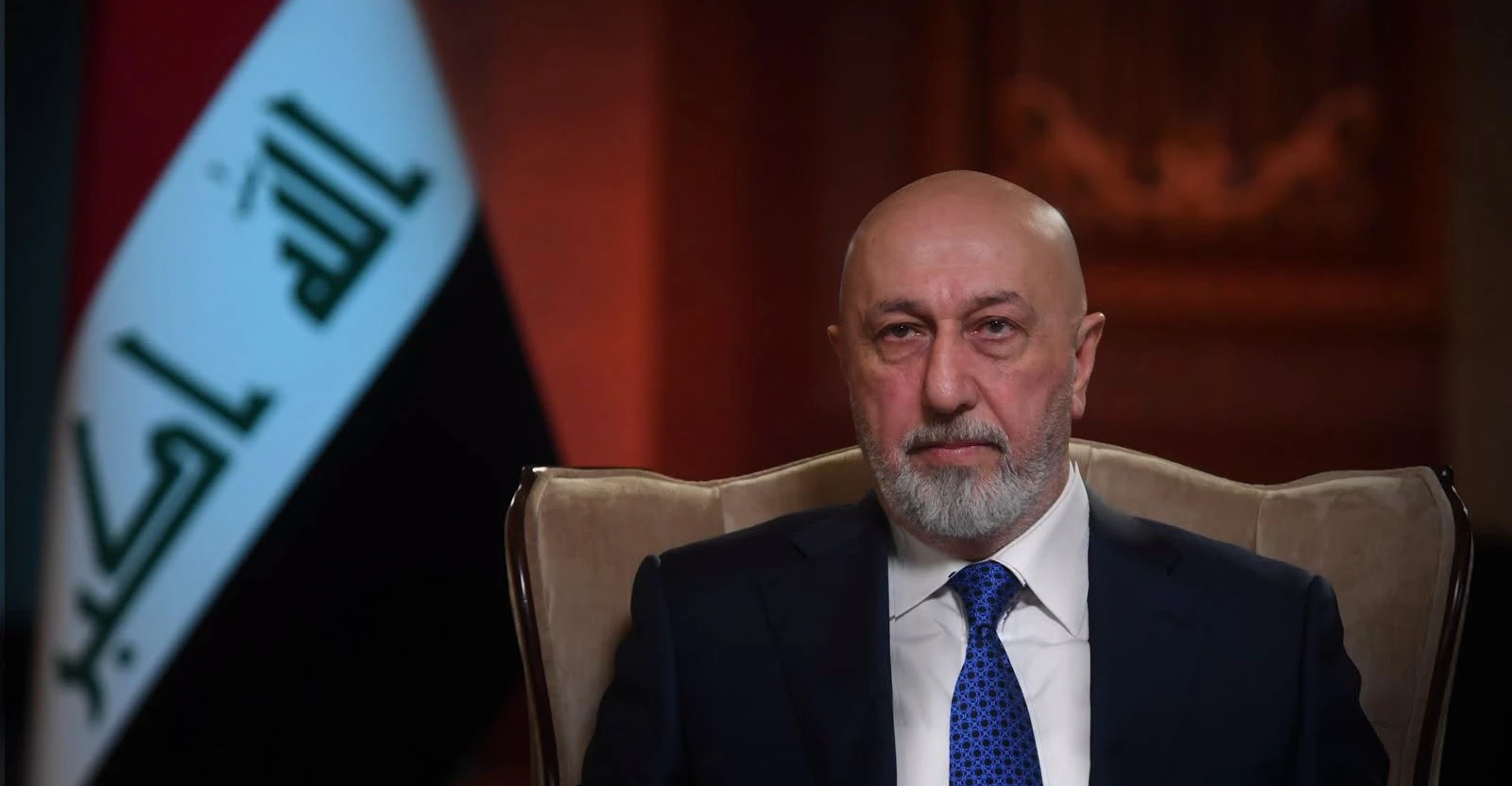 Shafaq News – Baghdad
Iraqi President Nizar Amidi said on Saturday that there is an opportunity to establish a regional security framework that includes the countries of the region, in which Iraq has a pivotal role, leading to a regional economic recovery. He pointed out that resolving the disputes between Baghdad and Erbil goes through the budget law and guaranteeing the constitutional rights of the region.
The Presidency of the Republic, in a statement received by Shafaq News Agency, quoted the most important points of Amidi’s interview with the Saudi channel “Al-Hadath”, in which he said that “the last meeting of the four presidencies addressed strategic economic and security files, and an agreement was reached on integrated work between the presidencies and the political, parliamentary and societal forces to prevent Iraq from sliding into the repercussions of wars and security and economic crises in the region.”
He added that “the corruption file enjoys a genuine will from the government and the support of all presidencies, the House of Representatives and political forces, as corruption is no less dangerous than terrorism,” stressing that “combating corruption is an irreversible decision, no one is above the law, there are no red lines in this file, and everyone will be subject to the judiciary.”
In addition to combating corruption, Amidi said that “restricting weapons to the state is one of the most important files of the government, and the recent war has shown the fragility of the Iraqi security situation. There is a real decision and will to restrict weapons to the state in an Iraqi, national and wise way and without bloodshed.”
He stressed that “the first steps in the file of restricting weapons have begun, and there is a response from some factions, with the effort to remove the reasons that led to carrying weapons and raising the slogan of resistance.”
He pointed out that “with the end of the war in the region, an opportunity arises to establish a regional security framework that includes the countries of the region, and Iraq has a pivotal role in it, which will lead to a regional economic recovery.”
He explained that “the constitution and the law are the governing factors in the issue of weapons, and the state will deal with any violator through the judiciary and legal means,” indicating that “addressing the issue of factions and restricting weapons requires caution and wisdom to avoid clashes and bloodshed.”
Regarding the targeting of countries in the region by factions during the war between Iran on one side and the United States and Israel on the other, the Iraqi president stressed that “Iraq rejects targeting any regional country, especially our brothers in the Arab Gulf states, from Iraqi territory, as the security of Iraq and the security of the Gulf are one.”
He added that “the restriction of weapons aims to strengthen Iraq’s sovereignty and prevent the targeting of neighboring countries from Iraqi territory.”
He pointed to “working on other security files with Turkey and Iran, including ending the Kurdistan Workers’ Party file and the Sinjar issue, as we are proceeding with the implementation of the security agreement with Iran and ending the file of the Iranian opposition factions present in Iraq.”
According to the Iraqi president, “Iraq’s relations with Iran are historical, cultural, religious, national, and economic, and will be built on the basis of mutual respect, common interests, and respect for sovereignty.”
Amidi added that “Iraq’s relations with the United States, Europe and the Gulf states are an Iraqi matter, and relations with Iran or the United States will not be at the expense of each other.”
He added: “We seek to strengthen our relations with the United States, and we consider it a strategic partner in the future to build a strong economy in the region,” noting that “the assessment of the need to continue or dispense with international support will be based on reports and the needs of the Iraqi armed forces.”
The Iraqi president explained that “after the end of the international coalition’s mission, Iraq will assess its security situation, and based on that, it will decide whether to conclude memoranda of understanding, agreements, or contracts with the United States or others to complete the building of its military capabilities.”
He added: “We are proceeding with the implementation of the security agreement with Iran regarding the Iranian opposition present in Iraq and ending any threat to Iranian territory emanating from Iraq.”
He added that “the Kurdistan Workers’ Party (PKK) file is complex and old, and a military solution will not end it. Turkey has adopted a peace project with the party, and steps are underway for its members to lay down their weapons. There is high-level coordination with Türkiye to end the PKK file and the Sinjar issue, and the matter requires wisdom and patience.”
Regarding relations with Damascus, the Iraqi president said that “relations with Syria are witnessing development and a shift from the security file to the diplomatic file, while continuing to improve relations with Damascus.”
He stressed that “Iraq seeks to build the best strategic relations with the Kingdom of Saudi Arabia in the economic, political and religious fields, given the importance of Saudi Arabia as a neighboring and Gulf state to Iraq.”
Regarding the relationship between Baghdad and Erbil, Amidi believes that “the relationship between the two sides is marred by some flaws, and the constitution is the protector of this relationship, while the problem in the region currently lies in the failure to form a new government in the Kurdistan Region and the failure to activate the parliament.”
He called on the two main parties in the region (the Patriotic Union and the Kurdistan Democratic Party) to “reach an agreement and a genuine partnership, form a fully empowered government, and activate the parliament,” stressing that “resolving the financial disputes between Baghdad and Erbil requires passing the budget law and guaranteeing the constitutional rights of the region.”
He explained that “there is no oil and gas law despite Iraq’s dependence on these two resources, and there is a need to legislate it to solve many problems. There are also more than fifty constitutional articles that have not yet been regulated by laws, in addition to the existence of hundreds of old decisions, including decisions of the dissolved Revolutionary Command Council, which are not consistent with the current reality.”
He explained that “the President of the Republic has the right to submit and amend draft laws, and the Presidency of the Republic cooperates with the rest of the authorities to complete the legislation during the current session.”
shafaq.com
