$60 billion to redraw the oil map: Will al-Zaidi change the future of the Iraqi economy?
$60 billion to redraw the oil map: Will al-Zaidi change the future of the Iraqi economy?
7-26-2026
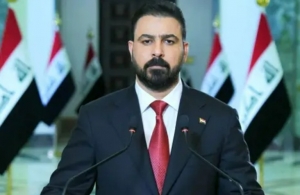 Researcher Shatha Khalil
For over fifty years, the Strait of Hormuz has been the vital artery connecting Gulf oil to the global economy, with roughly one-fifth of the world’s oil trade passing through it daily. This waterway has become one of the world’s most strategic chokepoints, as any military or political tension there directly impacts oil prices and threatens global energy security. For Iraq, the Strait of Hormuz was not merely a shipping lane; it represented the country’s almost sole gateway for exporting the bulk of its oil wealth, making the Iraqi economy hostage to geopolitical developments in the region.
Today, the agreements signed by the Iraqi government with American companies, worth about $60 billion, indicate the beginning of what may be the biggest shift in Iraq’s oil export strategy since 2003. These agreements do not only aim to increase oil production or develop some fields, but carry a broader vision based on redrawing the map of Iraqi oil exports by creating alternative routes that reduce dependence on the Strait of Hormuz, and give Iraq greater flexibility in accessing global markets.
Instead of relying almost entirely on a single seaport, the new plans aim to develop a network of pipelines transporting Iraqi oil north through Turkey and west through Syria to Mediterranean ports, allowing exports to reach Europe and global markets without being limited to the Arabian Gulf. If these projects succeed in reaching the implementation stage, they will alter a decades-long equation and make Iraq less vulnerable to the risks posed by any military or political escalation in the Gulf region.
The impact of these projects extends beyond logistics, reaching the very core of Iraq’s economic model. Diversifying export routes reduces risks to public revenues and strengthens Iraq’s ability to fulfill its export contracts, even during crises. This, in turn, boosts investor confidence and attracts international energy companies, creating a more stable investment environment. In a world where security of supply is as crucial as the size of oil reserves, having multiple export routes has become a key element of economic strength.
These agreements also reflect a shift in the nature of the economic relationship between Iraq and international companies. The Iraqi government is no longer simply seeking companies to implement specific projects, but rather aims to attract long-term strategic partnerships encompassing energy, infrastructure, telecommunications, logistics, and healthcare. This shift could pave the way for technology transfer, the development of local expertise, the creation of thousands of jobs, and the diversification of economic sectors beyond oil exports.
International financial institutions, such as Goldman Sachs, estimate that pipeline projects currently under development in the region could transport approximately 14 million barrels per day by 2028, equivalent to about 60% of the volume currently passing through the Strait of Hormuz. If these projections materialize, they will not eliminate the strait’s importance, but they will reduce its monopoly over oil trade, potentially shifting the balance of power in global energy markets and mitigating the impact of regional crises on oil prices.
However, the path to this transformation is not easy. Cross-border pipeline projects require massive investments and political and security agreements between multiple countries, and may take years before becoming operational. Their success will also remain contingent on the stability of the regional environment and Iraq’s ability to provide an attractive legal and investment climate for international investors.
Despite these challenges, the economic message of these agreements is clear: Iraq is no longer solely focused on increasing oil production, but has begun to consider how to ensure the delivery of this oil to global markets with minimal risk. This represents a strategic shift in economic thinking, because the true value of oil wealth lies not only in its production, but also in the ability to export it stably and securely, regardless of changing political circumstances.
If this vision succeeds in moving from the stage of agreements to actual implementation, Iraq may not only become one of the world’s largest oil producers, but could also transform into a regional energy hub linking the Arabian Gulf and the Mediterranean Sea, redrawing the map of oil trade in the Middle East. In that case, the $60 billion agreements will not be merely new investments, but the beginning of a new economic era that could redefine Iraq’s position in the global economy for decades to come.
Economic Studies Unit / North America Office,
Links Center for Research and Strategic Studies
rawabetcenter.com
