“Youngest” and “unknown”: Western interpretations of al-Zaydi’s appointment to the Iraqi government
“Youngest” and “unknown”: Western interpretations of al-Zaydi’s appointment to the Iraqi government
2026-04-28
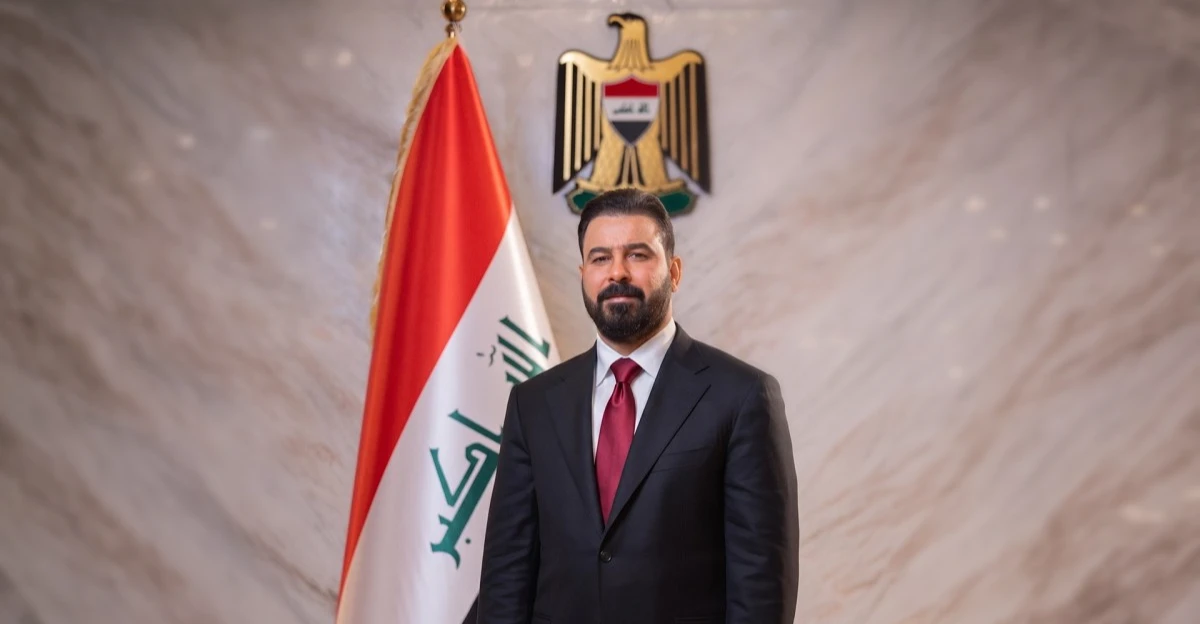 Shafaq News – Special Translation
Western newspapers and media outlets have varying interpretations of the “surprising” decision, as they describe it, to task Ali al-Zaidi with forming the new Iraqi government. Some consider it a result of an attempt to break the political deadlock, while others link it to American pressure. However, they almost all agree on the idea that he comes from an “unconventional or unknown background.”
The French newspaper Le Monde, in a report in English translated by Shafaq News Agency, considered that the coordination framework, whose forces are linked to varying degrees with Iran, initially supported former Prime Minister Nouri al-Maliki to assume the premiership, but the warning issued by US President Donald Trump made Iraqi leaders look elsewhere.
She said that Iraq’s leaders have been struggling since the 2003 invasion to balance relations between Tehran and Washington, which has gained considerable influence in the country.
However, Le Monde pointed out that if al-Zaidi (40 years old) succeeds in forming a government, he will become the youngest prime minister in Iraq, adding that his nomination “allows the coordinating framework to claim that it is adhering to the constitutional timetable,” whether or not he succeeds in forming a government.
She predicted that the new Iraqi prime minister would have to deal with Washington’s long-standing demand to disarm Iranian-backed factions, which the US classifies as “terrorist” organizations.
For its part, the Danish newspaper “Copenhagen Post” titled its report on Iraq, saying: “A millionaire will form the government after Trump’s threats,” referring to the threats of the American president to stop Washington’s support for Iraq if Nouri al-Maliki is assigned the task, given his close relationship with Iran.
The French channel “France-24” described al-Zaidi as a “new political player” and as “a compromise person, not very well known within political circles.”
For its part, the Abu Dhabi-based English-language newspaper, The National, said that when the Iraqi political elite sought a way out of the internal conflicts that had caused “paralysis,” it did not turn to a seasoned politician, but rather to a “young billionaire,” adding that al-Zaidi’s nomination embodies the rise of a new Iraqi elite: wealthy, well-connected, and largely unaffected by the ballot box.
In addition, the Turkish Anadolu Agency indicated that al-Zaidi’s appointment came after the Shiite political camp in Iraq had been preoccupied for weeks with political conflicts over who would lead the next government, noting that Nouri al-Maliki wanted to return, and the outgoing Prime Minister, Mohammed Shia al-Sudani, was pushing for renewal, while Washington opposed the former, and internal divisions weakened the second candidate, and Iraq was heading towards a constitutional vacuum, but on Monday night, the deadlock ended with an agreement on a “more moderate candidate,” namely al-Zaidi.
She added that al-Zaidi, unlike other prominent Iraqi leaders, did not build his rise through fiery speeches, factional conflicts, or years of public confrontations, but rather paved his way through financial, administrative, and organizational means, making him the consensus candidate when the ruling Shiite coalition needed a way out of its “paralysis”.
The Turkish report went on to say that al-Zaidi comes from Dhi Qar province, which it described as being known for its strong political and tribal influence in the modern Iraqi power structure, adding that al-Zaidi belongs to a family with a prominent social standing, and that his academic background reflects the technocratic image that characterizes his political rise.
He pointed out that Al-Zaydi holds a master’s degree in finance and banking, in addition to two bachelor’s degrees in the same field and in law, thus combining financial expertise with legal training.
The report quotes supporters of al-Zaydi as saying that his priorities are institutional reform, sustainable economic growth, enhancing the potential of young people, and linking education to the needs of the labor market, which reflects an image that contributed to shaping his personality as an administrator, rather than as a traditional party leader.
The Israeli newspaper “Jerusalem Post” said that the real story of al-Zaidi is that he is largely unknown, as he appears to have been chosen almost by “chance,” as if Iraqi politicians had simply settled on a “random figure” to lead the country.
The newspaper continued in its report that the complex and multifaceted Iraqi system has finally taken steps towards appointing a new prime minister, a decision that came 167 days after the elections in November 2025, adding that the choice fell on al-Zaidi, whom it described as a businessman with a banking background, but accusations of corruption were leveled against the bank he managed.
The newspaper argued that al-Zaidi’s selection came through political dynamics that lead to the selection of “unqualified, relatively cooperative, and weak figures” to assume the position of prime minister.
Meanwhile, the American website “Al-Monitor” reminded everyone that the commander of the Iranian Quds Force, Ismail Qaani, recently visited Baghdad and spoke about the decision regarding the selection of the new prime minister, which “should be based solely on the decision of the Iraqis.”
shafaq.com
