US website: The upcoming Iraqi elections are a “sovereignty referendum” with a “confrontation with the Popular Mobilization Forces”
US website: The upcoming Iraqi elections are a “sovereignty referendum” with a “confrontation with the Popular Mobilization Forces”
2025-10-11 02:40
 Shafaq News – Special Translation
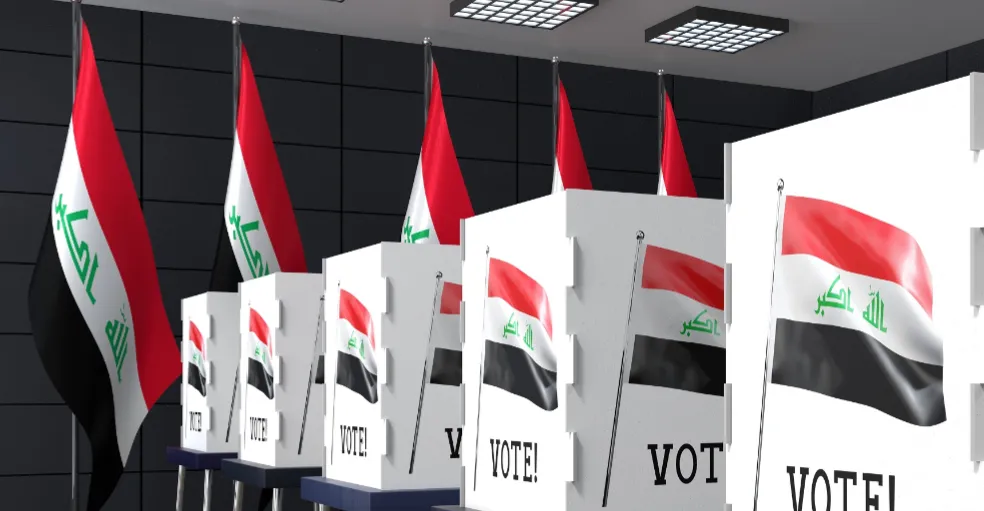
The American website Middle East Monitor warned that Iraq faces “catastrophic choices” between sovereignty or eliminating the Popular Mobilization Forces (PMF). The upcoming elections represent not just a partisan contest for Iraqis, but a referendum on sovereignty, the report said, questioning whether voters will vote for change or repeat history.
The American website explained in a report, translated by Shafaq News Agency, that with the approaching elections on November 11, Iraq is facing a turning point that extends beyond the vote, adding, “There are two fundamental questions behind this turning point: Is Baghdad able to gain true sovereignty over its security apparatus by getting rid of the Popular Mobilization Forces and its dependence on Tehran? And is it able to dismantle the current political framework and rid itself of the corrupt political elite that currently controls it?”
The US report considered that the answers to these two questions would redefine Iraq’s future and the broader regional order, explaining that Iraq’s trajectory would have far-reaching repercussions throughout the Middle East.
The report continued, stating that Iraq’s relations with the Gulf states, particularly Saudi Arabia, the UAE, and Qatar, are closer, as these countries attempt to offer alternatives to Iranian hegemony. It also noted that Turkey’s economic and diplomatic engagement has become more evident as an indicator of Ankara’s ambitions.
According to the report, the idea of a “Shiite Crescent,” first raised by former Jordanian King Hussein as a warning against Iranian regional hegemony, now faces its most serious test in Iraq. The report explains that if Baghdad successfully consolidates control over its security apparatus, it will not merely represent a tactical defeat for Tehran, but rather a strategic repositioning for Baghdad, with repercussions for Lebanon, Syria, and Yemen.
The report argues that the development of the Popular Mobilization Forces (PMF), with its entrenchment within the power structures, embodies the crisis of sovereignty in Iraq. The PMF has expanded into every aspect of Iraq’s political and economic institutions, manning checkpoints, appointing ministers, siphoning off $3 billion annually from the state budget, and running prisons. The report describes the PMF as a security force and a kleptocratic political machine all rolled into one, and its consolidation of external influence within the Iraqi security sector is turning sovereignty into an illusion.
While the report noted that Iraq has become Tehran’s only remaining viable foothold, with its regional leverage collapsing following the fall of the Assad regime, the closure of the Syrian land bridge, Hezbollah’s acceptance of ceasefire terms, and the retreat of the Houthis, the report argued that Iran’s economic hemorrhage, the decline of the rial, and the worsening inflation have transformed Iraq into a strategic asset in its financial lifeline. It explained that corruption networks linked to the Popular Mobilization Forces have pumped hard currency into Tehran, according to the report.
The website noted that the Popular Mobilization Forces (PMF) are currently focused on survival through patronage, rather than ideological expansion, a vulnerability that Washington could exploit.
Against this backdrop of comprehensive pressures, the report stated that Iraqi elections will be held, noting that unprecedented divisions within the Shiite majority will limit the Popular Mobilization Forces’ ability to achieve progress. However, it added that Prime Minister Mohammed Shia al-Sudani governs through a coalition dominated by the Popular Mobilization Forces and must balance his loyalties between Washington and his local power base.
However, the report recalled the experience of US Governor Paul Bremer, who was like an uncrowned king, dissolving the army and corrupting the state with the stroke of a pen, leading to failure. It explained that “Iraq now faces disastrous choices,” as dissolving the Popular Mobilization Forces (PMF) heralds a bloody backlash and a sectarian firestorm, while preserving the PMF guarantees the end of sovereignty and maintains American anger.
The report stated that Iraq is suspended between nominal sovereignty and dependency, noting that the November elections will not resolve this paradox, but will determine the nation’s course.
He added that the stakes are greater than Iraq itself, and that the elections offer Iraqis not just partisan elections, but rather a referendum on sovereignty itself and whether Iraq will determine its own future or remain a regional battleground—an issue that will continue to haunt the Middle East for decades to come.
The report continued by stating that Iraqis had previously suffered under a single tyrant, but now they face thousands of masked, uniformed, and recognized tyrants carrying weapons.
He continued, saying that the Iraqi people have been betrayed, but they are not broken. They are gagged, but they are not silent. They are seething with anger, awaiting accountability. He explained that the promise of freedom has proven to be a curse, and that the dream of democracy is a nightmare. But the question next November is: “Will you leave the past behind you or re-elect the known faces of failure?” Because history is crying out, demanding an answer.
shafaq.com
