The rising dollar is driving up food prices in Baghdad, Erbil, and Basra; the Ministry of Trade is threatening those manipulating prices.
The rising dollar is driving up food prices in Baghdad, Erbil, and Basra; the Ministry of Trade is threatening those manipulating prices.
2026-11-07
 Shafaq News – Baghdad
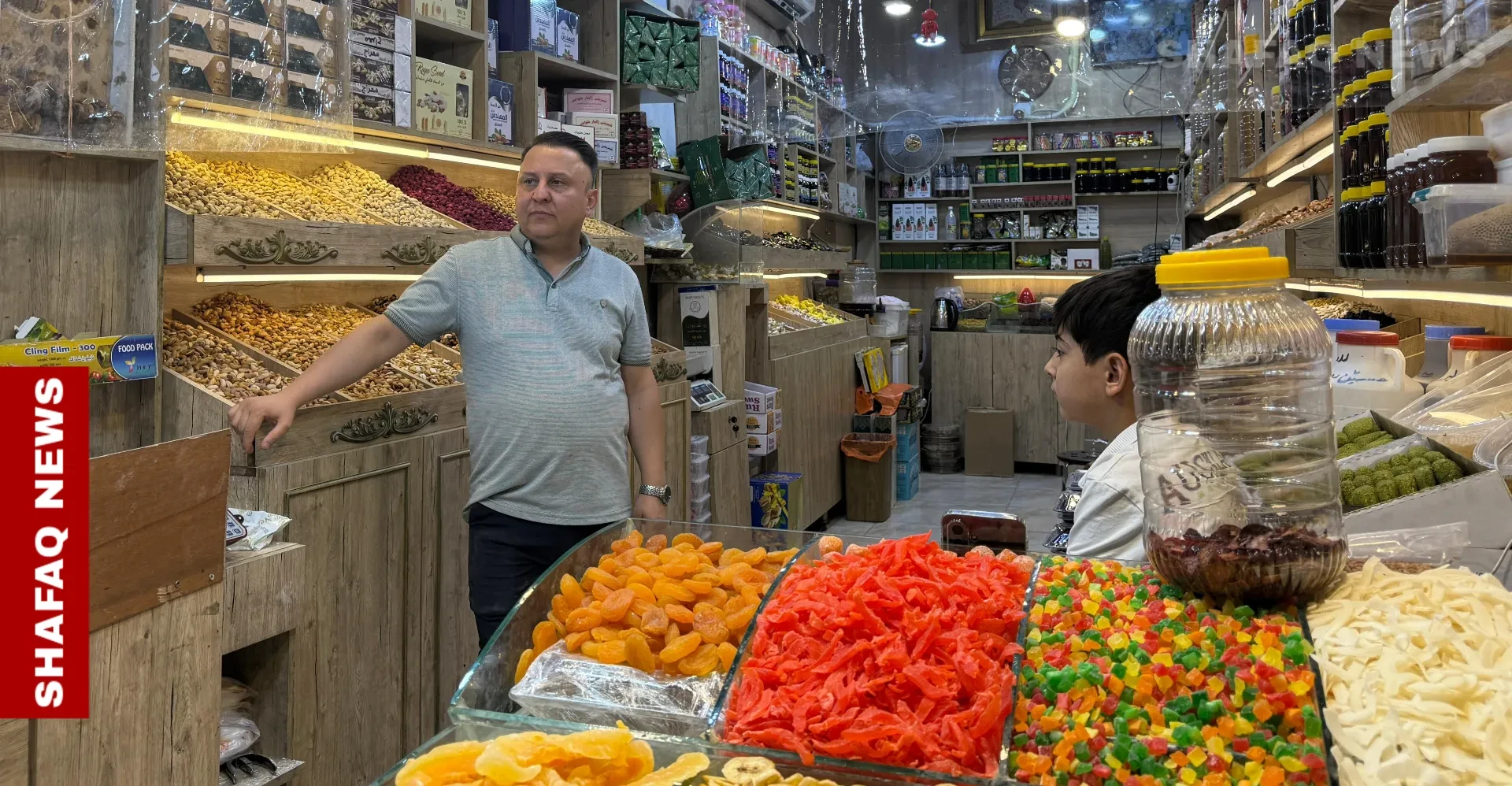
Prices of goods and commodities, especially food, have witnessed a significant increase. The “Iraq Future” Foundation for Economic Studies and Consultations noted this in three major cities, namely Baghdad, Erbil, and Basra, at varying rates. Meanwhile, the Ministry of Trade described this rise, under the pretext of the dollar exchange rate, as “unjustified” in many cases, stressing that it will not tolerate those who manipulate the people’s livelihood.
In this regard, Manar Al-Obaidi, head of the “Iraq of the Future” Foundation, said in a post entitled: “Weeks of devaluation of the dinar: How have food prices changed in Baghdad, Basra, and Erbil?”, that “at the beginning of November, the official exchange rate of the dollar was changed to 1,520 dinars. Data from the World Food Programme, which includes 25 basic commodities, shows how prices have changed in the markets during this period.”
He explained that the dollar’s price on the parallel market rose from approximately 1,565 dinars to 1,675 dinars, an increase of about 7%, with similar levels in the three cities. The gap between the official and parallel market rates remained around 10%.
Al-Ubaidi added that food prices rose in the three cities during this period, as follows: Basra 10%, Baghdad 6.5%, and Erbil 6.5%.
Highest priced goods in the three cities
In Basra, Al-Ubaidi noted that the price of vegetable oil rose from 2,500 to 3,500 dinars, potatoes increased by 68%, and onions doubled. Cheese also rose by 25%, rice by 18%, and chickpeas by 10%. In Erbil, sugar increased from 1,050 to 1,500 dinars, and the prices of bulgur rose by 35%, rice by 31%, and powdered milk by 22%. Potatoes also increased by 50% and onions by 33%. In Baghdad, onions rose by 45% and powdered milk by 18%, while beans increased by 7%, and rice, oil, and potatoes each increased by 6%.
Prices of some goods remain stable
The head of the “Iraq of the Future” Foundation confirmed that the prices of bread, flour, chicken, eggs and red meat are stable in the three cities, while the prices of dates and fish have decreased.
What do these changes indicate?
Al-Ubaidi explained that the increase appeared quickly. The dollar rose 7%, and food prices increased between 6.5% and 10% in just a few weeks, suggesting that traders may have raised the prices of some of their existing stock in anticipation of higher costs for new shipments.
He pointed out that the increase did not affect all goods. It was concentrated in many imported items priced in dollars, such as rice, oil, sugar, legumes, and powdered milk. In contrast, the prices of some basic commodities remained stable.
He concluded that prices had also risen in Baghdad. After a period in which the dollar’s rise was not clearly reflected in food prices in the capital, prices have increased by 6.5% over the past six weeks. This means that the price hikes are beginning to reach the city’s markets.
What might happen next?
Al-Ubaidi concluded his post by saying, “Further increases may appear with the sale of stock purchased with the lower-priced dollar and the arrival of new goods whose cost is calculated at the current market price,” adding, “But the amount of the next increase depends on what happens to the dollar price, and on whether the gap between the official and parallel prices will narrow.”
The position of the Iraqi Ministry of Trade
For his part, the advisor to the Ministry of Trade, Muhammad Hannoun, confirmed that the ministry is closely monitoring price movements in local markets, especially the increases witnessed in some food and consumer goods, including local products that are not directly related to imports or to fluctuations in the dollar exchange rate.
Hannon explained in a statement received by Shafaq News Agency that the rise in the dollar exchange rate cannot be an automatic justification for increasing the prices of all goods, especially local products and stocks previously imported at lower exchange rates, noting that the ministry rejects exploiting economic changes to impose unjustified price increases and achieve exceptional profits at the expense of citizens.
He added that the Ministry of Commerce, through its regulatory bodies and in coordination with the relevant sectoral and security authorities, is working to monitor market activity, detect cases of price gouging and manipulation, monopolistic practices, and verify the reasons for price increases and their relation to the actual costs of production, import, transportation and distribution.
He pointed out that the ministry deals with these phenomena by intensifying monitoring tours, following up on citizens’ complaints, and coordinating with the competent authorities to take legal action against violators, and referring cases of fraud, monopoly and illegal commercial practices to the concerned authorities in accordance with the applicable laws.
Hannon stressed that market freedom does not mean freedom to exploit the consumer, and that legitimate competition should not turn into a means of exaggeration and monopoly, stressing that the ministry will continue to work on enhancing the supply of basic goods, supporting market stability, and encouraging competition in a way that contributes to protecting the purchasing power of citizens.
He concluded by saying that consumer protection is a national responsibility and we will not accept that the rise in the dollar exchange rate becomes an open pretext for raising prices without real economic reasons, and violations will be monitored and legal action will be taken against the perpetrators without leniency.
shafaq.com
