The era of the digital republic has begun. Iraq is cashless, and the Central Bank imposes its authority as the “ruler of the country.”
The era of the digital republic has begun. Iraq is cashless, and the Central Bank imposes its authority as the “ruler of the country.”
2025-06-10
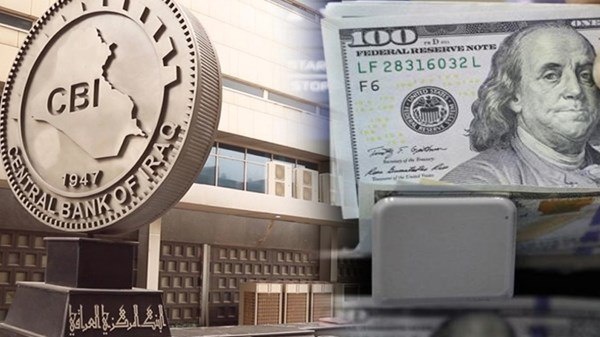 With increasing pressure on cash liquidity in Iraq, the government has begun expanding its reliance on electronic payment systems within state institutions. This move, which may appear on the surface to be a technical measure to modernize transactions, is essentially linked—according to experts—to an attempt to contain a growing financial crisis by reducing reliance on paper money and keeping as much of the money within the banking system as possible.
Al-Tamimi: The decision is not an administrative update, but rather an attempt to control liquidity.
Financial and economic affairs expert Nasser Al-Tamimi confirmed to Baghdad Today that “the government’s decision to impose electronic financial transactions within institutions is not merely a regulatory move, but rather a direct response to the cash liquidity crisis currently facing the country.” Al-Tamimi explained that “the government seeks to reduce demand for cash by converting transactions into digital electronic formats, which will ease pressure on the public treasury.”
He added, “The crisis may push authorities to make new decisions, such as imposing electronic payments in broader sectors outside of state institutions, or even restricting the withdrawal of full salaries from credit cards, allowing employees to withdraw only a portion while the remainder remains within the banking system.” He noted that “such measures are typically used in countries facing severe liquidity shortages, but they could spark widespread controversy if implemented without prior preparation.”
Saleh: The economy is moving from financial dominance to monetary influence.
In a deeper reading of this trend, Dr. Mazhar Mohammed Saleh, the Prime Minister’s Advisor for Economic Affairs, stated in his most recent statements that Iraq is witnessing a gradual shift in the balance of power between fiscal policy (concerned with spending and revenues) and monetary policy (concerned with liquidity management and stability), in what he called “soft monetary dominance.”
Saleh says, “The Central Bank of Iraq has begun to play a pivotal role in managing macroeconomic balances, after years of pressure to directly finance the budget deficit.” He points out that “this shift does not mean the bank is monopolizing economic decision-making, but rather indicates a decline in the dominance of traditional fiscal policy, which was based entirely on oil revenues.”
He continues: “In light of weak non-oil revenues and the state’s ballooning liabilities, fiscal policy is no longer able to adapt to periodic shocks, forcing the Central Bank to bear the brunt of the burden by managing the exchange rate, injecting liquidity, and intervening in the market.” He believes that this transformation is taking place gradually and flexibly, so that monetary policy does not lose its independence, as guaranteed by Law No. 56 of 2004.
Overlapping policies and resorting to unconventional tools
Saleh points out that one manifestation of this phase is the use of electronic payment tools as an indirect means of circulating cash and easing pressure on the paper currency. He explains that “transforming transactions to a digital system enables the state to keep liquidity under control and gives the central bank room to maneuver in the face of inflation and market fluctuations, without resorting to printing currency or excessive monetary expansion.”
However, this overlap between monetary and fiscal policy is not new. The central bank has previously used tools such as bond discounting and indirectly financing the government, which undermined its independence in previous periods. What’s new today, according to Saleh, is that the bank has become more disciplined and is showing a resistance to overstepping its boundaries, even if it conflicts with the expansionary policies desired by the executive branch.
Will the state succeed in this transformation?
Observers believe that the success of this approach depends on the state’s ability to ensure a balance between imposing electronic tools and achieving financial and social justice. Digital payment systems cannot be imposed without improving infrastructure and creating genuine confidence in the banking system, particularly in rural areas and regions that lack regular access to banking services.
Al-Tamimi also warns that any attempt to restrict cash withdrawals without realistic alternatives could lead to the creation of a parallel market or raise people’s fears of losing control over their money. He adds, “If the state wants this approach to succeed, it must clearly clarify its objectives and ensure citizens’ protection from any exploitation or banking loopholes.”
Between a pressing liquidity crisis and the Central Bank’s attempt to impose new stability rules, Iraq appears to be moving toward a “soft monetary model,” in which the state attempts to regulate the economy through electronic rather than traditional tools. However, this path, while necessary, requires a delicate balance between reform and gradualism, and between authority and trust, to prevent the move from becoming a new burden on citizens rather than a way out of an old crisis.
burathanews.com
