The blocs of Hakim and Halbousi confirm their participation in the session to elect the President of Iraq.
The blocs of Hakim and Halbousi confirm their participation in the session to elect the President of Iraq.
2026-04-10
 Shafaq News – Baghdad
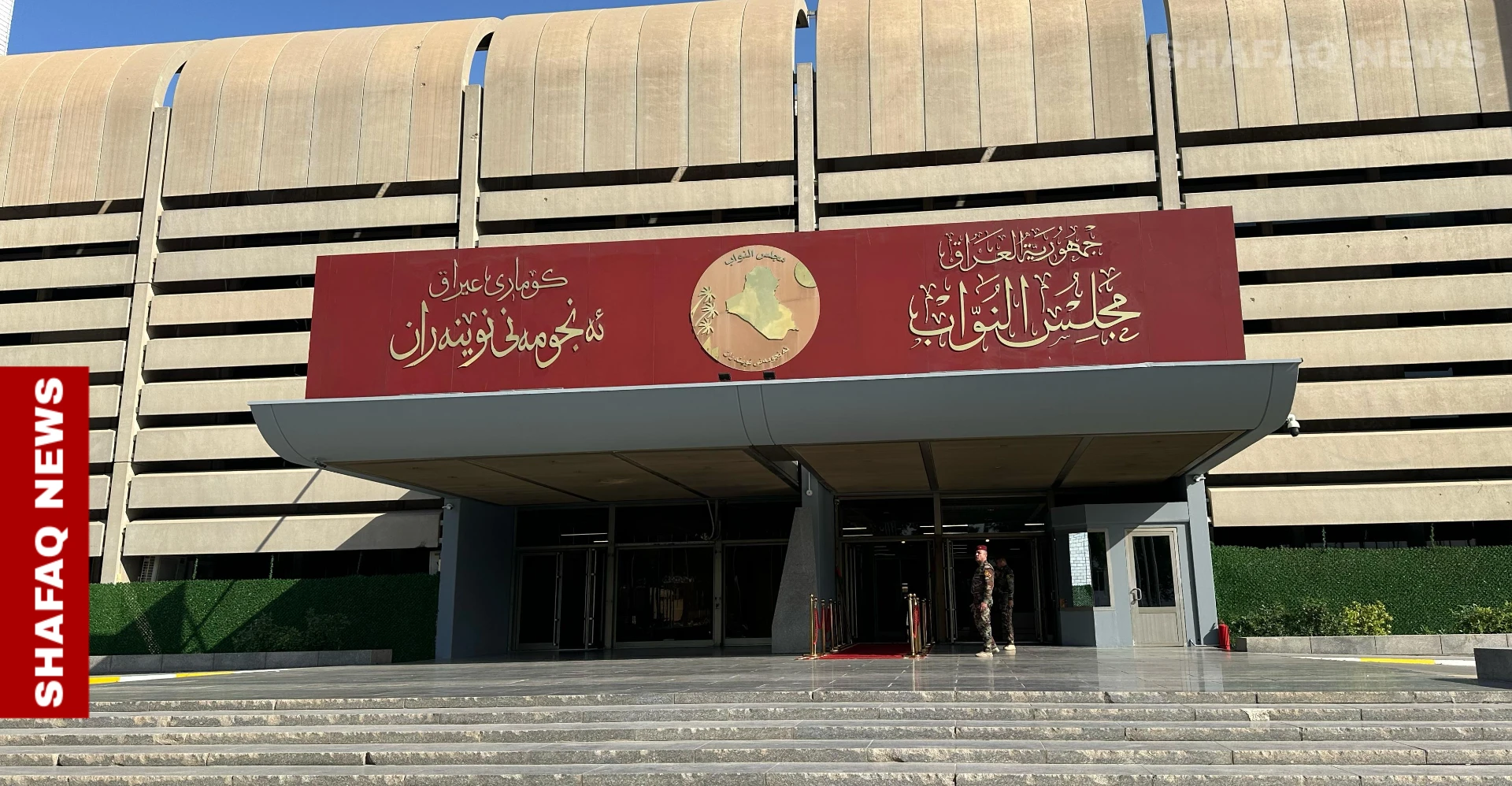
The National State Forces Alliance, headed by Ammar al-Hakim, and the Progress Party, headed by Mohammed al-Halbousi, announced on Thursday evening that their bloc’s representatives would attend the House of Representatives session scheduled for next Saturday, April 11, 2026, which is dedicated to electing the President of the Republic of Iraq.
In a statement received by Shafaq News Agency, the alliance indicated that “the State Forces Alliance, while sensing the sensitivity of the current stage and the challenges facing our country, renews its firm commitment to supporting the constitutional path, moving towards ending the political deadlock, and strengthening the stability of state institutions.”
The coalition called on all political forces and parliamentary blocs to assume their national responsibilities and to actively participate in order to make the session a success, in line with the supreme interest of Iraq and the aspirations of its noble people.
He stressed that “our presence is not a formality, but a clear national stance that expresses a genuine will to build the state and consolidate stability.”
In the same context, the Progress Party said in a statement received by Shafaq News Agency on Thursday evening, “We affirm our commitment, with all members of the party’s parliamentary bloc, to attend the House of Representatives session to elect the President of the Republic next Saturday, April 11.”
Earlier, the Iraqi parliament published the agenda for next Saturday’s session, which included “electing the president of the republic,” noting that the session would begin at 11:00 AM.
The session to elect the Iraqi president comes at a time when the coordinating framework that includes the ruling Shiite political forces in Iraq intends to decide on the position, whether or not an agreement is reached between the Kurdish forces, to whom this position has become allocated.
The nomination of a candidate for the position of Prime Minister will be postponed until further notice due to a lack of agreement on this matter, as stated by MP Jawad Rahim Al-Saadi of the National State Forces Alliance to Shafaq News Agency earlier.
Iraqi political parties are trying to alleviate the internal pressure they are under, especially after several months have passed since the legislative elections in late 2025, and their failure to form the new Iraqi government.
Regional developments were another factor that added complexity to the Iraqi political landscape, with security tensions escalating to unprecedented levels in the Middle East region.
After the Iraqi parliament elected its new speaker, who is from the Sunni component, it was the Kurds’ turn to present their candidate for the position of President of the Republic, which is from this component.
It has been customary for this position to go to the Patriotic Union of Kurdistan party, but in the last two election cycles, the Kurdistan Democratic Party objected to this and began demanding that a candidate from its party assume this position, especially after it swept the elections with the highest number of votes in the two cycles in the Kurdistan Region.
At the end of 2025, Kurdish leader Masoud Barzani called for a change in the mechanism for electing the Iraqi president, which is the “quota of the Kurds,” and submitted a proposal to that effect, stipulating that this position be held by a candidate chosen by the Kurdish parties and blocs, and not necessarily limited to the two main parties in the region (the Kurdistan Democratic Party and the Patriotic Union of Kurdistan).
The issue of selecting a Kurdish candidate for the presidency of the Republic of Iraq, a position that has been traditionally reserved for this component of Iraqi society, remains unresolved due to political disagreements and a lack of consensus between the two main parties in the Kurdistan Region.
After the fall of Saddam Hussein’s regime in the spring of 2003 at the hands of US forces and their allies, the major political forces of the Shiites, Kurds, and Sunnis adopted a quota system in distributing positions for the three presidencies: the Prime Minister’s office, the Republic, and Parliament.
The Coordination Framework had officially nominated Maliki on January 24, a move that opened the door to negotiations to form the new government, but the process faltered as disagreements continued over the election of the President of the Republic, the constitutional entitlement that precedes assigning the candidate of the largest bloc to form the government.
Any future prime minister in Iraq will face challenges in managing the balance between Iranian influence and American pressure, as well as the issue of armed factions linked to Tehran.
Pressure on Maliki’s nomination increased after US President Donald Trump announced on January 27 that Washington would not continue to support Iraq if Maliki returned to the premiership, while Maliki later said he would welcome a decision to replace his nomination if it came from the coalition that nominated him.
shafaq.com
