Wall Street: Closing Iraqi ports increases Iran’s isolation after the naval blockade
Wall Street: Closing Iraqi ports increases Iran’s isolation after the naval blockade
2026-10-24
 Shafaq News – Follow-up
The Wall Street Journal revealed that Iran is facing increasing restrictions on its land trade routes, after Iraq and Pakistan closed some vital crossings, while the newspaper says that the US naval blockade and sanctions imposed on the transport and aviation sectors have contributed to reducing shipping and trade options, exacerbating economic pressures on Tehran.
The newspaper reported that these measures come in conjunction with US President Donald Trump’s escalation of military and economic pressure on Iran, with the aim of pushing it to make concessions regarding its nuclear program, while diplomatic efforts to resume talks have been stalled for months, amid Tehran’s rejection of US demands to discuss the nuclear issue.
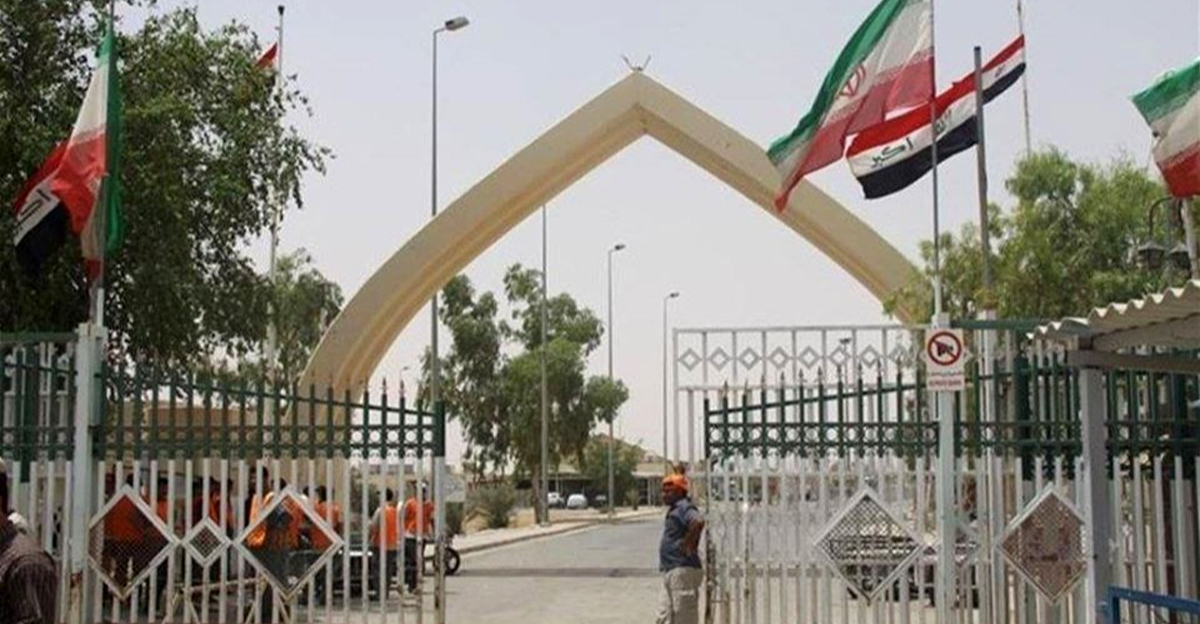
Iraq closed the Al-Shaib border crossing, which connects the two countries, last Wednesday. Baghdad attributed the move to the need to tighten controls and combat smuggling. In Pakistan, authorities prevented trucks coming from Iran from entering through the main Ghabd and Taftan border crossings over the weekend, citing security reasons, according to the newspaper.
The newspaper quoted a spokesman for the Pakistani Foreign Ministry as saying on Friday that his country adheres to the existing sanctions regimes, adding: “Pakistan, as a responsible member of the international community, adheres to – and will continue to adhere to – all existing sanctions regimes, in accordance with international and domestic laws.”
Earlier this month, US Treasury Secretary Scott Bisnett announced that he was working with Pakistan and Turkey to cut off Iranian land routes. Speaking at the Newsmax Policy Summit, he said Washington was moving beyond financial sanctions toward what he called a “total isolation campaign” against Iran.
Last month, a Treasury official stated that the department was considering blacklisting entities that provide warehouses and distribution centers, with the aim of restricting the movement of goods across Iran’s land borders. The newspaper also quoted a Trump administration official as saying that the US economic campaign “is isolating the Iranian regime and pushing it toward desperation.”
Although work continues at other crossings along the Iranian border, the recent closures are increasing congestion and exacerbating difficulties in transporting goods, at a time when land routes are facing increasing pressure to compensate for the decline in sea freight, amid rising costs of basic commodities for Iranian consumers.
According to the report, hundreds of truck drivers are waiting in long queues at border crossings with Pakistan. The Iranian Federation of Truck Drivers and Operators Associations stated on Tuesday that some drivers were forced to abandon shipments of spoiled fruit and other agricultural products due to the delays.
The newspaper quoted Ehsan Malekzadeh, head of the Iranian Association of International Transport Companies, as telling the semi-official Mehr News Agency that by September 29, about 17,000 trucks were waiting at the Iranian borders with Turkey, Afghanistan and Azerbaijan, with waiting times usually reaching 20 days.
For its part, the Iranian Broadcasting Corporation (IRIB) reported that the closures from the Pakistani side have left more than 4,500 tons of liquefied gas stuck on the Iranian side of the border, which the report described as one of the last remaining Iranian energy exports.
Miyad Maleki, a former U.S. Treasury Department sanctions official, told the newspaper that the partial border closure could further disrupt the Iranian economy, explaining that maritime restrictions have pushed trade to limited and expensive land routes, leading to increased congestion, transportation costs, and delays in the arrival of raw materials and essential imports, and putting pressure on production and tax revenues.
In Tehran, Hamid Hosseini, a board member of the Iran-Iraq Chamber of Commerce, said he believes the closure of the Iraqi border crossings was a result of the US campaign to isolate Iran economically.
The Mehr News Agency quoted Peyman Sanandji, head of the transportation committee at the Tehran Chamber of Commerce, as saying that Iranian exports to Pakistan have halted due to banking sanctions. He added that Islamabad requires Pakistani importers to register their banking information related to trade transactions with Iran, but restrictions on the Iranian financial system are hindering these procedures.
For his part, Feda Hossein Maleki, head of the Iranian-Pakistani Parliamentary Friendship Group and a member of the National Security and Foreign Policy Committee in the Iranian Parliament, held the United States responsible for the developments, saying on Thursday: “We did not expect this from our Pakistani friends, and we did not expect them to succumb to American pressure.”
According to the report, the US Navy has imposed a blockade on Iranian ports for months in response to Tehran’s attacks in the Strait of Hormuz. This has, the newspaper says, halted oil exports and disrupted the country’s imports, including food. Although humanitarian goods are exempt from the blockade, shipping companies’ fears of their vessels being intercepted have limited trade.
The newspaper added that Iran’s oil reserves outside the scope of the embargo, which had enabled Tehran to continue selling to buyers in China in recent months, have been depleted. The US Treasury Department also imposed new sanctions on banks dealing with Iran and on the Iranian aviation sector, as part of Washington’s efforts to expand Tehran’s economic isolation and curtail its trade ties.
Indicating the extent of the economic pressures, the Iranian Statistics Center reported this month that war and isolation have crippled the economy, and that Iranian families lost 90% of their purchasing power last year, according to the newspaper. Food prices have also risen by 128%, forcing families to buy meat on credit.
The report indicated that the Iranian rial hit a new low on Thursday, with the price of one dollar reaching about 2.74 million rials.
shafaq.com
