The arrival date of the first South Korean air defense battery to Iraq has been revealed.
The arrival date of the first South Korean air defense battery to Iraq has been revealed.
2025-11-01 09:49
 Shafaq News – Baghdad
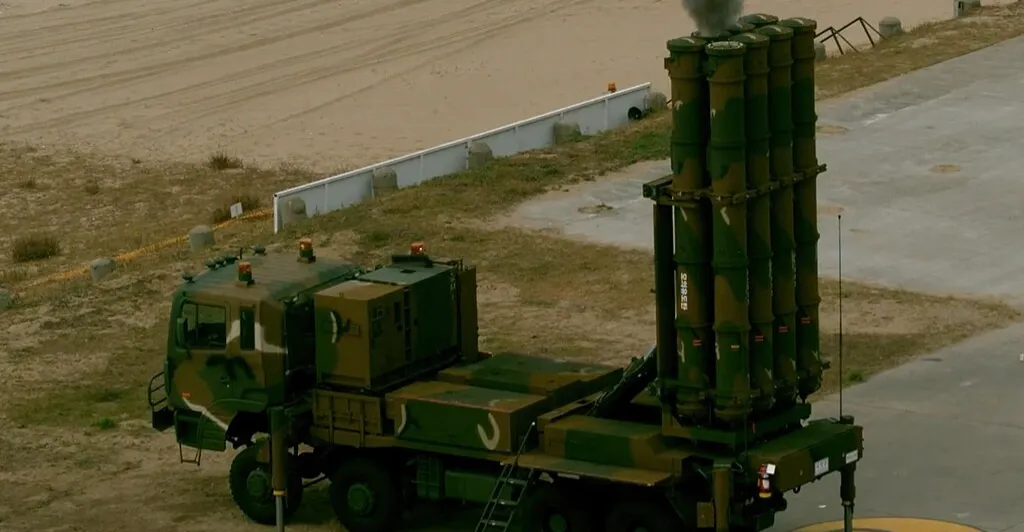
A government source revealed on Saturday the arrival date of the first “battery” or air defense system out of 8 defense batteries imported from South Korea, while indicating that the completion of the deal depends on Baghdad paying Seoul the amount of the system.
The source told Shafaq News Agency that “the first of eight South Korean M-SAM air defense batteries will arrive in Iraq next February.”
He added that “Iraq had contracted to purchase these batteries for $2.63 billion.”
He pointed out that “if Iraq succeeds in paying for the defense system that will arrive in the country next year, South Korea will deliver the rest of the defense batteries successively, otherwise the deal may fail.”
He pointed out that “Iraq has an American radar system and its operation is linked to the American forces, but according to the current data, there is a change in the paths of armament in favor of the Iraqi security system represented by the Ministries of Interior and Defense, and some supporting formations, meaning that it wants Iraq to have complete control over its airspace in a way that achieves security and stability in the region.”
He continued, “There are other deals that Iraq will conclude with international arms suppliers according to protocol agreements that will be announced in due course.”
The deal is worth $2.8 billion for the purchase of medium-range air defense systems (M-SAM) from the Korean company LIG Nex1, known as Skybolt, which was announced in 2024 and is scheduled for delivery in early 2026.
The deal came amid escalating tensions between Iran and Israel, as Baghdad moved towards expanding its military cooperation with South Korea, after the Iraqi army purchased Korean missiles and fighter jets in recent years, in an effort to strengthen its defense capabilities and develop its deterrent system away from the political sensitivities that accompany arms deals with Washington or Moscow.
According to a report by the Korea JoongAng Daily, translated by Shafaq News Agency, Iraq intends to expand its deals with South Korean defense companies as it seeks to strengthen its deterrent capabilities amid escalating tensions between Iran and Israel, after having previously purchased missiles and fighter jets from Korea.
The report added that Seoul could represent an attractive alternative for Baghdad to replace old American and Russian equipment, given Iraq’s desire to avoid the geopolitical dimensions that accompany dealing with Washington or Moscow, while maintaining the quality of armament and adhering to delivery schedules.
The report indicated that Iraq may also turn to purchasing KF-21 fighter jets from Korea Aerospace Industries (KAI), K9 self-propelled guns from Hanwha Aerospace, and K2 tanks from Hyundai Rotem.
A KAI spokesman said that Iraq had already purchased T-50 aircraft and KUH-1 Surion helicopters, which naturally made it interested in more Korean equipment, but he clarified that it was still too early to talk about progress in the negotiations.
The Iraqi army has been using a mix of American, Russian and Czech weapons since 2003, including M1 Abrams and T-90 tanks and F-16IQ, Su-25 and L-159 fighter jets.
The report stated that the first Iraqi-Korean deal dates back to 2013 when Baghdad purchased T-50 light training and combat aircraft from KAI, noting that this aircraft outperformed British, Czech and Russian offers thanks to its design based on F-16 technologies and its speed of delivery.
Professor Choi Ki-il of Sangji University said, “Although there are anti-American sentiments in Iraq, Iraqi forces operate many American systems, so Korean weapons, designed to work with those systems, do not raise political sensitivities.”
He added that South Korean weapons face competition from China and Europe, but their superior manufacturing quality and lower cost might sway Iraq toward more deals with South Korea. However, he noted that Seoul’s path to boosting its defense exports “remains long and requires sustained government support.”
shafaq.com
