Rumors and concerns… What is the true state of the financial situation in Iraq?
Rumors and concerns… What is the true state of the financial situation in Iraq?
2025-11-26
 Shafaq News – Baghdad
In recent days, the Iraqi scene has witnessed a widespread wave of “rumors” related to “disappearance of funds,” “salary delays,” and “cutting off livelihoods,” which has raised public concerns about the financial situation in the country.
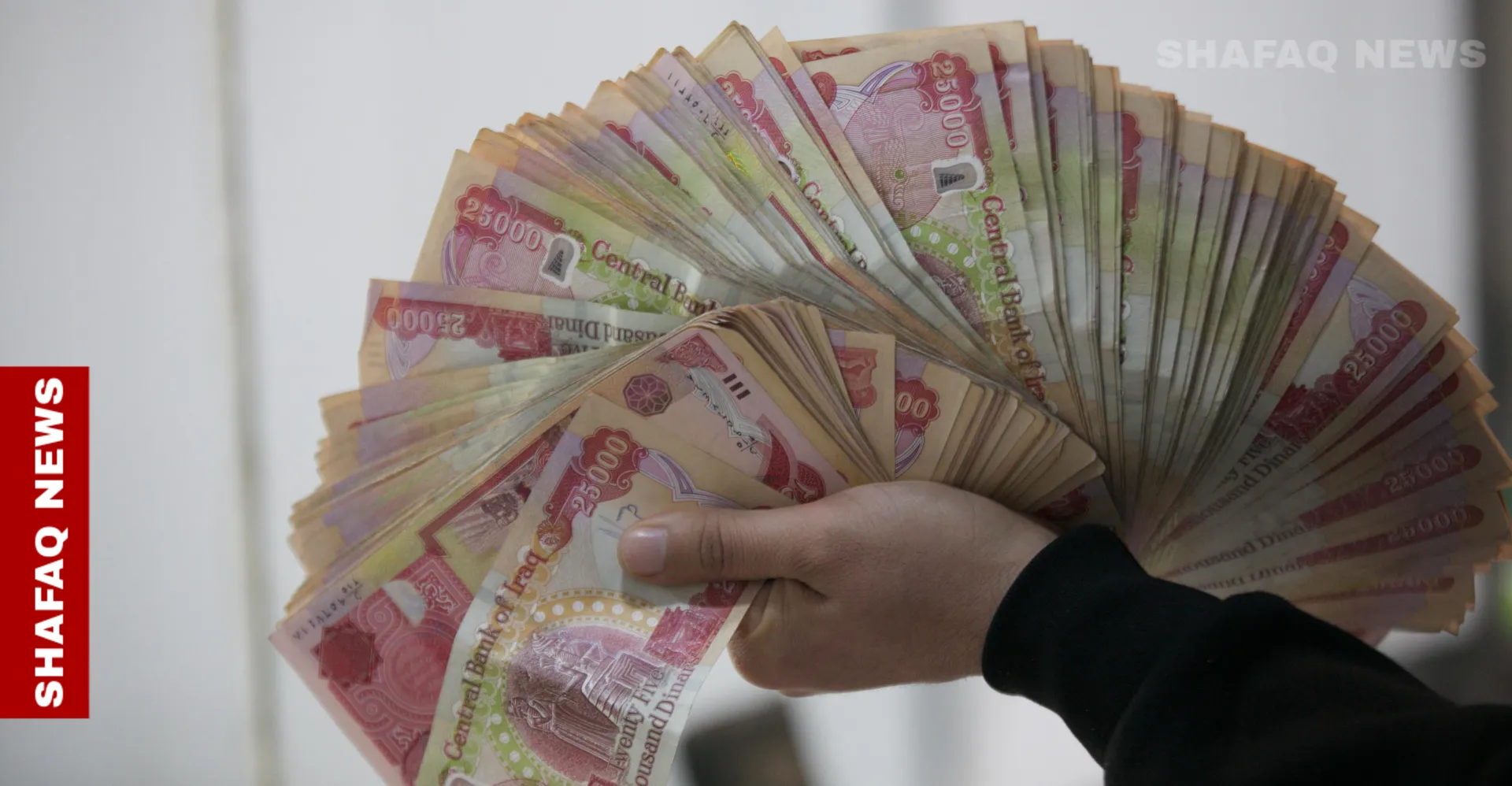
Media outlets and social media have recently circulated news about the disappearance of an estimated 2.5 trillion dinars (approximately two billion dollars) from the Social Welfare Fund of the Iraqi Ministry of Labor and Social Affairs, along with a temporary delay in paying the wages of employees in some government institutions for several days, amid fears of “cutting off livelihoods” as a result of the great financial pressures that Iraq is suffering from.
These concerns coincide with the chaos of economic discourse in the media and on social media platforms, and conflicting expectations about the future of the exchange rate and the state’s financial capacity, despite government assurances and official statements confirming that the financial situation is under control and that salaries are secured.
“False rumors”
In this context, Mazhar Muhammad Saleh, the financial advisor to the caretaker prime minister, says that what is being circulated falls within a “heated political season in which negative rumors against Iraq abound,” stressing that most of what is being raised is not based on facts.
Saleh adds to Shafaq News Agency that Iraq has high financial capabilities, including good oil revenues and non-oil revenues, and that the government places salaries, wages, pensions and social welfare at the top of its priorities, explaining that any delay in payment is technical and simple and happens occasionally.
He points out that the current wave of fear-mongering has put citizens in a state of unjustified anxiety, stressing that “Iraq is not a besieged country and is not at war, and the financial and monetary policies are working to ensure a decent life, from the food basket to salaries and infrastructure, and everything that is being raised about cutting salaries or reducing the value of the dinar or an economic collapse is nothing but lies upon lies,” as he put it.
Saleh also calls for reducing negative analyses that psychologically affect citizens, stressing the state’s ability to protect food and financial security, and that economic bodies are working in accordance with their responsibilities.
Dollar stability
For his part, Alaa Al-Fahd, a member of the media office at the Central Bank of Iraq, explains that the bank has no intention of changing the official exchange rate, stressing that price stability is a fundamental pillar of economic stability.
Al-Fahd told Shafaq News Agency that the Central Bank’s current and future monetary policy is centered on defending the current exchange rate (1320 dinars to the dollar) to support citizens’ confidence in the banking system and strengthen Iraq’s international obligations.
He points out that the stability of the exchange rate contributed to the decrease in inflation rates to negative monthly levels, which had a positive impact on price stability.
Regarding the parallel market, Al-Fahd explains that its rises represent speculation based on news and rumors, stressing that the bank is responsible for financing foreign trade at the official rate and meeting all official requests for dollars.
economic risks
In contrast, economist Nawar Al-Saadi warns that talk of missing funds and rising fears of livelihood cuts is not just a passing corruption issue, but a dangerous indicator for the national economy if the state and regulatory institutions do not act quickly.
Al-Saadi, speaking to Shafaq News Agency, points out that Iraq is facing structural financial pressures, with a declining ability to cope with shocks, and the existence of administrative and financial accumulations that increase the fragility of public accounts and weaken trust between the citizen and the state.
He says that the lack of transparency and governance leads to the erosion of public services and higher spending costs, and increases unemployment and the risk of protests if people do not feel a tangible improvement in their living standards.
It calls for urgent and integrated measures that include declaring transparency in disputed financial files, launching independent and public investigations, expanding cash social safety nets for the poor, reforming customs and taxes to boost non-oil revenues, and, in the medium term, restructuring wages and public spending and investing resources in productive sectors to break dependence on oil and reduce waste.
Economic governance
In another reading, economist Karim Al-Helou believes that addressing economic concerns and challenges cannot be achieved without genuine reform based on the principle of comprehensive governance.
Al-Hilu told Shafaq News Agency that “public funds and community funds should be inside banks and financial institutions, and this is the rule that prevents financial crises and liquidity crises.”
He emphasizes that without this measure, no real reform will be achieved, indicating that Iraq is lagging behind in this aspect “either intentionally, due to administrative ignorance, or as a result of corruption,” which makes the economy vulnerable to instability in the face of any crisis or rumor.
shafaq.com
