Replacing the Syrian currency: A monetary measure to regulate the market and restore confidence in the economy
Replacing the Syrian currency: A monetary measure to regulate the market and restore confidence in the economy
2025-12-31 02:57
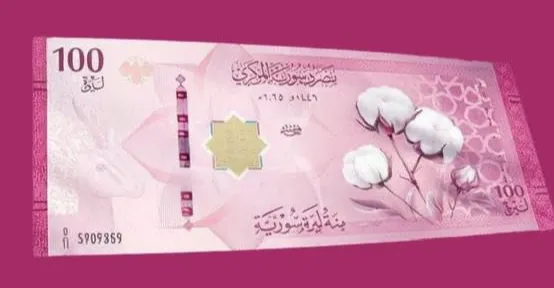 Shafaq News – Damascus
Economic experts and officials in Syria confirmed that replacing the currency has nothing to do with addressing inflation, but rather with reducing illegal activities and is a “purely technical” act, regulating trading and facilitating daily transactions.
Osama Al-Qadi, senior advisor at the Ministry of Economy and Industry, confirmed to Shafaq News Agency that “the currency replacement is a purely technical act that has no relation to price increases or inflation,” explaining that “it contributes to addressing the liquidity shortage and restores citizens’ confidence in banks and financial institutions by providing sufficient cash in the market.”
The judge pointed out that “this step would contribute to eliminating money laundering operations, monitoring real estate and gold markets, reducing forgery and speculation, in addition to controlling the money supply and reducing black market activities in Syria.”
He pointed out that “strengthening the value of the national currency is also linked to the availability of liquidity and the lifting of sanctions, especially the Caesar Act, and the impact of this on facilitating financial transfers for foreign companies,” while stressing at the same time that “the black market cannot be eliminated all at once, but its severity can be reduced and speculation controlled.”
For his part, Ziad Ayoub Arabsh, an academic and consultant at Damascus University, stressed that “replacing the currency is not an isolated technical procedure, nor a sudden step aimed at confusing the citizen, but rather it is a strategic option that must be managed with great care, especially at this critical stage in the life of the Syrian economy.”
Arabsh explained that “the main objective of this step is to regulate and facilitate cash transactions and control the money market, far from any intention to harm citizens’ savings or cause a shock to their economic behavior.”
He considered that “this step, if properly implemented, could constitute an entry point for rebuilding confidence in the national economy, encouraging local investment, and paving the way for broader reforms in the financial sector, particularly in the areas of digitization, modernization of the banking structure, and orderly opening up to regional markets.”
Arabsh explained that “the positive impact of currency replacement may appear in the near term by reducing excessive inflation, facilitating daily transactions, achieving greater monetary stability, and reducing uncontrolled reliance on foreign currencies.”
He pointed out that “the economy may face a state of confusion or initial resistance, especially in the absence of transparency or weak communication with citizens, or poor management of liquidity and cash reserves,” stressing that “trust, clarity and continuous dialogue with various economic and social actors are crucial elements to avoid any negative effects.”
Arabsh concluded by emphasizing that “the success of the currency replacement process is not limited to its monetary dimension alone, but is directly linked to the path of reforming the financial sector as a whole, by reducing informal dollarization, promoting reliance on the national currency, protecting reserves, and building a more balanced relationship between the citizen and financial institutions.”
Last Monday, Syrian President Ahmed al-Sharaa revealed details of the new Syrian currency in an official announcement, describing it as a pivotal step within a national economic strategy aimed at strengthening monetary stability, consolidating confidence in the Syrian economy, and supporting a sustainable economic recovery.
He pointed out that the new currency design reflects a unifying national identity, based on symbolism related to Syrian nature and geography, and moving away from the veneration of individuals. He considered this step to be the beginning of a new phase of confidence and economic growth, provided that a responsible financial culture is adhered to during the replacement period and any speculative practices that harm the market are prevented.
shafaq.com
