Iraq’s next prime minister: Complex criteria and conditions are shaping the candidate’s profile early on.
Iraq’s next prime minister: Complex criteria and conditions are shaping the candidate’s profile early on.
2025-11-15 08:26
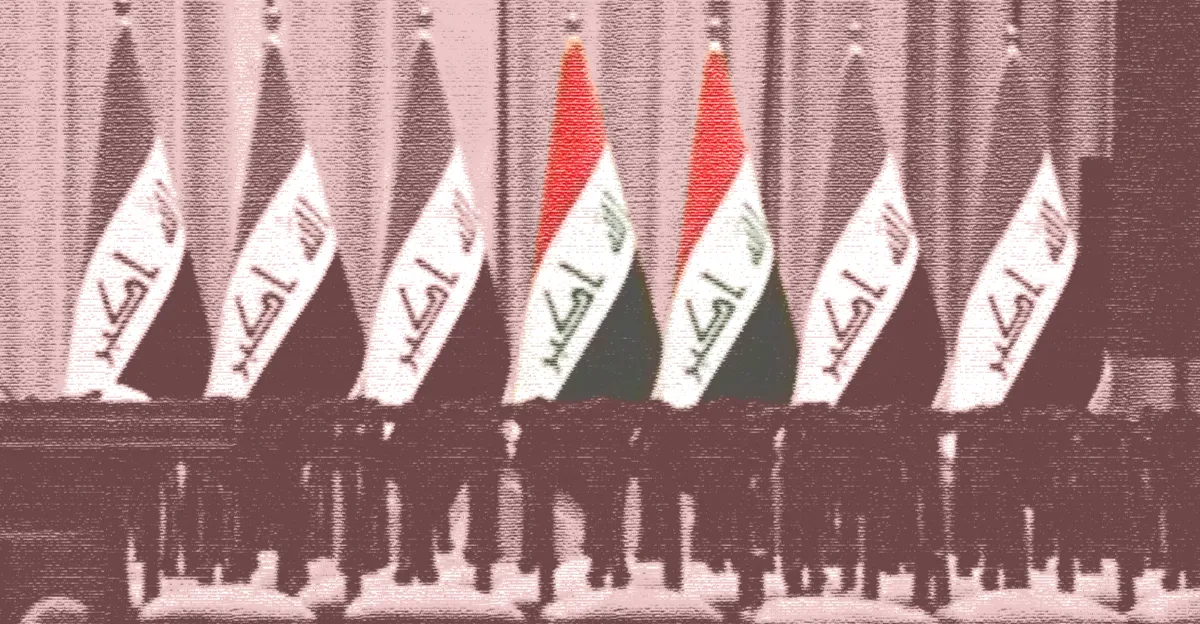 Shafaq News – Baghdad
Four days after the legislative elections in Iraq to choose members of parliament for its sixth session, the political forces began moving to form the new federal government, bringing back to the forefront the fundamental questions about the basic criteria that must be available in the next prime minister to ensure stable leadership, and about the urgent priorities that he should begin to implement as soon as he takes office.
In light of the complex internal challenges and the heightened sensitivity of regional and international issues, the task of choosing the new prime minister has become more complicated than ever. The political conflict within the Shiite bloc and the American-Iranian rivalry all make the position of the next prime minister subject to delicate equations and multiple conditions that go beyond traditional party frameworks.
According to observers, the selection of the next prime minister appears to be based on three overlapping paths. The first is internal consensus and the constants of the Shiite house, where political identity, the role of the Popular Mobilization Forces, and the foreign presence are determinants that no candidate can ignore.
The second path relates to the balance between Washington and Tehran, as no government can ignore the influence of the United States, nor can it overlook the Iranian weight within the coordinating framework that brings together the ruling Shiite forces in the country. Third, the prime minister must be an economist and an expert in austerity and structural reforms in light of the oil price crisis and water scarcity.
“It’s not a picnic”
Regarding the details of these paths and challenges, Aqeel al-Rudaini, spokesman for the Victory Coalition led by Haider al-Abadi, believes that the specifications of the next prime minister must be exceptional and difficult, given the nature of the “serious” challenges that await the country.
Al-Rudaini confirms to Shafaq News Agency that the most serious thing facing the next government is the decline in oil prices to below $60 a barrel, which makes it difficult to cover salaries, the investment budget and state expenses.
He adds that “Iraq is facing a harsh austerity phase, which requires preventing appointments and imposing taxes to ensure the continued functioning of the state.”
He points out that the water crisis has reached an unprecedented level, as the Tigris and Euphrates rivers are experiencing a dangerous decline “for the first time in the history of Iraq,” which portends an agricultural and environmental disaster, and consumption may be limited to drinking water only.
Therefore, Al-Rudaini stresses that the Prime Minister must have a purely economic vision, along with an effective network of international relations, especially with Turkey to resolve the water issue, in addition to the ability to streamline ministries, reduce expenses, and convince the public of the necessity of difficult decisions.
Under these circumstances, he emphasizes that “the next prime ministership is not a picnic, but rather a dangerous phase that requires a shrewd man to save the country.”
external influence
As for external influence, writer and political researcher Omar Al-Nasser believes that completely separating the Iraqi government from American influence is almost impossible, for reasons related to the military and security presence of the United States, and to the Iraqi economy, which is dependent on the dollar and the Federal Reserve.
Al-Nasser told Shafaq News Agency that “Washington may not choose the prime minister, but it influences the quality of the government and its security and economic policies.”
He points out that the coordinating framework theoretically possesses the parliamentary and coalition capacity to form a government, but Washington’s conditions – which emerged with the arrival of US envoy Mark Savaya – relate specifically to the issue of armed factions, which makes any new government obliged to take these parameters into account.
Al-Nasser believes that the framework’s ability to form a government remains contingent on the absence of internal splits or sudden changes, stressing that the framework is capable of building dynamic alliances with Sunni and Kurdish forces, but ultimately it cannot cross American red lines on sensitive issues.
Determinants of the Shiite House
For his part, political researcher Abu Mithaq Al-Yasari believes that accepting any candidate for prime minister within the coordination framework goes through a set of basic parameters, which he described as “constants that cannot be bypassed.”
The leftist explains to Shafaq News Agency that the first of these parameters is preserving the Shiite political identity and its executive head, while the second relates to the Popular Mobilization Forces by guaranteeing their rights and the structure of their forces and refusing to integrate or dissolve them.
According to the leftist, the most prominent national determinant is the pursuit of a complete withdrawal of foreign military presence from Iraq, and therefore “whoever assumes the position must carefully consider these conditions to gain favor within the framework.”
Increased interventions
For his part, political researcher Abdul Qadir Al-Nayel confirms that the struggle to form the government began immediately after the results were announced, noting that Iran supports the path led by the leader of the State of Law Coalition, Nouri Al-Maliki, to assemble a bloc that may reach 130 deputies within the coordination framework, while seeking an alliance with the Kurdish and Sunni blocs and some quota seats to form an alliance that may reach 210 seats, and pushing the current Prime Minister and head of the Reconstruction and Development Alliance, Muhammad Shia Al-Sudani, and his alliance towards the opposition.
Al-Nayel, speaking to Shafaq News Agency, points out that Washington announced its rejection of the dominance of “Maliki and the armed factions” over the next government, which prompted Al-Sudani to head to Erbil (the date of the visit has not yet been officially set) to negotiate with the Kurdish forces, while the leader of the Progress Party, Muhammad Al-Halbousi, is moving to assemble a Sunni bloc that will block Maliki’s project.
He adds that the situation became more complicated after the statements of the head of the Judicial Council, Faiq Zaidan, regarding the existence of lawsuits against Al-Sudani, including the “case of spying on politicians,” which Al-Nayel considered an “early targeting” that may disrupt the formation of the government.
He concludes by saying that the delay in forming the government is almost inevitable, and he suggests that the matter will be resolved through direct American intervention if Iranian interference in the political alliance negotiations continues.
Sixth session elections
On the ninth and eleventh of November, Iraq held special and general voting in the parliamentary elections for the sixth parliamentary session, as part of a democratic practice in the political process that emerged after 2003, when the former Baath regime was overthrown by the forces of the United States of America and its allies.
The Independent High Electoral Commission in Iraq announced last Wednesday the preliminary results of the parliamentary elections, which saw a turnout of 56.11% to elect 329 representatives.
She noted that the “Reconstruction and Development” alliance, led by Mohammed Shia al-Sudani, made significant progress in the preliminary results, achieving 1,317,346 votes in 12 out of 18 governorates. The Progress Party, headed by former Speaker of Parliament Mohammed al-Halbousi, came in second, and the State of Law Coalition, led by former Prime Minister Nouri al-Maliki, came in third.
Regarding the Shiite Coordination Framework forces, the Reconstruction and Development Alliance of Sudani won 45 parliamentary seats, followed by the State of Law Coalition led by Nouri al-Maliki with 30 seats, and the Sadiqun Bloc led by Qais al-Khazali with 26 seats, while the Badr Bloc led by Hadi al-Amiri won 19 seats, and the State Forces led by Ammar al-Hakim won 18 seats.
shafaq.com
