Iraq retests the “Syrian route” for oil transport… a move with strategic implications that go beyond “size”.
Iraq retests the “Syrian route” for oil transport… a move with strategic implications that go beyond “size”.
2026-04-03 06:51
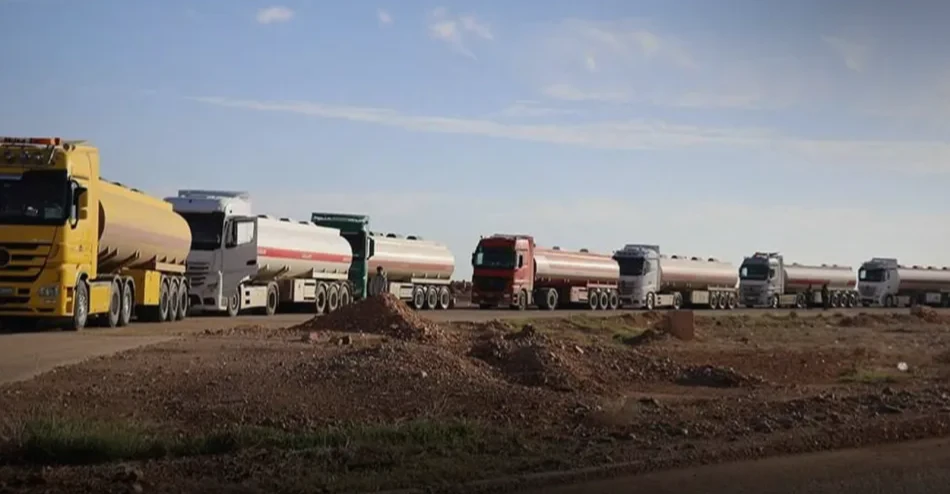 Shafaq News/Damascus – Baghdad
On Friday, the Chairman of the Board of Directors of the Syrian Association for Shipping and National Supply, Muhammad Riyad Al-Sirafi, revealed the outlines of a new strategic step taken by Iraq, which is to reactivate the route for transporting part of its oil through Syrian territory towards the Mediterranean Sea, considering that this step carries implications that go beyond its actual size.
Al-Sirafi explained in a statement to Shafaq News Agency that the quantities of oil transported by land are still very limited compared to Iraq’s huge maritime exports, but the real importance lies in “breaking the deadlock and retesting Syrian geography as a vital corridor in the movement of regional energy and trade.”
Logistical challenges and security imperatives
Al-Sirafi pointed out that the land transport option is not primarily economical, but is more costly and involves logistical risks. However, the Iraqi decision was driven by the necessities of continuing exports, in light of regional challenges that may threaten other alternatives, stressing that “continuity is more important than idealism” in such circumstances.
He explained that the operation of this route reflects coordination between Damascus and Baghdad, albeit at a slow pace, which he considered a positive indicator of the return of a “language of shared interests” between the two countries. Regarding the challenges on the ground, the Syrian official pointed to the weak road infrastructure, the lack of organized collection centers, and the complete reliance on trucks instead of pipelines.
Between the speed of land and the vastness of the sea
Al-Serafi said: “We have a working solution, but it is not comfortable yet,” adding that land transport is fast, but it lacks the capacity provided by sea transport, noting that “land is fast, and the sea is wide, but pipelines are the real solution in the long term.”
He stressed that what is happening represents the reinstatement of Syria within the regional transit map, emphasizing the need to revive the “Kirkuk-Banias” line, which he described as “the absent present,” as a strategic option to reduce costs and decrease reliance on maritime routes.
Unbalanced exchange
He also pointed out that trade between the two countries remains unbalanced, with Iraq exporting energy in exchange for Syrian exports of goods, considering that this opens the door to boosting Syrian exports if local products are supported and their access to Iraqi markets is facilitated.
Al-Sirafi concluded his statement by emphasizing that Iraq is looking for “alternative outlets” to secure its exports, while Syria possesses the geographical advantages to play a pivotal role in the next stage.
shafaq.com
