Internet restrictions are driving Iranians to buy Iraqi SIM cards at exorbitant prices in border areas.
Internet restrictions are driving Iranians to buy Iraqi SIM cards at exorbitant prices in border areas.
2026-05-19
 Shafaq News – Special Translation
Strict restrictions on the internet within Iran have led to the emergence of an active black market for Iraqi mobile phone company SIM cards in the western border regions of the country, where Iranian citizens and professionals resort to buying them at high prices to conduct their business and access the global network without blocking.
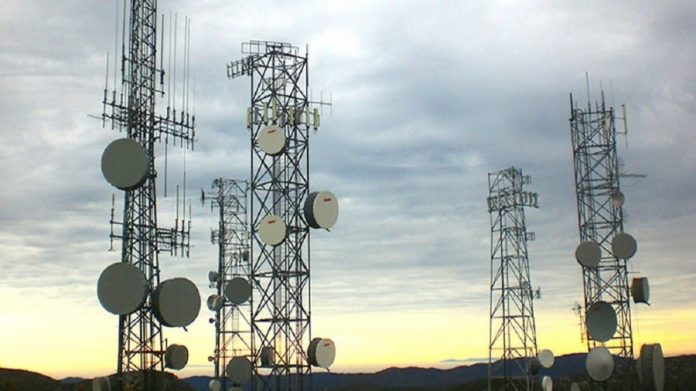
Hamshahri Online published a report, translated by Shafaq News Agency, indicating that during a field tour along the ring road leading to the official Parviz Khan border crossing in Qasr-e Shirin district of Kermanshah province, dozens of cars were observed lined up daily, where citizens, mostly young people, students, and professionals, gather to pick up wireless signals coming from broadcasting towers inside Iraqi territory in what has become known locally as “digital migration at point zero.”
Black market and high costs
The region is witnessing increasing demand for SIM cards from Iraqi mobile operators such as Asiacell, Korek, and Zain, due to the geographical proximity of the Iraqi cities of Kalar and Khanaqin, which allows signals to reach inside the Iranian border strip to a depth of between one and two kilometers.
These SIM cards – whose actual value does not exceed a few dollars in Iraq – are sold on the Iranian black market for amounts ranging from 5 to 6 million Tomans (equivalent to approximately 80 to 100 dollars according to the prevailing exchange rates), which represents a significant financial burden compared to the local internet tariff.
Mohammad, an Iranian programmer from the area, said he had to buy an Iraqi SIM card to continue his work and download and update software: “The SIM card doesn’t work inside Qasr-e Shirin city, so I have to come to this border road every day for several hours to complete my projects.”
He added that the cost of packages, such as the 20 GB package which costs 15,000 Iraqi dinars, is very high when calculated in the local Iranian currency, which is experiencing constant fluctuations, stressing the lack of available alternatives.
Technical mechanisms and legal loopholes
According to telecommunications industry experts, users rely on two technical mechanisms to operate these chips:
Direct connection: By connecting phones directly to Iraqi Broadcasting Stations (BTS ) near the border, in which case the data passes completely independently of Iranian infrastructure and government control.
Roaming Protocol : In more remote areas, users activate international roaming via Iranian monopolies (such as Hamrah Aval or Irancell). Technically, data traffic is encrypted and transmitted through an encrypted tunnel to the home network in Iraq before reaching the global internet, bypassing local blocking (filtering) systems.
Legally, Iranian law does not criminalize the possession of foreign SIM cards, and border authorities lack the legal powers to inspect the digital contents of travelers’ or visitors’ personal phones without a court order, which facilitates the flow of these SIM cards through transit truck drivers and regular visitors.
Criticisms of the “class-based internet”
Observers believe this phenomenon reflects a deep gap between government policies for controlling cyberspace and the vital needs of users.
The Iranian government had tried to accommodate the discontent of professional sectors by introducing a project known as the “class internet,” which grants facilities and broader access privileges to specific segments such as doctors, programmers, journalists, and university professors through special profiles.
However, this project faced widespread criticism from technology experts and civil society organizations, who argued that it perpetuates “digital discrimination” in access to information, and failed to reduce citizens’ reliance on alternative and costly solutions such as virtual private networks (VPNs ) or borderline SIM cards.
Government position
In contrast, Iranian authorities justify these restrictions on security grounds. In recent press statements, Iranian Minister of Communications and Information Technology, Seyyed Sattar Hashemi, said that “the restrictions on internet access are related to the military and security situation in the country,” emphasizing that the government is working to overcome these challenges as soon as possible.
It is worth noting that the district of Qasr-e Shirin, which has a population of about 27,000 and includes the official Khosravi and Parviz Khan border crossings, is the most prominent economic and commercial artery for inter-regional exports and non-oil trade between Iran, the Kurdistan Region, and the federal government in Iraq.
shafaq.com
