From Baghdad to Basra, Iraqi traders protest customs regulations and threaten further escalation.
From Baghdad to Basra, Iraqi traders protest customs regulations and threaten further escalation.
2026-02-08 00:22
 Shafaq News – Baghdad/Basra
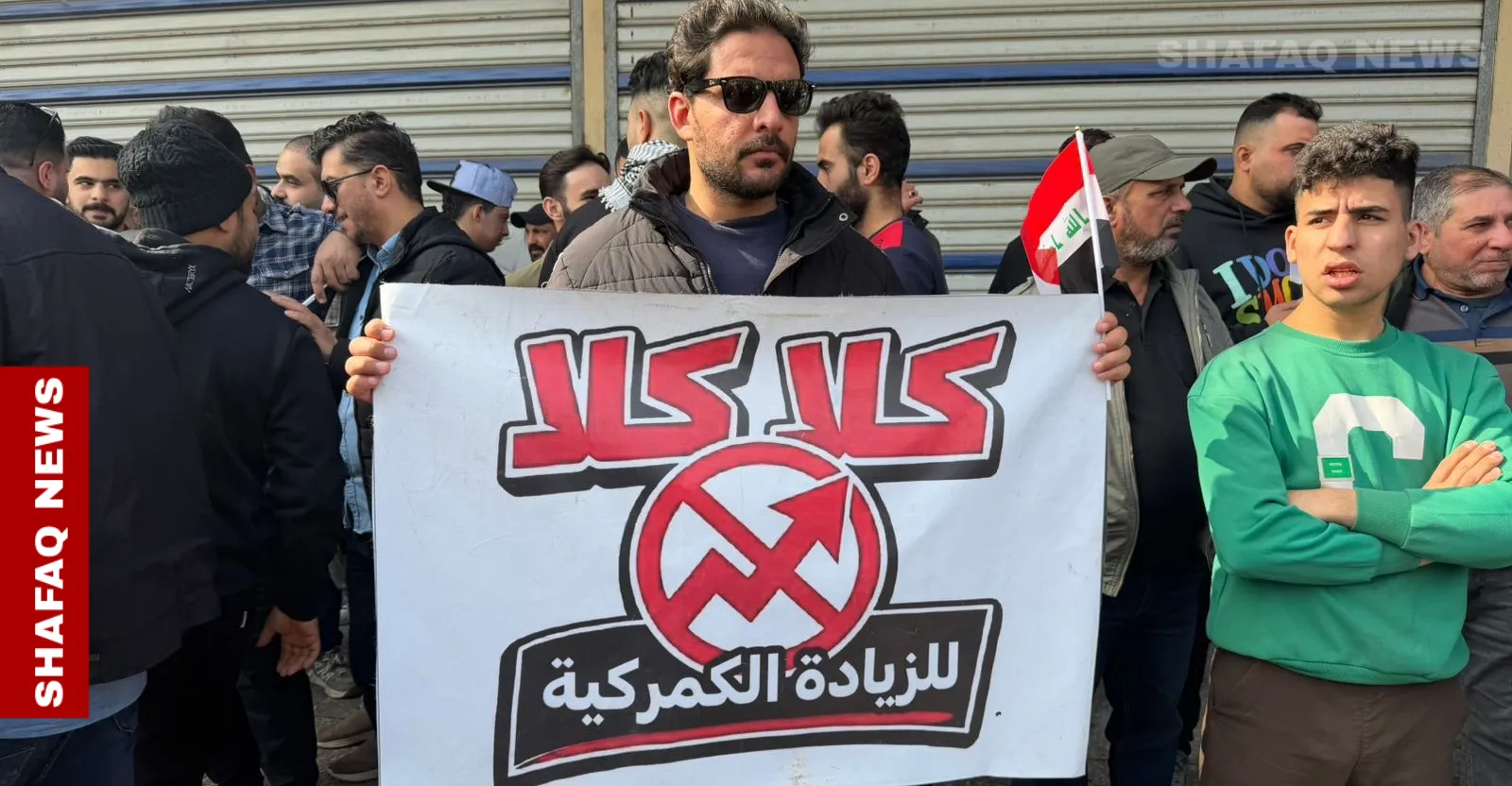
On Sunday, dozens of merchants and shop owners demonstrated on Al-Nidal Street in front of the Customs Authority building in central Baghdad, protesting the new customs tariff and demanding that it be canceled or amended to be in line with the reality of the local market.
The protesters raised Iraqi flags during the demonstration and chanted slogans condemning the recent measures, which they said had burdened them and caused an increase in import costs and a decline in buying and selling activity in the markets.
On Sunday morning, Iraqis woke up to closed shops and markets after traders announced a general strike in protest against the decision to raise customs tariffs in the capital, Baghdad, and a number of central and southern provinces.
Salem Mohammed, an Iraqi merchant, told Shafaq News Agency that “the new pricing has negatively impacted the prices of basic commodities and directly affected the purchasing power of citizens.”
Mohammed pointed out that “continuing to implement it could lead to a widespread economic recession and the closure of more shops,” calling for a review of the decision and warning at the same time of escalating protests if their demands are not met.
Basra
In Basra, the Al-Ashar market in the center of the province witnessed a widespread strike that included the closure of a large number of shops, coinciding with a protest organized by merchants in objection to the decision to raise customs tariffs, amid warnings of economic repercussions that may affect market activity and commodity prices in the province.
Alaa Ahmed, a representative of the protest, told Shafaq News Agency that “the decision to raise customs tariffs has caused significant losses for traders, and has also led to the accumulation of goods inside the Umm Qasr North Port, which has disrupted the movement of goods into local markets.”
Ahmed explained that “traders are facing increasing financial pressures as a result of the rise in customs tariffs in addition to import and transportation costs,” noting that “these measures will be directly reflected in the prices of goods in the markets, which will force traders to pass on part of this increase to consumers.”
He pointed out that “continuing to work with the current decision may limit the flow of trade and affect the stability of the local market,” calling on the concerned authorities to reassess the customs tariff in a way that ensures the protection of commercial activity and preserves the purchasing power of citizens, as well as facilitating the entry of goods and supporting economic activity in the governorate.
shafaq.com
