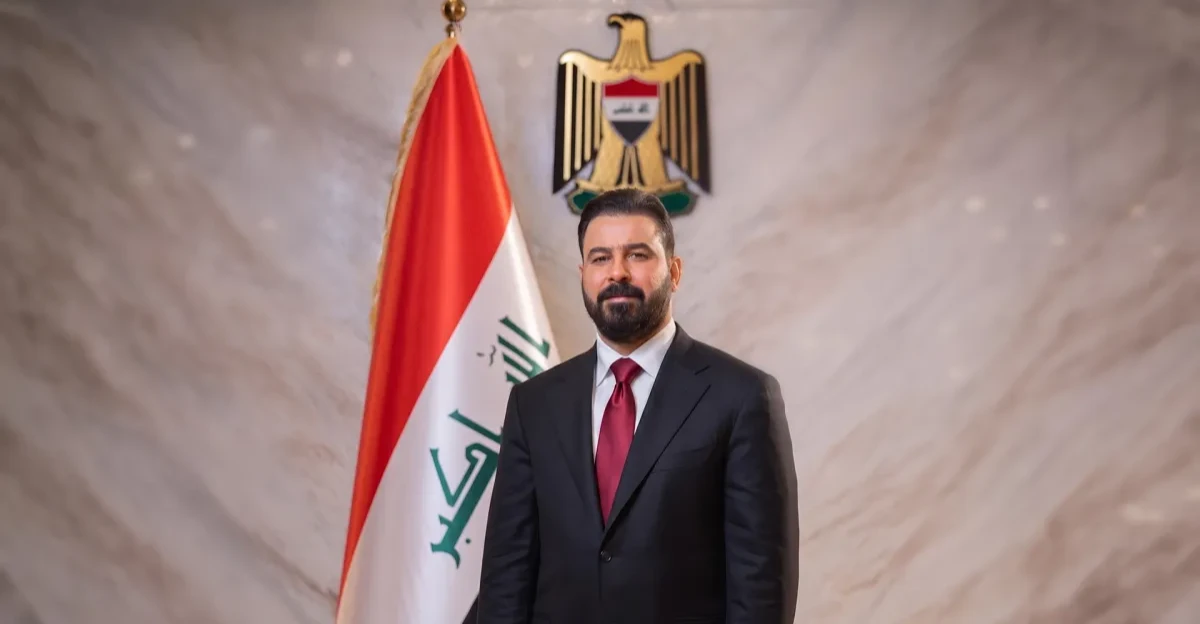
From administration to presidency: Ali al-Zaidi, the compromise candidate who is testing the limits of the Iraqi system.
From administration to presidency: Ali al-Zaidi, the compromise candidate who is testing the limits of the Iraqi system.
2026-04-28
 Shafaq News – Baghdad
Special analysis
Ali al-Zaidi was not the most prominent name in the prime ministerial struggle. He did not lead a broad election campaign, he did not appear as a party leader, and he was not part of the political generation that Iraqis were used to seeing moving between parliament, the government, and influential blocs.
But, at a moment of deadlock within the coordination framework, he became the name that could pass, and he was one of the youngest in the administration of Iraqi governments.
After weeks of negotiations between the head of the State of Law Coalition, Nouri al-Maliki, and the outgoing Prime Minister, Mohammed Shia al-Sudani, and with the end of the constitutional deadline, the forces of the Coordination Framework chose the young businessman Ali al-Zidi as a candidate for the next government. According to political sources, the choice was less an expression of one side’s victory over the other, and more an expression of everyone’s desire to avoid an open defeat.
Al-Zaydi, who hails from the Al-Shatra district in Dhi Qar Governorate, enters the scene from a different perspective than most Iraqi prime ministers after 2003. He is not a traditional party leader, but rather an economist, administrator, and banker. He holds a master’s degree in banking science and a bachelor’s degree in law. He previously served as chairman of the board of directors of the South Islamic Bank. His name is also associated with the National Holding Company, the People’s University, and Dijlah Satellite Channel, in addition to commercial ties with Al-Awais Company, which is one of the well-known entities in the food basket supply lines through contracts with the Ministry of Trade.
This background gives him, in the eyes of his supporters, the image of an administrator capable of dealing with the state as an economic system, not merely as an arena for partisan conflict. But it also places an early burden on him, for in Iraq, capital is not easily separated from politics, and extensive commercial relations are never without questions surrounding contracts, influence, and networks of vested interests.
This aspect is made more sensitive by Al-Zaydi’s previous association with the South Islamic Bank, one of the banks included in the measures to ban dollar transactions through the Central Bank of Iraq, as part of a campaign that came after Iraqi-American communication to reduce money laundering and illegal uses of the US currency.
According to publicly available information, there is no confirmation that al-Zaidi himself is personally listed on direct US sanctions lists, but his connection to a bank that has been subject to financial measures will remain a point of internal and external scrutiny, especially in any future dialogue with Washington regarding the dollar, banks, and transfers.
Behind the scenes of the assignment
According to a source within the coordination framework, Al-Zaydi was not a sudden addition to the nomination lists. His name was among the first list that included 29 figures, and with the failure of multiple mediations to contain the disputes, Al-Zaydi’s name returned as an option that seemed unexpected to many.
In Baghdad, this is not a procedural detail, as choosing a prime minister is not simply a matter of naming a person, but a redistribution of power. Whoever obtains the position may have to relinquish some ministerial portfolios. Therefore, al-Zaidi appeared, to certain factions within the system, as a useful candidate because he did not carry the weight of a clear party agenda, nor did he compel other parties to acknowledge the victory of a direct rival.
Other sources told Shafaq News Agency about the role of the head of the judiciary, Faiq Zaidan, in presenting Al-Zidi as a compromise candidate after the dispute between Al-Maliki and Al-Sudani reached a dead end.
On the Sunni side, the welcome came quickly through its prominent leaders. A source in the “Sunni political house” said that al-Zaydi has good relations with Mohammed al-Halbousi, Khamis al-Khanjar and Muthanna al-Samarrai, as he is a man of economics and investment, not a man of direct political rivalry.
The source added that al-Zaidi resides in Jordan and has connections with political and financial figures inside and outside Iraq, particularly in Jordan and Britain.
The welcome was not limited to Sunni forces. The Kurdish leader Masoud Barzani blessed the appointment, preceded by the President of the Kurdistan Region, Nechirvan Barzani, and the Prime Minister of its government, Masrour Barzani. On the external level, Jordan, Britain, France, and Germany rushed to welcome it, indicating that the capitals concerned with the Iraqi file view al-Zaidi, at least until now, as a figure who can be dealt with and not a Saddamite extension of any axis.
In contrast to the swift welcome, the positions of Washington and Tehran have thus far appeared more ambiguous. The two capitals with the greatest influence on Baghdad’s power dynamics have not yet issued a clear official statement on al-Zaidi’s nomination. The United States is monitoring the incoming government from the perspective of issues related to the dollar, banks, and armed factions, while Iran is observing the balance of power within the Shia political establishment and the new candidate’s ability to maintain the existing power structure.
Shafaq News also contacted people close to the religious authority in Najaf to inquire about its position on the assignment, but they declined to comment at this stage, a position consistent with the religious authority’s well-known approach of avoiding direct comment on names before the government formation process becomes clear.
In parallel, information reached Shafaq News indicating that some Islamic factions and movements within the Shiite environment are still expressing reservations about the assignment, whether due to al-Zaydi’s economic and banking background, or due to their fear that his selection is part of a broader settlement that redistributes influence within the next government.
But what is most striking about his network of relationships is what political sources say about his close ties to the private office of Muqtada al-Sadr, the leader of the Sadrist movement. This relationship, if it remains within the bounds of personal acceptance, could give him a rare advantage at a time when the Sadrist movement is absent from parliament but not from the streets.
However, those close to the movement are usually careful to separate personal relationships from the official political position, which means that any reliance on direct Sadr cover would be exaggerated unless a clear position is issued by the leader of the movement himself.
Herein lies one of al-Zaidi’s paradoxes. The man, whom private sources describe to Shafaq News Agency as a friend to all, may find that this quality is not enough to govern Iraq, as broad acceptance helps in the nomination, but it does not guarantee the formation of a government. Moreover, multiple relationships open doors, but they may quickly turn into constraints if each party demands its share within the cabinet, which is what the sources expected, that al-Zaidi would face obstacles in the way of forming his ministerial cabinet.
In his first statement, Al-Zaidi spoke about confronting internal and external challenges, assessing risks, and seizing opportunities, and said that Iraq’s economic potential allows for the management of a capable state.
The language was more akin to that of an administrator than a combatant, but it will soon be tested on issues that cannot be managed solely through numbers. The incoming government will face mounting American pressure regarding armed factions and weapons outside state control, a highly sensitive relationship with Iran, and the repercussions of the regional war on the economy and security, in addition to the issues of the dollar, banks, corruption, and public services. It will also face a more complex internal question concerning its ability to survive among the Shiite forces themselves, after the nomination process revealed that the coordinating framework is no longer a solid bloc but rather a coalition of competing interests.
Thus, al-Zaydi finds himself facing a double test. First, he must form a government that satisfies the Sunni and Kurdish blocs without provoking the Sadrists or quickly clashing with Washington or Tehran. Second, he must answer a deeper question concerning his political identity: Is he an economic technocrat who came to rescue the state from the political deadlock, or a businessman who rose through the very post-2003 system that produced this deadlock?
In Baghdad, prime ministers often begin with broad compromises, only to find themselves constrained by those same compromises. Al-Zaidi, if he passes through parliament, will be no exception. He will be a young prime minister in a country described as politically aging, a businessman in a system that swallows up businessmen when they get too close to power, and a consensus candidate at a time when compromises seem like nothing more than a brief respite before a greater test.
shafaq.com
