“Double Win”: US Forces Expected to Remain in Erbil Beyond 2026
“Double Win”: US Forces Expected to Remain in Erbil Beyond 2026
2025-10-08 04:08
 Shafaq News – Special Translation
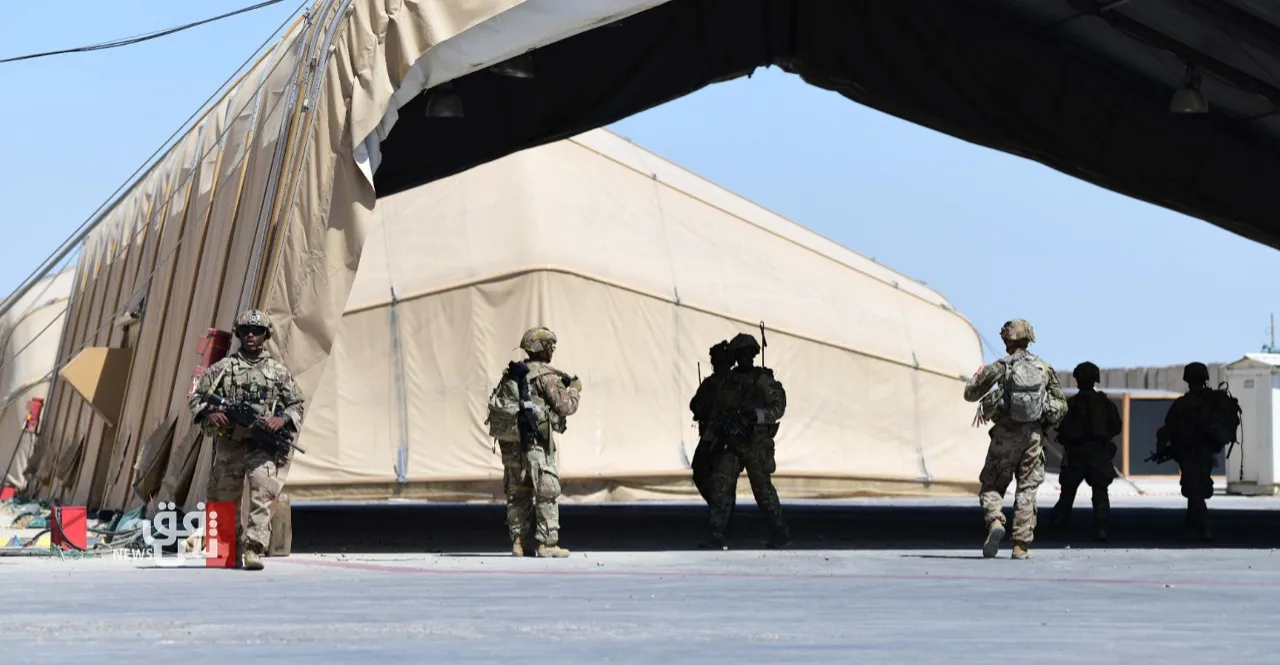
Forbes magazine highlighted the vital role played by the Kurdistan Region in the war on terror, as US forces leave the federal provinces and relocate to Erbil, a role they have played for more than a decade.
The US report, translated by Shafaq News Agency, described the deployment of forces in Erbil as not surprising, describing the city as “home to long-standing Kurdish allies of the United States.”
He pointed out that “these US moves come within the framework of implementing the phased withdrawal of forces reached between Washington and Baghdad,” noting that “US forces began leaving Ain al-Asad Air Base in August, ahead of the agreed-upon deadline of September 2025.”
Once the US deployment in Erbil is complete, fewer than 2,000 US troops will remain in Iraq, the vast majority of them in the Kurdistan Region, according to the report. The report also confirmed that Washington will continue to support counter-ISIS missions in neighboring Syria from Erbil Air Base until at least September 2026, meaning Erbil will serve as a critical headquarters for continued US support and engagement in counter-ISIS operations.
According to the report, given plans to expand the number of helipads at Erbil Air Base, located within the city’s international airport, US forces may remain there beyond 2026, especially if the situation in Syria remains unstable. The report added that last September alone saw 25 ISIS attacks in northeastern Syria, resulting in the deaths of 40 civilians and US-backed allied fighters.
He also noted that a US airstrike in northeastern Syria killed a prominent ISIS leader who was responsible for planning external attacks. He noted that Erbil, given its geographical proximity, ease of access, and relative security, is a vital launching pad for such operations against ISIS.
The report continued, saying: “It is not surprising that some of the helicopters carrying the US Special Forces that killed ISIS leader Abu Bakr al-Baghdadi in Syria’s Idlib province in October 2019 took off from Erbil,” explaining that “ISIS was at the height of its power in June 2014, when al-Baghdadi declared the establishment of a caliphate across vast areas he had conquered in Iraq and Syria. Two months later, he made the decision to attack the Kurdistan Region.”
He explained that the Obama administration only authorized US strikes against ISIS when the militants approached Erbil, which marked the beginning of the US-led war that ultimately destroyed the “caliphate.” He noted that the Peshmerga forces held out against ISIS for years and prevented it from expanding further.
The report stated that their efforts paved the way for the Iraqi counteroffensive that later recaptured Mosul, the country’s second-largest city, while the Kurdish-led, US-backed Syrian Democratic Forces (SDF) recaptured Raqqa, which served as ISIS’s de facto “capital” until the group was expelled from its last remaining territory near the Iraqi border in October 2017 by March 2019.
However, the report noted that ISIS still has dormant cells in both Iraq and Syria, even though it no longer controls large swaths of territory. This, it added, requires continued US support for the SDF’s efforts to combat ISIS.
According to the details, the base in Erbil allows the United States to continue providing this essential support, especially as Washington is reducing its forces in Syria from 2,000 to less than 1,500, and the number of its bases there from eight to just one. He stressed that the US military has always played a key role in protecting Erbil and the Kurdish experience of self-rule since the 1991 Gulf War, through the US-led no-fly zone over much of the region to protect the Kurds from Saddam Hussein’s forces.
The report cited Kurdish leader Masoud Barzani’s telling journalist David Hearst in 1993 that he had received assurances from his allies, led by the United States, that they would intervene if Saddam’s forces attacked Kurdish population centers with artillery or missiles.
In addition, he believes that the Kurdistan Region played a significant role in the region at the outset of the war to overthrow Saddam Hussein, as US forces used the Harir Air Base in Erbil Governorate. He noted that during the subsequent Iraq War, not a single US or coalition soldier was killed in the Kurdistan Region.
The report addressed Iran’s direct targeting of the Kurdistan Region twice with ballistic missiles, in March 2022 and January 2024. Both attacks targeted the private residences of wealthy businessmen in the region. It noted that in April 2024, the US MIM-104 Patriot air defense system deployed in Erbil intercepted at least one Iranian ballistic missile heading toward Israel.
It is unclear whether the same system was in place during previous attacks directly targeting Erbil, leading some to question whether this Patriot system was meant to protect Kurdistan or Israel, according to the report. In either case, the report argues, the US presence in Erbil represents a double win for both the US and the Kurdistan Region. For the US, it would have guaranteed access to a strategically located base from which it could ensure that ISIS would not re-emerge from the Middle East.
For the Kurds, while the presence of US forces may attract occasional militia attacks on their territory, it also provides broad reassurance that the region will not be overrun by forces such as ISIS or Iranian-backed militias.
shafaq.com
