Disarmament negotiations reach a “near-dead end,” and a close associate of al-Zaydi warns of a “confrontation.”
Disarmament negotiations reach a “near-dead end,” and a close associate of al-Zaydi warns of a “confrontation.”
2026-11-05
 Shafaq News – Baghdad
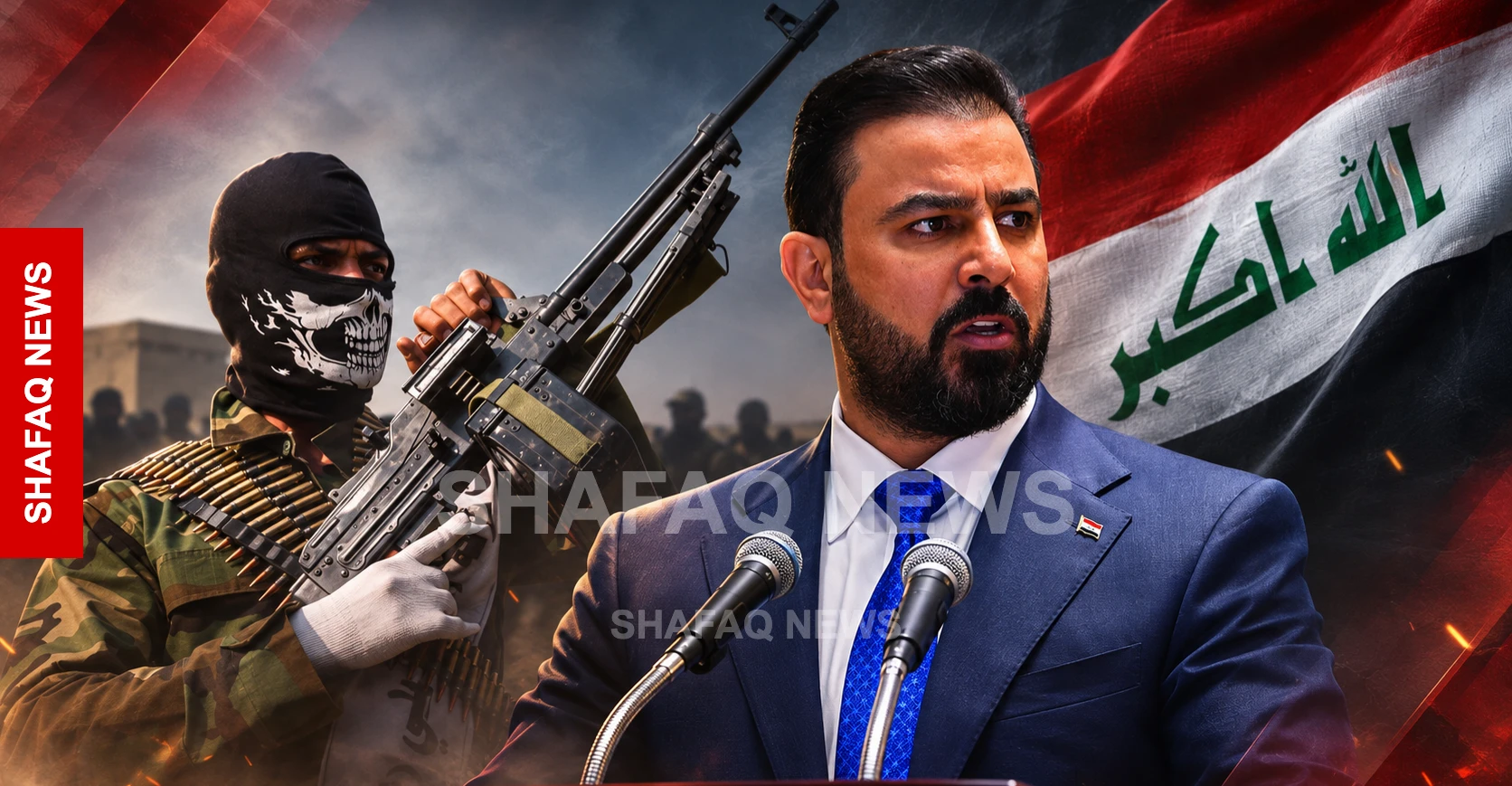
A government source close to Prime Minister Ali al-Zaidi revealed on Thursday that negotiations regarding the disarmament of armed factions have reached a near-dead end, warning of the possibility of media escalation spilling onto the streets and impacting the security situation.
The source told Shafaq News Agency that “the dialogue regarding the disarmament of the factions has reached a near-closed road, in light of the factions’ continued refusal to hand over their weapons,” noting that this prompted them to resume media escalation against Prime Minister Ali al-Zubaidi and his government, as well as against the coordinating framework that is negotiating with them through a specialized committee.
He warned that continued media escalation could push the confrontation from political statements and positions to the street, which could have repercussions on the security situation.
He added that influential parties within the coordination framework have, in the past few hours, made moves and contacts to calm the situation and contain the escalation between all parties, in an attempt to prevent the disputes from worsening.
This comes after Abu Mujahid al-Assaf, the security official of the Hezbollah Brigades, directed criticisms at the government and direct questions to the leaders of the Coordination Framework on Tuesday regarding political, security and economic files, including oil sales contracts with the Emirati company “ADNOC”, as well as accusing the government of not fulfilling its promises.
Al-Assaf pointed out that the “Islamic Resistance” is still waiting for a copy of the agreement signed with the Coordinating Framework Committee, while confirming that it has stopped carrying out any military operations inside Iraq until further notice.
An informed source revealed to Shafaq News Agency last Tuesday that some members of the four-member committee tasked with negotiating with the factions, including Badr Organization leader Hadi al-Amiri, were displeased with Prime Minister Ali al-Zubaidi’s interference in the negotiations by holding separate meetings with leaders of factions that refuse to hand over their weapons, fearing that these moves would have the opposite effect.
The source explained at the time that the committee had made progress in its dialogues and that it was committed to completing its mission by the end of June 2027, while new information indicates the continuation of disagreements that are hindering reaching a final settlement.
The issue of restricting weapons to the state is one of the most prominent contentious issues between the government and armed factions, as factions, including Kataib Hezbollah, Harakat al-Nujaba and Kataib Sayyid al-Shuhada, have previously announced their refusal to relinquish their military capabilities.
These developments coincided with the announcement by the commander of the Quds Force in the Iranian Revolutionary Guard, Ismail Qaani, on Wednesday, that the leaders and members of what Tehran calls the “Resistance Front” had declared in writing their “absolute loyalty” following the directives of the Iranian Supreme Leader, Mojtaba Khamenei, regarding dealing with the enemy without geographical restrictions, stressing that they had received the message at the highest level and had begun to act on its content.
Last Saturday, Khamenei issued directives to senior Iranian military commanders to respond immediately to any potential threat without geographical restrictions.
In another message marking the anniversary of November 4, Khamenei praised what he called the achievements of the “resistance front” in Iraq, Lebanon, Palestine and Yemen, stressing the importance of “unity of arenas” and warning that any new American attack on Iran would be met with a broader military response.
In contrast, al-Zaydi’s moves to restrict weapons to the state are supported by several Shiite political parties, most notably the Shiite National Movement led by Muqtada al-Sadr, the Wisdom Movement headed by Ammar al-Hakim, as well as Asa’ib Ahl al-Haq led by Qais al-Khazali and the Imam Ali Brigades, which announced steps to sever their armed formations’ ties to party frameworks and subject them to the authority of the state.
This approach also enjoys declared American support, as the US State Department had previously confirmed to Shafaq News Agency its support for al-Zaidi’s efforts to extend state sovereignty, confiscate weapons, and prevent armed attacks, while the White House stressed the need to transfer the factions’ weapons to the federal government, amid continuing internal disputes regarding the conditions for handing over weapons and the guarantees required to implement the operation.
shafaq.com
