Armed with the “Saraya al-Sadr” militia, al-Zaydi inaugurates a new era for Iraq without factions.
Armed with the “Saraya al-Sadr” militia, al-Zaydi inaugurates a new era for Iraq without factions.
2026-05-29
 Shafaq News – Baghdad
A government source confirmed on Thursday that the move by the leader of the Shiite National Movement, Muqtada al-Sadr, came as a quick response to direct messages sent by Prime Minister Ali al-Zubaidi to the political forces that have armed wings, urging them to “disband them and integrate their members into official institutions.” Experts confirmed that disbanding the Peace Brigades would strengthen the government’s position and embarrass the rest of the armed forces.
The source told Shafaq News Agency that “Prime Minister Ali al-Zubaidi sent direct messages to the leaders of the political forces, whether within the Shiite bloc or the rest of the components, demanding the dissolution of their affiliated military wings, in order to build a new Iraq that adheres to the law and is far from the language of weapons, especially since there is no longer a need for the existence of those armed formations, which necessitates handing over their weapons to the state.”
He noted that “separate meetings and gatherings will be held between the Prime Minister and political leaders, particularly the forces of the Coordination Framework, to agree on a mechanism for handing over weapons and integrating the elements of those armed wings.”
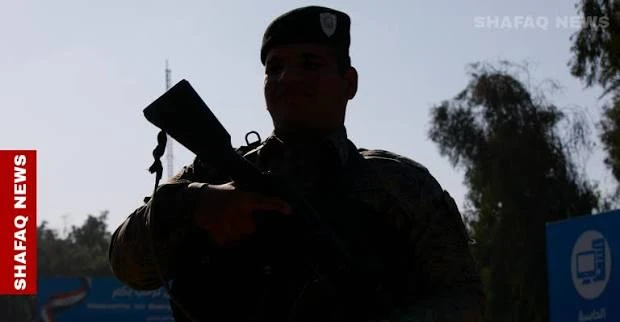
According to the source, al-Sadr’s decision to dismantle the Peace Brigades and attach them to the Commander-in-Chief of the Armed Forces represents a supporting and striking force in the hands of al-Zaydi. Consequently, there will be no orders issued by the Brigades’ Jihadist Assistant, but rather their movements will be exclusively under the command of the Commander-in-Chief, without any organizational or political connection to the Shiite National Movement. This will facilitate the performance of their tasks in the future, away from any embarrassment related to their previous authority.
According to the source, the disengagement of three brigades belonging to the Saraya (313, 314 and 315), which include approximately 9,000 members, represents a clear message to all political forces about the necessity of dissolving their armed wings, and it is also a lifeline for everyone to hand over weapons in a peaceful and official manner.
According to the same source, some political forces have become embarrassed by al-Sadr’s move, and are currently trying to reorganize their armed wings and move in the same direction.
In contrast, a source within the coordination framework stated that dismantling the Peace Brigades and handing over their weapons to the state could constitute a gateway for the Sadrist movement to return to the political process, which will be determined by subsequent steps.
The source told Shafaq News Agency that attaching three important brigades to the Commander-in-Chief of the Armed Forces represents direct support for the current government, which does not come from a particular political party, thus giving it a wider scope to make and implement decisions.
For his part, academic and political researcher Ghalib al-Daami said that “al-Sadr’s move will strengthen al-Zaydi’s control over weapons not under the authority of the state, and it will embarrass the armed factions outside the framework of the state and weaken the justifications for their refusal to hand over weapons to the Iraqi government.”
Al-Daami explained that “some members of Saraya al-Salam are affiliated with the Popular Mobilization Forces and receive their salaries from it, while the civilian side of the Saraya will join the Al-Bunyan Al-Marsous Foundation, which is a civilian formation concerned with providing support and humanitarian aid.
Most of the current armed factions trace their roots back to after 2003, when armed formations emerged in connection with the security vacuum that followed the American invasion of Iraq, and then expanded significantly after ISIS invaded large Iraqi cities in 2014.
At that stage, the Peace Brigades were formed as a military force in response to al-Sadr’s call to protect holy sites, in parallel with the integration of other factions into the Popular Mobilization Forces, which later became an official umbrella for a large number of armed formations.
But this merger did not end the multiplicity of power centers, but rather established a complex scene that combines the state, factions, and political and partisan authorities, which made the “weapons control” file one of the most problematic files in Iraq.
shafaq.com
