An Iraqi minister attributes the housing crisis to corruption: 300 properties and orchards are controlled by two individuals, one of whom is Al-Jumaili.
An Iraqi minister attributes the housing crisis to corruption: 300 properties and orchards are controlled by two individuals, one of whom is Al-Jumaili.
2026-08-29
 Shafaq News – Baghdad
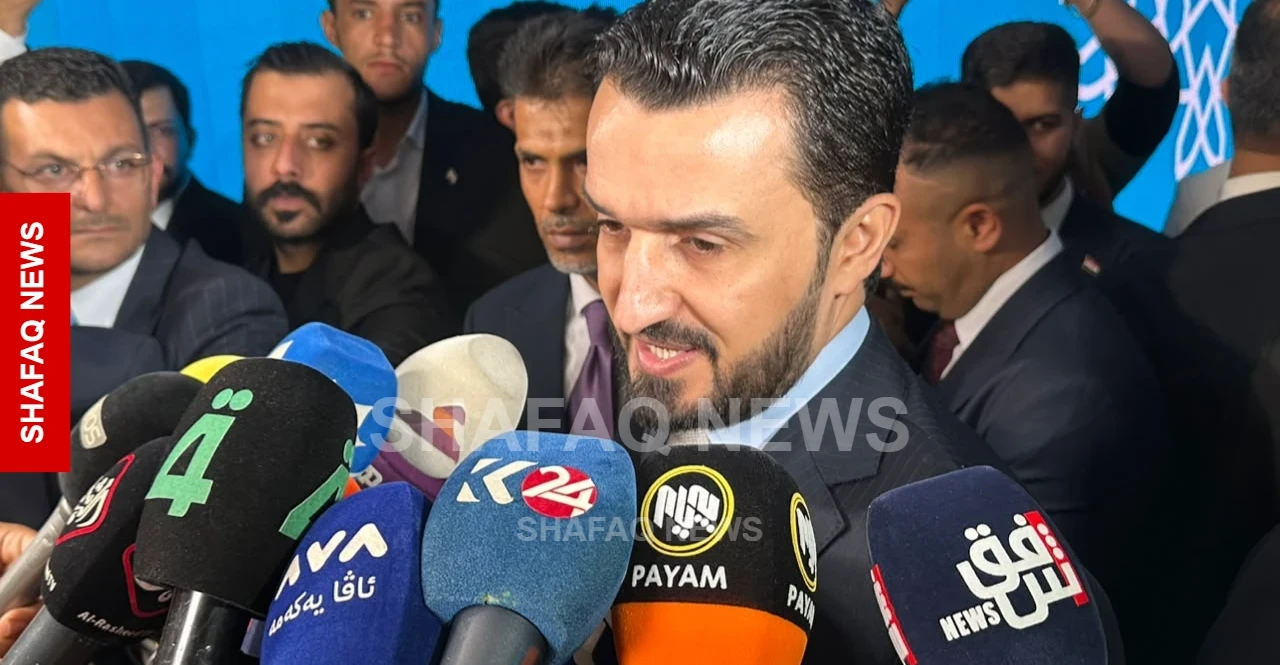
Iraqi Minister of Communications Mustafa Jabbar Sand attributed the housing crisis in the country on Saturday to widespread corruption, real estate hoarding, and the acquisition of real estate assets by influential people, noting that just two people own more than 300 properties and orchards.
Sand said in a post on social media that “the assistant director of the Real Estate Registration Department in Salah al-Din Governorate owns 95 properties, while the detained defendant Adnan al-Jumaili owns 210 properties and orchards,” indicating that these acquisitions by only two people reflect a large amount of hoarding separate from legitimate money based on legal work.
He added that “about 46 million citizens are competing for 8 million homes across the country, which makes a housing crisis inevitable,” noting that this is happening amidst the accumulation of illicit wealth in real estate, gold, and cash that rightfully belong to everyone as public funds.
Sand stressed that “striking at corruption will heal part of the economic problems, while understanding the economy and controlling the rules of supply and demand will address the other part.”
This comes in conjunction with what the investigating judge of the Central Anti-Corruption Criminal Court announced in mid-August, that in coordination with the Kurdistan Region, $20 million, $340,000, and 200 million Iraqi dinars were seized, in addition to the recovery of 60 kilograms of gold and the seizure of 7 cars, in the case of the Undersecretary of the Ministry of Oil for Liquidation Affairs, the accused detainee Adnan Al-Jumaili, and the parties involved with him.
A statement issued by the Supreme Judicial Council quoted the judge as saying that the follow-up and investigation procedures to seize the financial proceeds resulting from the waste in the projects implemented by the accused and the parties involved in the case resulted in the seizure of the aforementioned sums of money, gold jewelry and vehicles, stressing the continuation of investigations and the pursuit of the other involved parties, until the completion of legal procedures against them.
It is noted that the case of the Undersecretary of the Ministry of Oil for Refining Affairs, Adnan al-Jumaili, has been ongoing for about two months, and has affected deputies and officials who were arrested in various areas of Baghdad, including the Green Zone, as part of what was called “Operation Dawn”.
Billions of Iraqi dinars, millions of dollars, jewelry, and gold bullion were subsequently seized in the homes and farms of Iraqi officials and politicians, while the judiciary and the Integrity Commission vowed to continue arresting those accused of corruption as part of a campaign launched by Prime Minister Ali Faleh al-Zaidi for this purpose.
Earlier on Saturday, the Federal Integrity Commission announced the arrest of the husband of the assistant director of the Real Estate Registration Directorate in Salah al-Din, who was detained pending an investigation into money laundering and concealing the ownership of dozens of properties registered in his name and in the names of relatives and associates.
The commission reported that a team from it carried out a judicial warrant issued against the husband of the detained accused, the assistant director of the Real Estate Registration Directorate in Salah al-Din, as part of a parallel investigation into the suspicion of money inflation and illicit gain by her, and after moving to her house in the city of Tikrit and searching it, indicating that the accused’s husband admitted that approximately (27) properties were registered in his name fictitiously, while other properties were registered in the names of her relatives and some of the brokers who dealt with her, and that their real ownership belongs to his wife, and that the amounts of their purchase came from receiving bribes from citizens and benefiting from the public office.
She added that the search of the accused’s house resulted in the seizure of a large number of original real estate deeds, documents, and foreign purchase contracts for about (95) properties in the governorates of Salah al-Din, Baghdad, and Diyala, noting that the initial investigations showed that some of them were registered in the names of the accused’s husband, her parents, her relatives, and some of the brokers who dealt with her, with the intention of concealing their true ownership and evading legal responsibility, since the accused is one of those required to submit a financial disclosure statement.
She indicated that the seized items included, in addition to real estate deeds, real estate records, (31) statements containing fingerprints of people on blank paper, (4) computers, including a computer for opening “barcodes” belonging to the Real Estate Registration Directorate in Salah al-Din, which were stored in the accused’s house, in addition to sums of money in Iraqi dinars and US dollars, a box containing various gold jewelry, a collection of purchase contracts, powers of attorney and citizens’ transactions, as well as the seizure of a modern car belonging to the accused’s husband.
shafaq.com
