Ahmed Al-Bashir recalls the paradox of Al-Maliki and the contact with Al-Abadi and asks: Is Al-Zaydi (AI)?
Ahmed Al-Bashir recalls the paradox of Al-Maliki and the contact with Al-Abadi and asks: Is Al-Zaydi (AI)?
2026-05-14
 Shafaq News – Washington
Mustafa Hashim
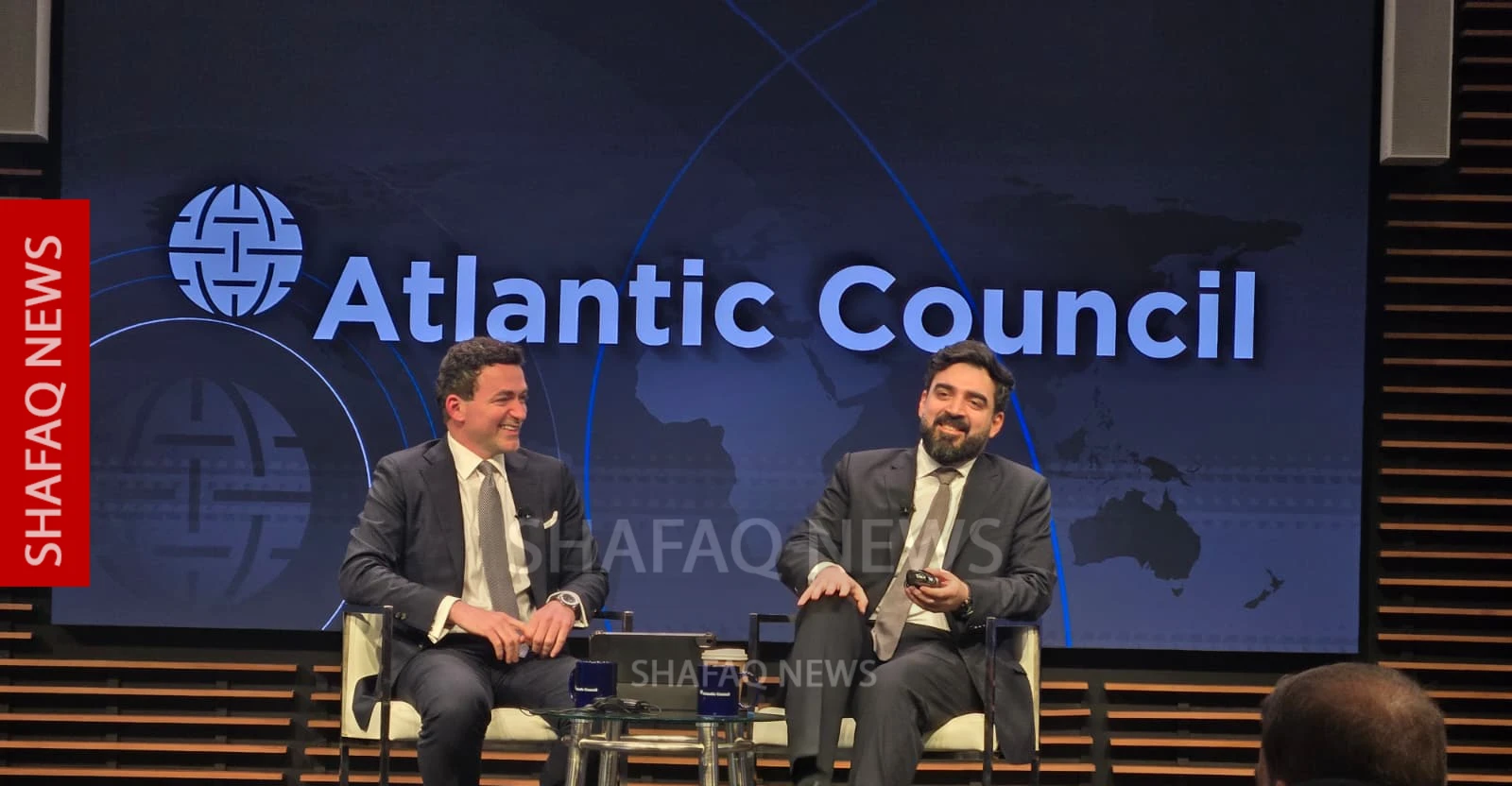
During a dialogue session at the Atlantic Council forum, Iraqi journalist Ahmed Al-Basheer mocked the mechanism for selecting heads of government in Iraq, saying that the rise of businessman Ali Al-Zaidi as a candidate for prime minister reflects a broader crisis in the political and electoral process since 2005.
Al-Bashir said, in an intervention that was mostly sarcastic, and which was attended by a correspondent from Shafaq News Agency, “We woke up one morning to find news saying that Ali al-Zaidi is the next prime minister. To be honest, I had never heard of him politically before, all I know is that he is a big businessman, and I personally consume his food products when I am abroad… he feeds us all.”
He continued: “We don’t know anything about this man; what is his ideology? Is he an Islamist? A liberal? An atheist? No one has an answer because he simply hasn’t given a single interview in his life. We are dealing with a phantom prime minister; we don’t even know the tone of his voice, and the voice we will hear in the future may just be artificial intelligence (AI).”
In his usual style of criticizing appearances, Al-Bashir mocked the image of Al-Zaidi that was circulated by the media: “The presenter said we have an (unconfirmed) image of the next candidate, and when the image appeared I was shocked. I was expecting a sixty-year-old man in a classic suit with a thick mustache and a mismatched shirt as is customary in Iraq, but I found a young man in his forties who looks like your friend whom you meet in the cafeteria to smoke shisha, and not the man who will run a country with the problems of Iraq.”
Al-Bashir moved from criticizing the “person” to criticizing the “system,” stressing that the voting process in Iraq has become devoid of real value, as he said: “I do not see any benefit in the elections anymore. Since 2005, the results have been going in one direction, and external forces (America and Iran) impose another person. We tire ourselves out with voting while the nine leaders sit to decide who is next. Why don’t we play this game without purple ink and without losing 3 trillion dollars?”
He argued that elections in Iraq have lost their true meaning, saying: “I see no reason to go to the ballot boxes as long as the final decision is cooked up in closed rooms among nine leaders. Historically, Iraqis vote for one side, and America or regional powers impose another side.”
Regarding the performance of the deputies, Al-Bashir described the parliament as a “gold mine” for its comedic material, explaining that the deputy’s decision does not stem from his conviction but from a “WhatsApp message” that he receives from the head of his bloc dictating when to raise his hand and when to leave the hall. He added: “Our deputies only show their professionalism and concern when a woman appears in a short skirt on television. Here they turn into guardians of values, but in the oil and corruption files… they are just puppets.”
In a segment that elicited laughter from the audience, Al-Bashir spoke about his “symbolic” attempt to run for the presidency after reaching the age of forty, explaining that the political system had placed “laughable” obstacles to prevent him, including the requirement of personal attendance and a “physical examination”.
He asked sarcastically: “Did they physically examine the former presidents? Did they have to run around the parliament building, for example?”
He stressed that he only aspired to see his name on the voting “board” inside parliament, confidently asserting: “If my name had been put on it, I would have received at least five votes, not out of love for me, but out of spite from some MPs towards their opponents.”
Freedom of expression… or “settling scores”?
When asked about the abundance of satellite channels and freedom of criticism in Iraq, Al-Bashir responded sarcastically: “Yes, we have hundreds of channels, but they are just like our democracy. There is no real freedom of expression. Every media outlet is affiliated with a certain party. They insult the other side only because they want to sit at the negotiating table to gain advantages. As soon as they agree, this (freedom) disappears.”
He added: “I have been criticizing everyone for 11 years and I am fine… Why? Because I am simply outside of Iraq. If I were inside, the story would be completely different.”
But he said: “You will laugh when I say this, but the period that witnessed the greatest freedom of expression for journalists was during the era of Nouri al-Maliki. He did not pursue me legally despite everything I said.”
He also recalled an incident with former Prime Minister Haider al-Abadi: “I (lashed out) at al-Abadi on my program for years, and when he left office, he called me and thanked me. He said to me: Thank you for revealing to me the snakes that were surrounding me. I felt a sense of accomplishment at that time, but after that we started to decline downwards, until we reached a point where people are now afraid to write a comment criticizing the government.”
Al-Bashir did not miss the opportunity to mock the legal issues that are pursuing content creators in Iraq: “We have reached a stage where a person may be imprisoned for a whole night because of a tweet about a governor. There are even those who are being prosecuted because they criticized (the quality of food) in restaurants. It seems that we will reach a stage where it is forbidden to criticize (cooking oil) because it is unpatriotic.”
Regarding the impact of his program, Al-Bashir admitted: “At first, I thought I would change the world instantly with one word. Then I was disappointed after the 2018 and 2021 elections. But now I believe that change takes time. Iraqis will reclaim their country from the militias and the corrupt at some point, just as the Tishreen youth surprised me. I am waiting for that next surprise, and no Iron Man will come to save us, we will do it ourselves.”
Al-Bashir also revealed his future plans, confirming that he is undertaking a stand-up comedy tour in several American states (Houston, Arizona, Chicago, and others), and announced a surprise: “Next year I will launch my first special show in English (Hour Special), in which I will explain the history of Iraq and my life in a comedic way… It will be crazy.”
shafaq.com
