A simple question on paper: “Where are the 2025 budget tables?”, and a more complex question about what the 2026 budget will look like in light of cheaper oil and a heavier deficit.
A simple question on paper: “Where are the 2025 budget tables?”, and a more complex question about what the 2026 budget will look like in light of cheaper oil and a heavier deficit.
2026-01-06
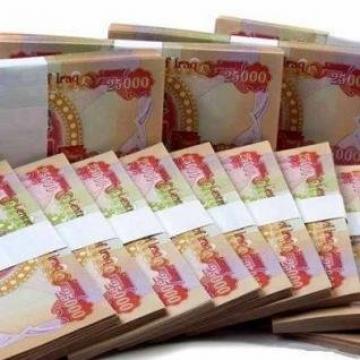 Between a simple question on paper, “Where are the 2025 budget tables?”, and a more complex question about the shape of the 2026 budget in light of cheaper oil and a heavier deficit, the financial scene in Iraq is moving on shaky political ground that makes every numerical requirement a subject of contention and postponement. MP Mudhar al-Karawi summarizes one aspect of the picture when he says, “The 2025 budget tables were expected to reach the Finance Committee in the House of Representatives during February or March of last year, but they have not been sent yet.” But behind this statement lies an entire fiscal year in which public funds were spent without the detailed allocation of expenditures passing through the House of Representatives as required by the constitution, as if trillions of dinars were managed in “dark rooms” beyond the reach of oversight.
The three-year budget law, encompassing the 2023, 2024, and 2025 budgets, was presented to the public as a reform measure that would end the annual budget delays and provide a foundation for three consecutive years of planning. However, the end of 2025 revealed a stark paradox: the state possessed an effective budget law, yet its third year was virtually a “year without schedules.” Spending continued, contracts were signed, and obligations were postponed, while the document meant to explain to Iraqis how and where their money was spent remained incomplete or had not yet been presented through a clear legislative process.
A full year’s schedules without a clear legislative path
Al-Karawi links the completion of the parliamentary leadership and the formation of committees, particularly the Finance Committee, to the reopening of this stalled issue. With the resumption of sessions, the committee will face two overlapping tasks simultaneously: first, demanding that the government submit the 2025 budget schedules with detailed section by section; and second, developing a clear mechanism for finalizing the 2026 budget by proposing ideas that align with Iraq’s current financial realities, rather than simply repeating the approaches of past years.
The crux of the problem is that Iraq embarked on a “three-year budget” experiment based on a single law covering the years 2023, 2024, and 2025, with massive spending figures, a clear deficit, and a hypothetical oil price far more optimistic than the market later proved. The law stipulated the submission of annual schedules detailing how funds were allocated each year, from provincial projects to sectoral allocations. However, in practice, the third year became a gray area; spending continued, obligations persisted, while the schedules that would grant Parliament the right to review and amend them were never submitted, or remained locked away in executive offices.
With this transformation, the “2025 schedules” become more than a financial document; they become a test of the limits of real oversight of public finances, and a mirror reflecting how trillions of dinars can be managed away from public parliamentary debate, at a time when the citizen is asked to bear the consequences of those decisions without being informed of their details.
Who is held accountable for a lost fiscal year?
The question of “Who is accountable?” oscillates between politics, oversight, and the judiciary, and has yet to find a definitive answer. Theoretically, the House of Representatives possesses broad oversight tools; the Finance Committee can request a detailed report from the new government on its spending plans for 2025, summon relevant ministers and officials to explain the reasons for the delays, and even proceed with questioning if it is proven that the delay was not a mere administrative glitch but a deliberate political decision to avoid public debate on the figures.
In contrast, the Financial Control Bureau can present to the representatives and the public a report that answers the direct question of the street: On what basis were hundreds of trillions spent in a year whose schedules were not approved? What is the size of the obligations that were postponed to 2026 without a clear legislative cover? And how did these obligations overlap with the contracts and projects that were extended or referred in light of this vacuum? Opening the “books of 2025” in this way is not a supervisory luxury, but rather a prerequisite to convince people that talk of “financial reform” is not just a slogan for political consumption.
However, the deeper dilemma lies in the conflict of interests; the forces that participated in managing the 2025 budget within the executive branch are almost the same ones that wield significant influence within parliament. Here, accountability becomes a test for the entire political system: Does it possess the courage to subject a full fiscal year to a genuine review, or will the file simply be shelved until it is forgotten under other pretexts?
2026… A new year born from cheaper oil and heavier spending
The biggest challenge, as Al-Karawi points out, is looming from the gateway of 2026. The new year does not start from a zero point, but rather on top of accumulated layers of public spending; inflated salaries that have swallowed up the largest part of the budget, long-term contracts in the electricity and infrastructure sectors, obligations towards the region and governorates, in addition to internal and external debts whose interest accumulates year after year.
Conversely, the oil prices upon which the three-year budget assumptions were based have fallen significantly, meaning that each barrel is now sold at a price lower than the price at which spending was planned. This difference is not confined to tables and calculations, but directly impacts the state’s ability to fund salaries and services, as well as its margin for investment spending. Therefore, Al-Karawi warns that the financial situation in 2026 “will not be easy,” and that it “necessitates taking decisions that will provide a degree of flexibility and fluidity in financial dealings, secure funding for government departments, and ensure the continuity of the payroll.”
Politically, the 2026 budget appears to be an early test for both the incoming government and the new parliament; it will reveal the extent to which political forces can move from the logic of postponing the problem to the logic of acknowledging the numbers as they are, and bear the cost of moving from the discourse of “oil abundance” to the discourse of managing scarcity with greater transparency before the public.
inventory
In reality, Iraq is discussing a three-year budget with spending ceilings approaching 200 trillion dinars annually, compared to planned revenues of around 135 trillion dinars. This translates to a projected deficit of approximately 65 trillion dinars for each of the years 2023, 2024, and 2025, assuming the assumptions of the budget law are met. These assumptions are based on a hypothetical oil price of around $70 per barrel and daily exports of approximately 3.5 million barrels, including a share of oil from the Kurdistan Region estimated at around 400,000 barrels per day.
With prices repeatedly dropping to levels closer to $60, every $10 difference in price theoretically translates to a loss of approximately 10 to 12 trillion dinars annually in revenue, assuming export volumes remain unchanged. A simple calculation shows that maintaining current spending levels with lower oil prices, and without a radical overhaul of expenditure categories, will push the actual deficit in 2026 into the tens of trillions of dinars. This transforms any talk of a “rescue budget” into merely a recycling of accumulated deficits, effectively carried over from 2023, 2024, and 2025 to the new year under the guise of “continuity.”
From 2025 tables to the financial confidence test with the street
In the background, the 2025 budget remains a stark indicator of how the state manages public finances during moments of political transition. A state that allows an entire fiscal year to pass without providing a detailed account of where its funds went will face a real challenge in convincing its citizens that the 2026 budget is a “rescue” budget, not a “patchwork” one. Iraq, which officially claims to want to move towards serious financial and structural reform, cannot turn a new page before providing an accounting of the previous one: Where were the budgets? Who decided to withhold or postpone them? How much was actually spent on development, and what was diverted to other channels unseen by the public?
What Mudhar al-Karawi raises in his brief statement opens a door that goes far beyond a mere technical inquiry; he puts his finger on a gap between the constitutional text and actual practice. If the political forces want to prove that their talk of “financial reform” is not just a slogan, the starting point will not be choosing a new oil price figure in the 2026 budget, but rather confronting a question that seems simple, yet is far more serious than the headline suggests: How were the trillions of dollars in 2025 managed in “dark rooms,” and who has the courage to open the door for Iraqis to see the whole picture?
burathanews.com
