A political memorandum calls for an end to the “paralysis” of the Kurdistan Parliament and warns against the continuation of the institutional vacuum.
A political memorandum calls for an end to the “paralysis” of the Kurdistan Parliament and warns against the continuation of the institutional vacuum.
2026-05-10
 Shafaq News – Sulaymaniyah
On Sunday, a group of representatives from civil society organizations, writers, intellectuals, university professors, and political and religious figures in the Kurdistan Region called for an end to the Kurdistan Parliament crisis and the urgent resumption of sessions, or the termination of the current session through legal mechanisms, given the continued paralysis of the legislative institution in the region for more than 18 months.
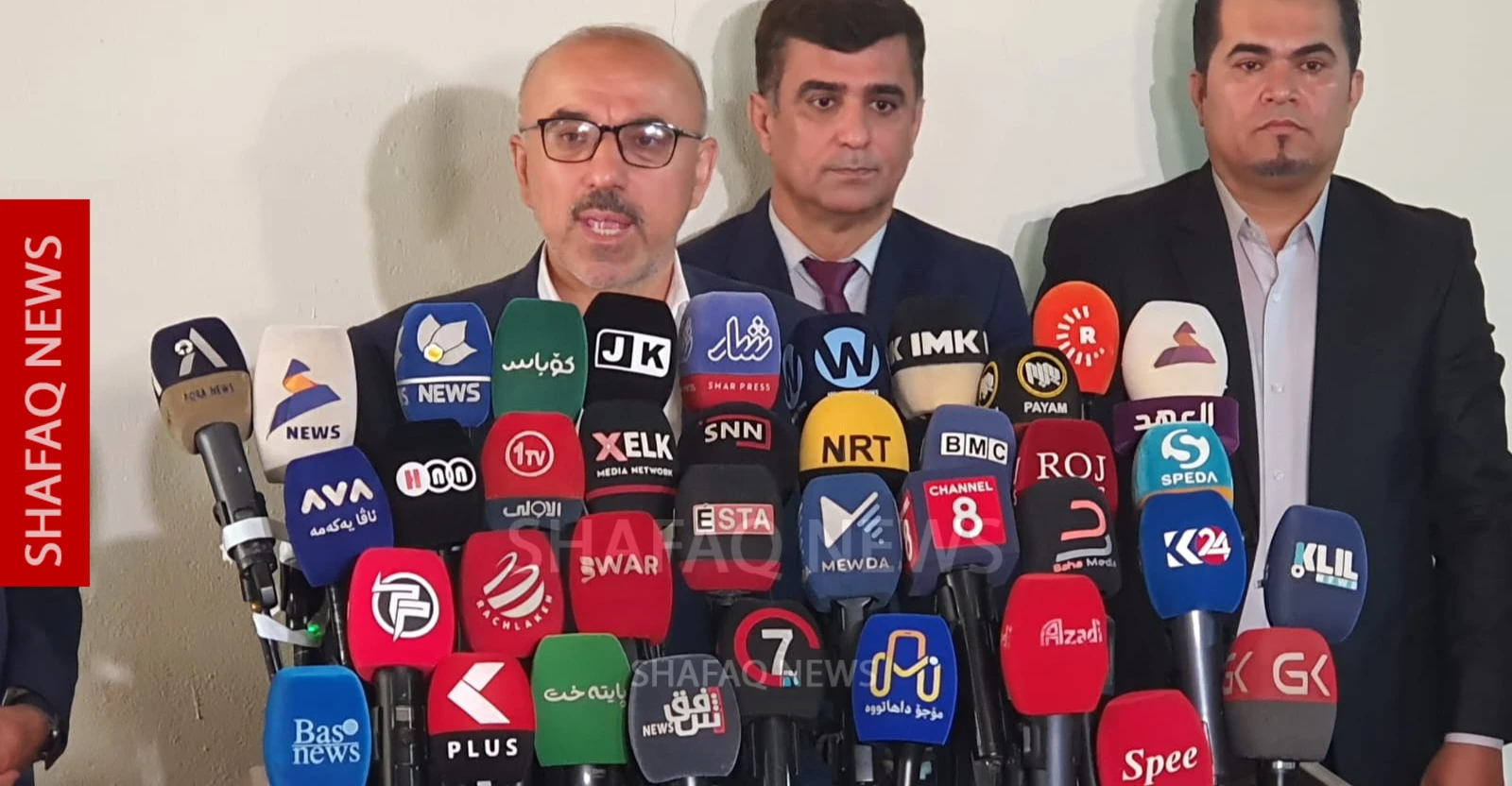
The spokesperson for the initiative, Sarwar Abdul Rahman, head of the (Pe) Foundation for the Development of Democracy, said during a press conference attended by Shafaq News Agency that “the passage of more than eighteen months since the holding of the sixth session elections for the Kurdistan Parliament, without holding any actual session except for taking the constitutional oath and confirming salaries and privileges, represents a serious case of political and institutional shortcomings.”
He pointed out that “the Kurdistan Region is going through sensitive circumstances and urgently needs an effective parliament and a new government capable of managing the current stage,” adding that “the continued paralysis of parliament has placed the region’s institutions before serious questions in the public opinion.”
Abdul Rahman pointed out that “the Iraqi elections were held a year after the Kurdistan Parliament elections, and despite the political disputes in Baghdad, the Iraqi Parliament and official institutions there continue to perform their duties,” considering that what is happening in Kurdistan reflects “a high level of irresponsibility towards constitutional and political entitlements.”
He stressed that “the political forces and blocs of the Kurdistan Parliament stand today before a historical, moral and political responsibility,” calling for “not continuing in the state of neglect and vacuum resulting from the absence of an effective parliament.”
He explained that academic, cultural, civil and religious figures signed a political memorandum to end the Kurdistan Parliament crisis and stressed the need to “resume parliamentary sessions as soon as possible, elect the parliament’s leadership, and begin performing legislative and oversight duties.”
He noted that the memorandum also included an explicit call to “end the current session of the Kurdistan Parliament through appropriate legal means, in the event that the parliament remains paralyzed and the required steps are not implemented,” stressing that “the continuation of a paralyzed legislative institution without serious solutions is unacceptable and should not be tolerated.”
Abdul Rahman pointed out that “the memorandum reflects the extent of public concern and discontent with the state of tension and political disputes that have led to the disruption of an important institution such as Parliament,” calling on political blocs to “declare clear positions before the public and take serious steps to address the crisis.”
The Kurdistan Region Parliament elections took place on October 20, 2024, with 1,091 candidates of both genders competing for 100 seats, five of which were allocated as a “quota” for the components, after it had been 11 seats, which were reduced by a decision of the Federal Supreme Court (the highest judicial authority in Iraq).
The number of seats allocated to women according to the election law is 30.
Candidates competed for 32 seats in Erbil, the capital, 36 seats in Sulaymaniyah Governorate, 24 seats in Duhok Governorate, and three seats in Halabja. The five quota seats for the components were distributed as follows: two seats in Erbil, two in Sulaymaniyah, and one in Duhok.
The parliamentary elections in the Kurdistan Region have been postponed four times in the past two years due to political disputes, as they were originally scheduled to be held in 2022.
The Independent High Electoral Commission announced that the Kurdistan Democratic Party won more than 40 seats out of 100, the Patriotic Union of Kurdistan won more than 20 seats, and the New Generation Movement won about 17 seats.
shafaq.com
