A general lockdown is expected in Iraq tomorrow… The tax crisis sparks a “merchants’ revolution”.
A general lockdown is expected in Iraq tomorrow… The tax crisis sparks a “merchants’ revolution”.
2026-02-07 02:08
 Shafaq News – Baghdad
Some Iraqi traders are rejecting and protesting the increased customs tariffs on some luxury goods and other items, which has led to a buildup of goods containers at customs ports and disrupted trade. This has negatively impacted revenues, which was one of the reasons for the delay in state employees’ salaries for January, according to experts.
Despite objections to the increased customs tariffs, the General Tax Authority indicates that good financial revenues were achieved during the past month.
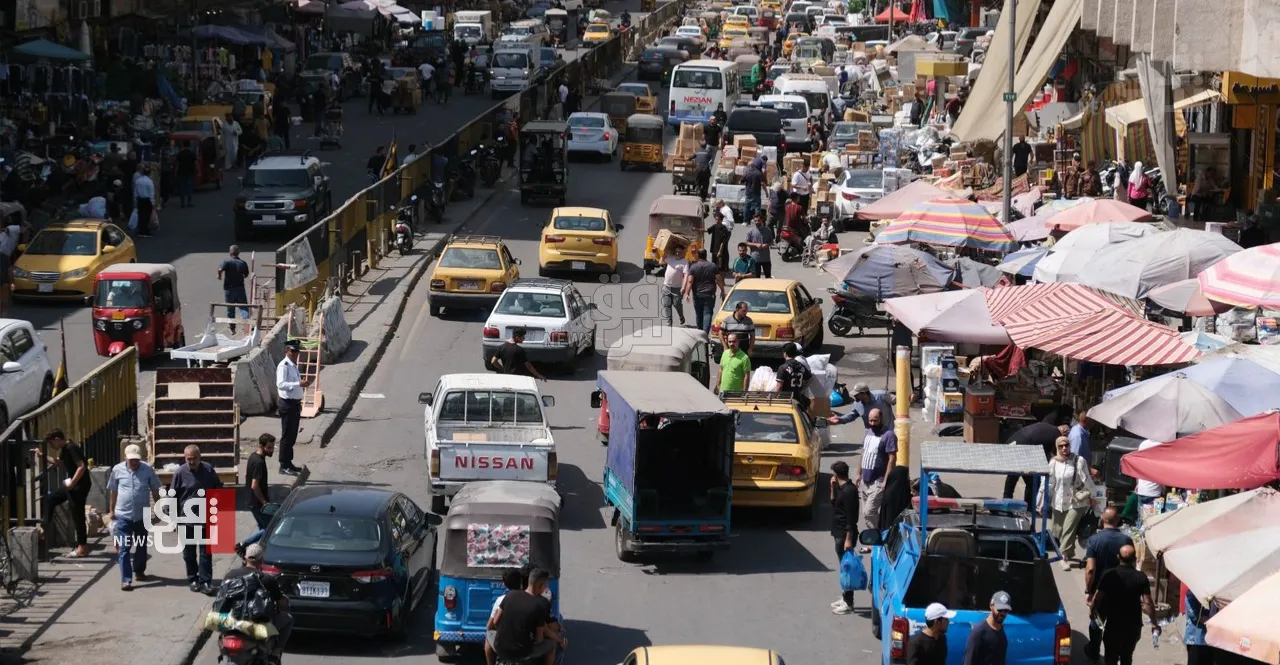
As a result, hundreds of merchants decided to close their shops on Sunday, in response to the tax decision and to pressure the government to postpone the decision or reduce the tax.
The Iraqi Traders Association also called for a “general closure” of all commercial markets in all governorates of the country, starting from tomorrow, Sunday, until further notice.
Who is responsible?
In this regard, the Director General of the Customs Authority, Thamer Qasim, confirms to Shafaq News Agency that “postponing the implementation of the decision to increase taxes for several months until traders finish bringing in their containers is a government decision, and the Customs Authority is only an executive body, and it does not have the powers to stop or postpone this decision.”
Regarding the issue of containers piling up at the ports, Qasim points out that “some traders went on strike and refused to clear their goods at the customs ports, while other traders are trying to clear their goods and pay their customs duties, but the piling up of containers is hindering the organization of work and the completion of the goods clearance procedures,” noting that “the increase in customs tariffs does not include all materials, but rather there are specific materials whose customs tariffs have increased, and the customs tariff for basic materials has not been manipulated.”
The Director General of the Customs Authority pointed out that “trade continues at customs ports, and that the Authority’s financial revenues reached 137 billion dinars during the first month of this year,” stressing that “this is conclusive evidence that trade continues at customs despite the reluctance of some traders and the accumulation of containers.”
The Iraqi government had announced an increase in customs tariffs and additional fees for 2026 on luxury goods with the aim of protecting the national product, including cars, where the additional fees amounted to 15%, in addition to cleaning products whose customs tariff reached 65%, while plastic containers and cups reached 60%, in addition to the reinstatement of taxes on communications and electronic devices at a rate of 20%, and other fees on materials ranged between 10% and 30%.
Unprecedented rise
Economic expert Ali Daadoush told Shafaq News Agency, “Customs revenues have increased according to the Customs Authority after the implementation of the Secuda system, but the current increase does not match the percentage of revenues achieved by the same authority last year.”
He adds, “The authority announced that its revenues for 2025 amounted to two and a half trillion dinars, meaning that the monthly average of customs revenues was more than 208 billion dinars last year,” indicating that “this means that customs revenues for last month decreased by about 71 billion dinars compared to the monthly average achieved last year, with a decrease rate of 52 percent.”
Daadoush asserts that “the solution to the current crisis in the Customs Authority lies in postponing the implementation of the decision to raise fees for a period of 3 months, while allowing the entry of old containers at a fixed price ranging between 6 and 7 million dinars, with Decision 957 to be implemented immediately thereafter.”
Strike and shutdown
Traders, who called for a general strike at all customs outlets, described the increase in tariffs and additional fees as an outrageous rise that will negatively affect trade and local markets.
Trader Saeed Bassam confirms that “next Sunday there will be a general strike at all customs outlets in protest against the decision to raise taxes.”
Bassam adds to Shafaq News Agency, “The increase in fees and taxes is completely unacceptable. The customs transaction for a container used to cost 3 million dinars before the recent decision, but now it is completed for 25 million dinars, and this is a very large difference that will have negative effects on trade.” He also points out that “work has completely stopped for a month in all ports and border crossings.”
He notes that “the merchants’ strike will be accompanied by another strike by truck drivers who have been stuck for a long time at the border crossings, and that investment companies are the beneficiaries of the current situation by imposing late fees on the stuck shipments, and the only loser is the Iraqi consumer,” describing the situation at the ports and border crossings as catastrophic and that it will get worse in the coming days if the merchants’ demands are not met.”
Some members of the House of Representatives criticized the government’s decision to raise fees and taxes, considering this measure to be the easiest way to achieve temporary and unsustainable revenues.
MP Mohammed Al-Khafaji confirmed on his Facebook account that “Iraq is incurring financial losses estimated at billions due to the accumulation of containers and the government’s wrong policy and its failure to reverse its wrong decisions.”
He added that “the merchant is currently bearing the losses, but when he is forced and time is tight, he will pass his losses directly on to the local consumer who will suffer from higher prices, while the government lives in the illusion of reform.”
shafaq.com
