Between smuggling and fraud, the “oil game” evaporates billions of Iraqis.
Between smuggling and fraud, the “oil game” evaporates billions of Iraqis.
2025-09-04 07:30
 Shafaq News – Baghdad/Amman/London
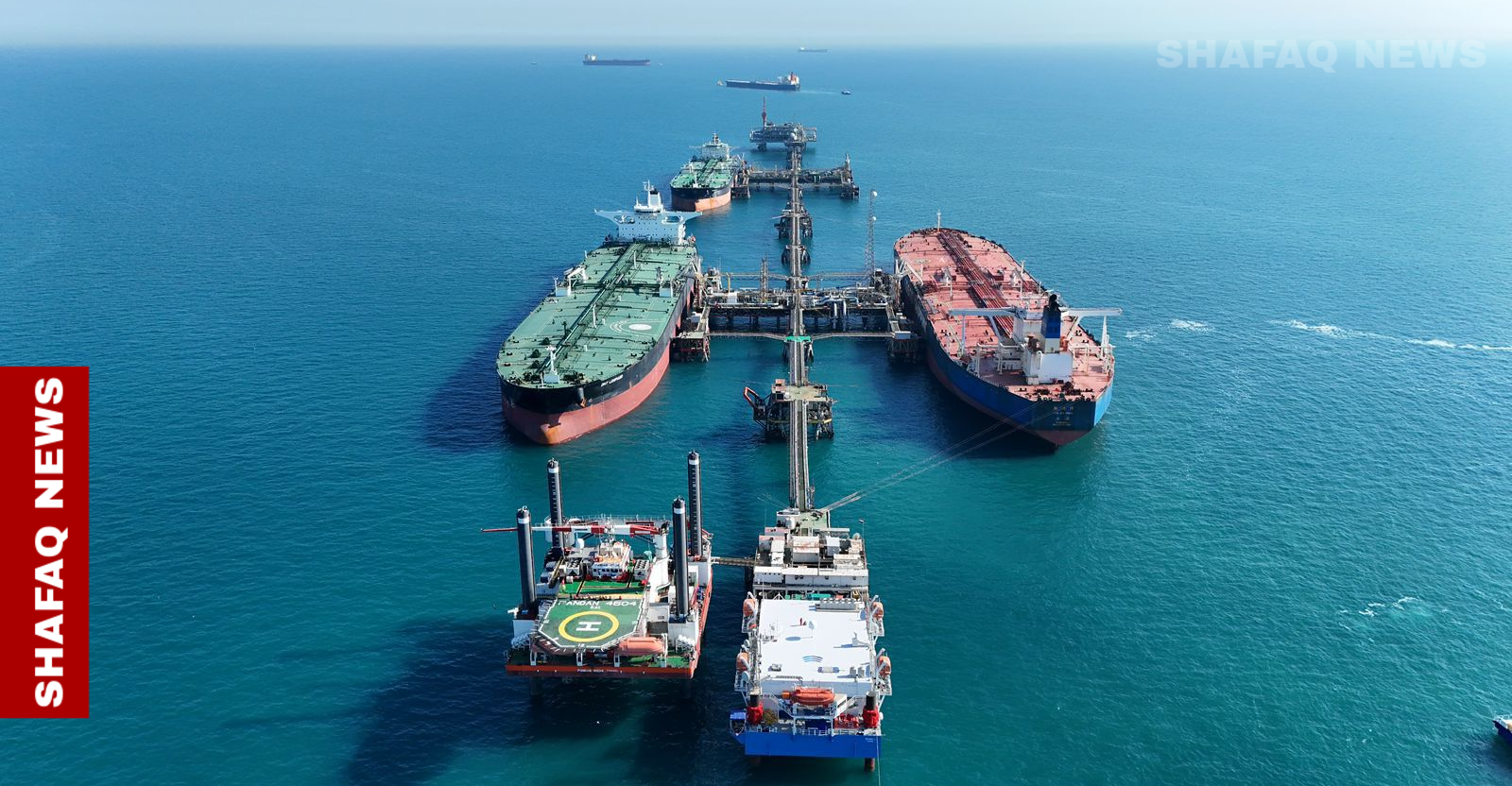
Iraq is incurring significant losses estimated at between two and four billion dollars annually from oil smuggling operations, which exceed 300,000 barrels per day, according to experts. They warn that the continuation of these practices could prompt the United States and international bodies to tighten controls on Iraqi oil exports, harming the general budget and the overall national economy.
Experts believe that the recent US sanctions targeting a network led by an Iraqi businessman, and previously by another businessman, that smuggles Iranian oil disguised as Iraqi oil, are a US warning to the Iraqi government to tighten controls on oil exports.
On Tuesday, September 2, the US Treasury Department imposed sanctions on a network of companies and shipping vessels led by UAE-based Iraqi businessman Walid Khalid Hamid al-Samarrai, accusing them of “secretly blending Iranian oil with Iraqi oil, then deliberately marketing it as pure Iraqi oil to evade sanctions.”
This action, according to the ministry’s statement, complements the Office of Foreign Assets Control sanctions issued in July 2025, which targeted the network of Iraqi businessman Salim Ahmed Saeed, who also smuggled mixed Iraqi and Iranian oil. These measures demonstrate the continuation of the maximum economic pressure campaign on Iran.
In this context, economic researcher Ahmed Eid said that Iraq “is incurring significant losses due to these practices, estimated at between $2 and $4 billion annually,” as they directly impact the country’s oil revenues and extend to the general budget and the overall economy.
According to Eid, these practices also distort production and export data, reducing expected revenues, limiting the state’s ability to finance its development and service projects, and placing additional pressure on the budget.
According to the economic expert who spoke to the agency, using Iraq’s name in smuggling operations “harms the country’s reputation in the international community, as Iraq could be perceived as unable to control its exports and monitor its natural resources,” which reduces confidence in the national economy and creates obstacles to foreign investment.
He pointed out that the continuation of these practices could prompt the United States and international bodies to “tighten controls on Iraqi oil exports, including a thorough review of contracts, licenses, and invoices accompanying oil shipments,” which would increase the administrative burden on government institutions.
Eid believes the solution lies in strengthening internal oversight of oil fields and ports, updating tracking systems and official documents, and prosecuting fraud cases to ensure the protection of national revenues and restore the confidence of the international community.
While the solutions proposed by Ahmed Eid have yet to be implemented, an Iraqi think tank predicts continued US pressure on Baghdad “to play its role in monitoring and prosecuting the mafias smuggling Iraqi or Iranian oil across its borders.”
Ghazi Faisal, director of the Iraqi Center for Strategic Studies from Jordan, warned that Iraqi authorities appear to have “failed to pursue these networks and put an end to the oil smuggling, which exceeds 300,000 barrels per day from Basra, facilitated by political parties and individuals in power, far from the government’s sight.”
These operations, according to Faisal, are the result of “the Iraqi government’s lack of seriousness or inability to put an end to the smuggling of Iraqi oil linked to networks of banks complicit in money laundering. There may also be shell companies and falsification of government documents.”
He emphasized that the Iraqi government “bears responsibility for putting an end to smuggling operations, and herein lies the challenge between Baghdad and Washington. The latter must identify, expose, and punish these companies, while Baghdad continues to face complexities in this regard, which harms the Iraqi economy and serves the Iranian economy, which is collapsing under embargoes and sanctions.”
In August 2025, the American website Oil Price revealed in a report translated by Shafaq News Agency that Iraq had officially entered the targeted circle within the escalating US sanctions strategy against Iran. This was achieved through a new bill submitted to Congress last April that aims to ban its imports of Iranian gas and electricity, which constitute approximately 40 percent of its energy needs.
Last February, US President Donald Trump revoked the exemption granted to Iraq to import electricity and gas from Iran, as part of a new package of sanctions on Iran.
For many years, Iraq has relied on importing electricity and gas from Iran, especially during the peak summer months. This relies on ongoing US waivers, which are issued multiple times each year.
For his part, Haitham Al-Hiti, a professor of political science at the University of Exeter in Britain, downplayed the impact of the recent US sanctions on the Iraqi businessman, stating that they “have received a greater media coverage than their actual extent for political, electoral, and other reasons.”
Speaking to Shafaq News Agency, Al-Hiti explained that the incident was an individual incident involving an Iraqi businessman who owns a company and is separate from the government. Therefore, the sanctions were imposed on his company and himself. This means that the punishment is imposed on the businessman, not the government, which did not violate the law.
He concluded by saying, “However, this penalty is a US warning to the Iraqi government of the need to tighten controls on businessmen’s handling of oil exports, and at the same time, it is a warning to all other businessmen who engage in this smuggling.”
shafaq.com
