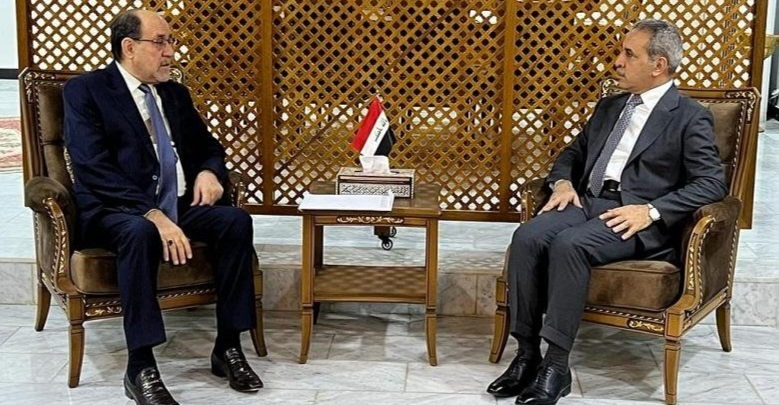
On charges of kidnapping, a legal case was initiated against Al-Maliki and Zidane.
On charges of kidnapping, a legal case was initiated against Al-Maliki and Zidane.
2025-09-02 05:36
 Shafaq News – Special Translation
The American website International Policy Digest revealed that Kurdish-American businesswoman Sara Saleem filed a lawsuit against the head of Iraq’s Supreme Judicial Council, Faiq Zaidan, and former Prime Minister Nouri al-Maliki. Saleem was kidnapped, assaulted, and blackmailed over a housing project she was implementing in Basra years ago.
The American website published a report, translated by Shafaq News Agency, harshly criticizing Iraq’s judicial system, describing it as still, 20 years after Saddam Hussein’s execution, a prisoner of corruption, sectarian favoritism, and repression, a reality felt by Kurds and women alike. The report noted that the promise of establishing the rule of law when the United States invaded the country in 2003 has faded.
The report, titled “Iraq’s Justice System Has a Godfather, and It’s Suing Him,” describes Sarah Saleem as a dual Iraqi-American citizen and successful Kurdish businesswoman who was overseeing a multi-million-dollar housing project in Basra in 2014. When she returned to Iraq to inspect the project, she was kidnapped by gunmen suspected of being linked to then-Prime Minister Nouri al-Maliki. Saleem says her crime was refusing to pay a £2 million “donation” to his re-election campaign.
According to Salim’s account, she was detained for 43 days, beaten, and threatened with dismemberment. The report quotes her as saying, “They insulted me and directed obscene insults at me about the Kurds.”
The report continued that after Salim returned to Virginia, she was met by FBI agents, and she confirmed that Al-Maliki was involved. She is now suing Al-Maliki and Faiq Zaidan, seeking $2 billion in damages in US federal court under the Anti-Terrorism Act and the Torture Victim Protection Act. She accuses Zaidan of helping to cover up the crime and using the courts as a weapon to harass her.
According to the report, Salim’s case is not an exception, but rather reveals the reality of the chronic dysfunction in Iraq, where the judiciary is held hostage by political mechanisms and sectarian patrons, especially those allied with Iran. The report points out that Zeidan has more influence than the prime minister himself, and through his alliance with Iranian Supreme Leader Ayatollah Ali Khamenei, he blesses extrajudicial killings and political arrests. He also takes a hardline stance against the Kurds in Iraq, having previously dissolved their constitutional court, blocked their salaries, and imposed restrictions on their legal independence.
After highlighting the persistence of sectarianism in Iraqi politics, the Shiite-Sunni divide, and the depth of Iranian influence, the report noted that the Kurdish minority, which represents between 15 and 20 percent of the population, continues to face institutional discrimination. It added that Sara Saleem’s story is an indictment of Iraq’s democratic landscape, quoting journalist Haider al-Moussawi as saying that the elections are widely considered corrupt and merely a facade and a means to redistribute power among elites.
The report added that Sarah Salim nevertheless returned to Iraq in 2017 to continue her housing project, only to be arrested again, allegedly on fabricated charges.
The report criticized the idea that British taxpayers are now claiming a £12 billion UK-Iraq trade package, signed earlier this year during Prime Minister Keir Starmer’s Downing Street meeting with Iraqi Prime Minister Mohammed Shia al-Sudani. Among the proposed projects is infrastructure development in Basra, the city where Sara Saleem was kidnapped and tortured.
The report explained that while Zeidan was being shaken by British ministers, Sara Saleem continued her struggle from Virginia. If her case is referred to court, it may be one of the few remaining avenues left for the victim of Iraqi judicial abuse, and the case will also test the West’s resolve.
The report concluded that Sara Saleem’s courage serves as a reminder that behind the sheen of diplomatic “progress” lies the continuing failure of the Iraqi regime and the human cost borne by those who challenge it.
Two decades after the fall of Saddam Hussein’s regime, Iraq still lacks an independent judiciary and a free press, suppresses Kurdish rights, treats women as second-class citizens, and operates under Iranian influence. While business deals and photo opportunities continue, reform is not taking place, the report says.
shafaq.com
