Washington folds its tents in Iraq amid a regional storm
Washington folds its tents in Iraq amid a regional storm
2025-08-30
 Shafaq News – Special Analysis
Ahmed Hussein
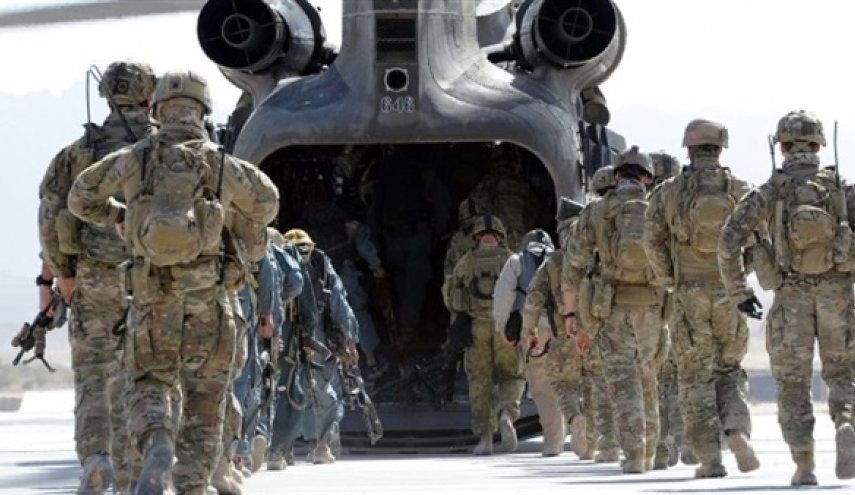
The US military withdrawal from Iraq is proceeding amidst internal, regional, and international political and security minefields. The White House’s statements so far have appeared “elastic,” attempting to hold a middle ground, or at least implying that they do. Meanwhile, the Iraqi interior remains divided, with ardent supporters and categorical opponents, while third parties are attempting to reconcile the two positions.
The Pentagon and the Hawks of Rejection and Acceptance
A US Department of Defense official told a Shafaq News Agency correspondent that Washington continues to “review and adjust” its troop position in Iraq “when necessary” in line with the missions of the international coalition against ISIS.
This condition, “when appropriate,” seemed like a loose phrase that made withdrawal or continued presence contingent on what the US administration deemed to serve its interests. The same official confirmed that “Washington is committed to ending the coalition’s military mission inside Iraq by September 2025, while continuing to support operations to defeat ISIS in Syria from bases inside Iraq until September 2026.”
The recurring mention of the “ISIS threat” with every mention of withdrawal raised suspicion among those opposed to the US presence, while supporters viewed it as evidence of the need for continued US forces. Meanwhile, mediators exploited this point to bolster their conciliatory rhetoric.
In contrast, opponents of the US troop presence consider talk of a withdrawal to be nothing more than a “maneuver” or a “dose of anesthesia” aimed at appeasing what Washington describes as “militias.” They believe that the escalation between Iran and Israel, even if it is mostly media-related, requires the United States to keep its forces in Iraq to protect Israel. Therefore, in their view, any withdrawal now would create a “strategic vacuum” that would be filled by Tehran.
This camp cites statements from its leaders and close analysts, who assert that the continued presence of US forces is essential for the Trump administration, even if it does not seek direct war with Iran. This assertion serves as a deterrent against Israeli Prime Minister Benjamin Netanyahu’s “impulsiveness” toward decisions that could embarrass the US and Europe.
They point to the repeated international condemnations of the Israeli military in Gaza, up to its initiative to attack Iran during the Twelve Day War.
Therefore, the “rejection hawks” cling to the conviction that Washington’s announcement of its intention to withdraw is nothing more than a “stall” aimed at buying time.
On the other hand, supporters of the continued presence of US forces believe that the reasons their opponents cite for refusing to remain are the same reasons that make withdrawal a risky move. They add another reason related to the US openness to the transitional Syrian government led by Ahmed al-Sharaa, who until recently was “al-Julani,” the leader of the al-Nusra Front. However, today the man enjoys regional and international acceptance, which prompted Baghdad to open early channels with him through the head of the intelligence service, Hamid al-Shatri.
Al-Shatri’s repeated visits to Damascus, starting in December 2024 and continuing until his final meeting with Al-Sharaa on Thursday, sparked widespread controversy, particularly as they addressed border issues, counterterrorism, and the situation of the Iraqi community in Syria.
Between these two camps, other forces are attempting to play the role of “doves,” seeking a formula that will neither make Iraq an arena for a proxy war between Iran and Israel nor a hostage to Netanyahu’s adventures. However, despite their differing rhetoric, these forces agree with both sides that the final decision is not determined by Baghdad alone, but rather by the international decisions of the major powers that hold the reins of the global order.
Snapback and potential escalation
However, the debate over the US withdrawal does not stop within Iraq itself; rather, it intersects with regional and international tensions, particularly with the revival of the term “snapback,” which opens the door to more escalating scenarios.
This mechanism, included in the 2015 Iran nuclear agreement, gives Washington and the other P5+1 members the right to automatically reimpose international sanctions on Tehran if it fails to comply with its obligations. In other words, it is like an “emergency button” that can be used to restore all previous UN sanctions without requiring a new vote in the Security Council.
Although this clause was originally designed to ensure Iran’s compliance with the nuclear agreement, its re-introduction today, amid escalating tensions with Israel and the United States, suggests that the Iraqi issue may be part of a broader equation. According to some observers, Washington may use the withdrawal or remaining in Iraq as a pressure card related to the Iranian nuclear issue.
In Tehran, this American threat was met with a clear threatening tone, reflected in statements by officials and an escalation in media outlets close to the Revolutionary Guards. These outlets described the US withdrawal from Iraq as a “suspicious departure” and concluded with a question that carries more than one meaning: Has the international coalition’s mission truly ended, or will it return under a new cover to play the same role?
Observers believe that, on paper, Washington is moving toward a “coordinated” withdrawal by redefining the mission of its forces from direct combat to providing advisory and technical support. This, in practice, means a continued American military presence under a different title. The United States has previously used this formula in similar experiences, such as Afghanistan in 2014, when forces shifted from combat missions to “resolute support,” before finally withdrawing seven years later amid chaos and the complete collapse of the Afghan government.
Some Iraqi parties fear that the same scenario could evolve into a “modified” version in Baghdad, where American soldiers remain in specific bases but retain the ability to intervene whenever American interests require it.
While Washington continues to emphasize its “transitional” commitments, and Tehran clings to its threatening rhetoric, Iraq remains stuck in the middle: an arena where the messages of the major powers intersect, and a bargaining chip in an equation that transcends its geographical borders. Between a declared withdrawal and an actual presence, it appears that the future of US forces in Iraq will remain hostage to international balances rather than the outcome of an internal decision.
shafaq.com
