Qatari mediation: containing the escalation and testing Iranian concessions.
Qatari mediation: containing the escalation and testing Iranian concessions.
11-3-2026
 Iyad Al-Anaz
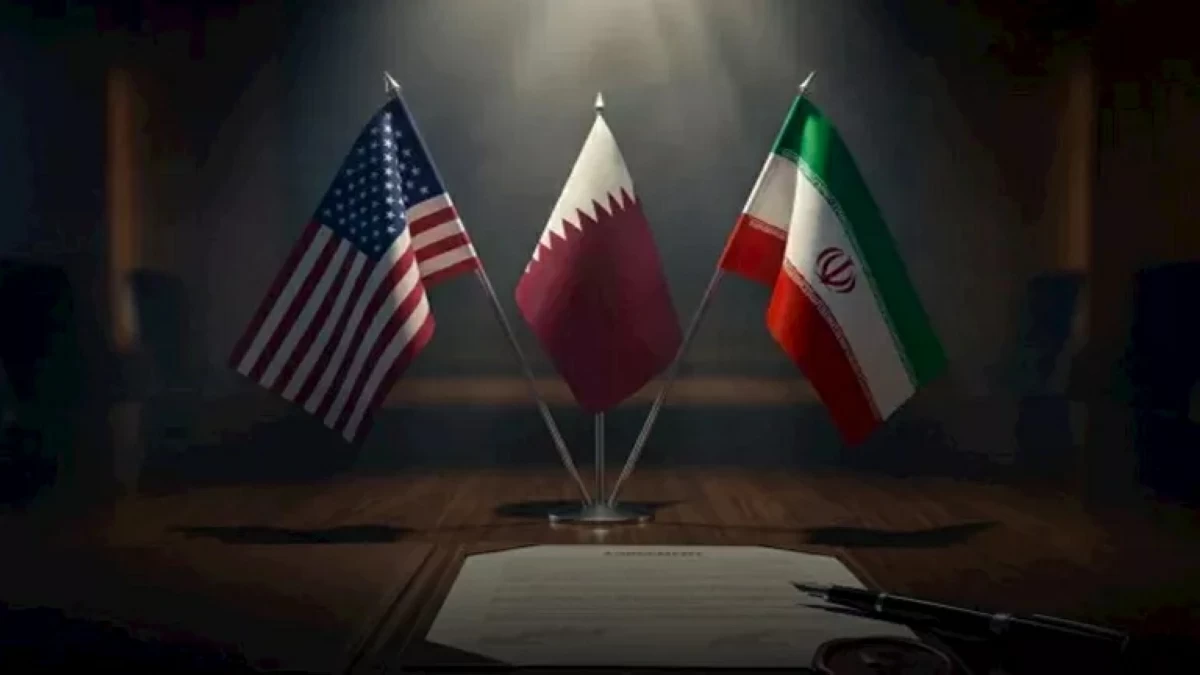
The paths to a political settlement of the US-Iranian military confrontation continue, employing tools and methods that reflect the realities on the ground. These are the tools the mediators adhere to, working to present proposals, ideas, and opinions that could open genuine avenues for political dialogue and diplomatic negotiations. This was exemplified by the Qatari-Arab-Gulf mediation, which involved proposals presented to the Iranian side. A delegation representing the Qatari government, headed by the Senior Advisor to the Prime Minister and Minister of Foreign Affairs, arrived in Tehran on October 30, 2026, as part of intensive diplomatic efforts to defuse the crisis and revive indirect negotiations between the United States and Iran.
During the visit, the Qatari delegation received the Iranian response to a letter from US Vice President Jay D. Vance, sent on October 25, 2026, to the Secretary of Iran’s Supreme National Security Council, Mohsen Rezaei, which outlined a possible framework for future negotiations between the two countries.
The Qatari visit led to a breakthrough in the process of building indirect negotiations between Washington and Tehran. An Iranian delegation accompanied the Qataris on their return to Doha, reflecting Iran’s efforts to support Qatar’s political initiatives. There are also indications that an American delegation, directed by President Donald Trump, is expected to arrive to conduct indirect negotiations with the Iranian delegation, potentially paving the way for a resumption of formal negotiations between the two sides.
This political move and mediation, supported by Pakistan and with clear backing from the countries of the Mecca Agreement, comes amidst reports of American military preparations and security incidents affecting oil tankers and shipping lanes in the Strait of Hormuz. Tensions in the Strait of Hormuz continue to escalate, following the Iranian Revolutionary Guard’s announcement on October 30, 2020, of explosions and fires affecting four oil tankers. Meanwhile, the Israeli Broadcasting Corporation revealed American military movements, including the transfer of ten cargo planes to Israeli air bases in the Negev.
The mediators (Qatar and Pakistan), in their joint meetings with the Americans, believe that any agreement could put an end to the enormous expenses incurred by the US Department of Defense in escorting oil tankers through the Strait of Hormuz and the Arabian Gulf. According to a report in the Wall Street Journal, the US military spends between $66 million and $100 million daily to continue its operations in the Middle East, amounting to approximately $2 billion to $3 billion monthly.
The Iranians are perplexed by the US president’s repeated assertion that Tehran will not possess a nuclear weapon. After the US military’s pronouncements about destroying nuclear facilities, dismantling capabilities, and halting uranium enrichment activities, what is the US administration seeking and insisting upon? At the same time, what prevents Iran from offering serious commitments that it will not resume developing its nuclear program?
This is the missing equation in the framework of political moves and continuous visits to Arab and regional countries, and its movement between Washington and Tehran to reach initial principles and foundations from which to reach a comprehensive agreement to stop the escalation and end the state of dispute between the two countries.
The last few days have witnessed a clear development in the American political vision regarding Iran, in moving towards dialogue with Iranian security and military figures. This conclusion can be inferred from the message that reached Mohsen Rezaei, Secretary of the Supreme National Security Council of Iran, from US Vice President JD Vance, after reaching an American conviction that Iranian pledges, if any, depend on the acceptance of the military establishment in the Iranian regime, apart from the opinions of the political system.
The events bring to mind the political approach taken by President Trump when he sent a direct message to the former Supreme Leader Ali Khamenei in March 2025, calling for bilateral negotiations and reaching an agreement on the Iranian nuclear program. The American administration did the same with the Speaker of the Iranian Parliament (Mohammad Baqer Qalibaf), whom they considered the main link close to the Supreme Leader Mojtaba Khamenei, who enjoys extensive relations and direct influence within the Iranian Revolutionary Guard Corps and his ability to carry out specific tasks through which Mojtaba Khamenei’s approval could be obtained to continue dialogue and negotiations with the United States. This led to a state of understanding between them through Pakistani mediation, which led to the signing of the Joint Memorandum of Understanding by Presidents Trump and Pezhikan. This agreement was not successful because the Revolutionary Guard fired on two Qatari oil tankers south of the Strait of Hormuz, a month after the agreement was signed, which brought the military confrontation back to its beginning.
Despite Arab and regional mediation efforts, American threats persist, now targeting the Kuh Kalang nuclear facility near Natanz. This facility was recently established in light of Iran’s attempts to exploit the lull in military escalation to resume its nuclear activities.
Faced with these developments on the ground and Iran’s objectives, Washington sought an influential Iranian figure within the Iranian government who could finalize and sign any agreement reached. This led to the possibility of indirect dialogue with Mohsen Rezaei, facilitated by Qatari, Arab Gulf, Pakistani, and Russian mediators. This came after Iranian officials increasingly spoke of military plans to retaliate against any attack on Iran by targeting the infrastructure of countries hosting American bases.
American calculations are geared towards using political diplomacy with Iran to achieve specific goals, including reaching an agreement that can meet its conditions or increase pressure on Tehran before resorting to the military path. The diplomatic path provides an opportunity for it to say that it has given Iran a political way out. It believes that the failure of any attempt at negotiation can prepare the political tools to justify the next strike and mitigate opinions that speak of American goals in targeting Iran.
Iran has presented its stated goals and objectives to any political mediation regarding the reopening of the Strait of Hormuz to maritime traffic. These objectives include the United States lifting its naval blockade on Iranian ports, oil exports, and trade. Washington has declared its commitment to this, provided that Iranian authorities agree to discuss the nuclear program and allow the International Atomic Energy Agency (IAEA) inspectors to resume their regular visits to nuclear sites and facilities to verify the quantities of enriched uranium Iran possesses. This is all in an effort to reach a more favorable agreement acceptable to all parties.
Iran’s acceptance of the Qatari mediation, which is based on the return of international inspectors and discussions of nuclear activities, does not necessarily imply its acceptance of comprehensive oversight of all its facilities or the abandonment of its nuclear program.
Several key questions arise concerning the Qatari initiative and the implications of Iranian and American acceptance: Will Washington lift the naval blockade, release frozen assets, and allow Iran to sell its oil? And when will Iran reopen the Strait of Hormuz and remove restrictions to allow maritime navigation to resume, thus ensuring the security of international energy supplies and global trade?
The United States, in light of its ongoing dealings with Iran, understands that strategic decisions are linked to a network of institutions and centers of influence, the impact of their officials, and the extent to which their views align with the operational calculations of security and military leaders. Ideological rigidity and a willingness to negotiate are not contradictory in Iranian political doctrine. Several political experiences have confirmed this political imprint in dealing with issues concerning the regime’s survival, its continued existence, and the preservation of its internal and regional influence. Any gains the Iranian ruling system deems attainable through negotiation, and any potential losses from making concessions without tangible returns or reliable guarantees, are the foundations and pillars upon which any approach aimed at maintaining the existing regime’s survival and preserving its power is based.
Not every diplomatic activity indicates an imminent settlement, and the exchange of messages does not necessarily signify a decrease in the likelihood of war. These moves may be a final attempt to test the chances of understanding, but they may also serve another purpose in Washington’s calculations: to demonstrate that the US administration has exhausted the diplomatic path, and that any subsequent Iranian rejection can be used as justification for a return to the use of force.
Links Center for Research and Strategic Studies
rawabetcenter.com
