An Iraqi ministry threatens international oil companies with “strict and decisive” measures.
An Iraqi ministry threatens international oil companies with “strict and decisive” measures.
2026-11-02
 Shafaq News – Basra
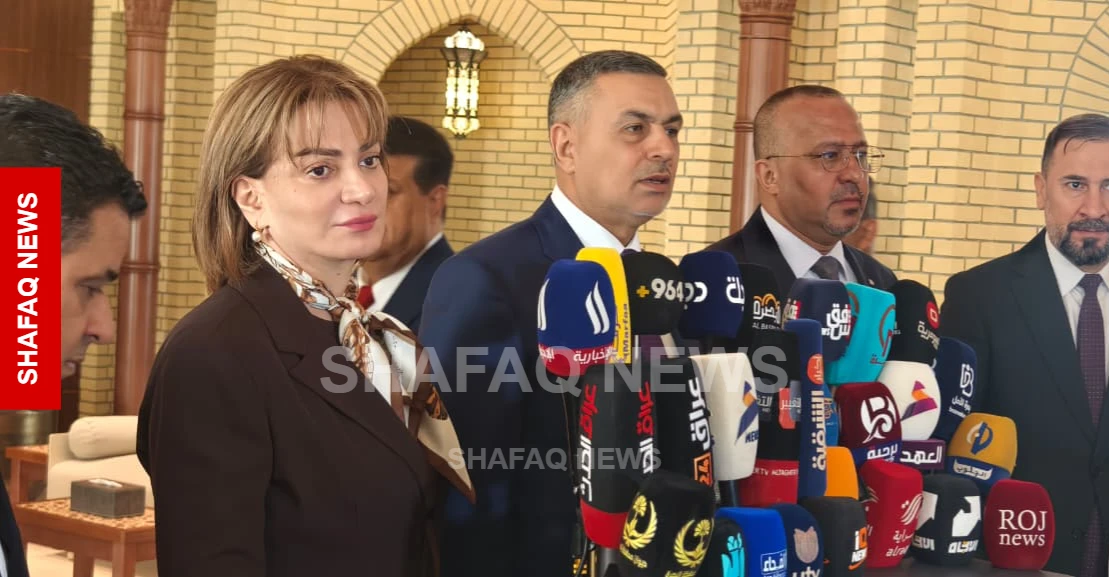
Environment Minister Sarwa Abdul Wahid threatened on Monday to take strict legal action against international oil companies operating in Basra Governorate, warning of continued pollution resulting from their activities, while demanding that plans be put in place to address environmental damages in proportion to the size of the profits these companies make from working in Iraq.
During a press conference held in Basra, accompanied by Governor Asaad Al-Eidani and attended by a correspondent from Shafaq News Agency, Abdul Wahid said that the ministry has “very negative indicators” regarding the environmental impact of oil activities, stressing that companies operating in the governorate are required to stop the pollution and develop a clear plan to address it.
She added that “it is unacceptable for international oil companies to come to Iraq and Basra and earn billions of dollars, and then cause environmental problems within the province,” stressing that these companies are supposed to be more concerned about the environment, especially since they adhere to environmental standards in their own countries, which necessitates applying the same standards in Iraq.
The minister continued: “We will have strict and decisive measures with companies starting today,” noting that the ministry will visit the Basra Oil Company, as well as one of the oil fields, to see the environmental situation and follow up on files related to oil activity.
Regarding the general environmental situation in the governorate, Abdul Wahid expressed her hope that the success and reconstruction that Basra is witnessing will also be reflected in its environmental reality, and that it will become one of the best Iraqi governorates in this field, reaching the goal of “zero pollution”.
She noted that the measures currently being taken to reduce pollution are still, despite the progress made, in their initial stages, pointing out that there has been development in some sectors, including hospitals that have established biological treatment units, but she stressed the need to complete the requirements for solid waste treatment, including providing shredders for it.
Regarding the sewage and wastewater file, she explained that there are stations under construction and others that have been completed, but some obstacles still exist, especially with regard to the Olive River, indicating that the governor expressed his readiness to complete the procedures for the stations that have not yet entered service.
Abdul Wahid revealed that the Basra Governorate had agreed to provide air quality monitoring stations, while the Council for the Protection and Improvement of the Environment had agreed to provide water monitoring stations, enabling the Ministry to monitor air and water pollution levels and rely on monitoring data in its work.
Regarding the issue of water pollution, she said that the ministry’s plan is based on treating pollutants at their sources, including water coming from the Kurdistan Region, as part of efforts to address the pollution of the Tigris and Euphrates rivers.
Abdul Wahid concluded her remarks by saying that “Basra faces major challenges in the area of mines and war remnants,” considering it to be one of the most polluted governorates with them, which places the ministry under a double responsibility to work on this issue in a more focused manner, without providing additional details about the indicators related to it.
shafaq.com
