Through the “Export Support Fund”… Iraqi trade announces a plan to develop non-oil exports
Through the “Export Support Fund”… Iraqi trade announces a plan to develop non-oil exports
2026-04-19
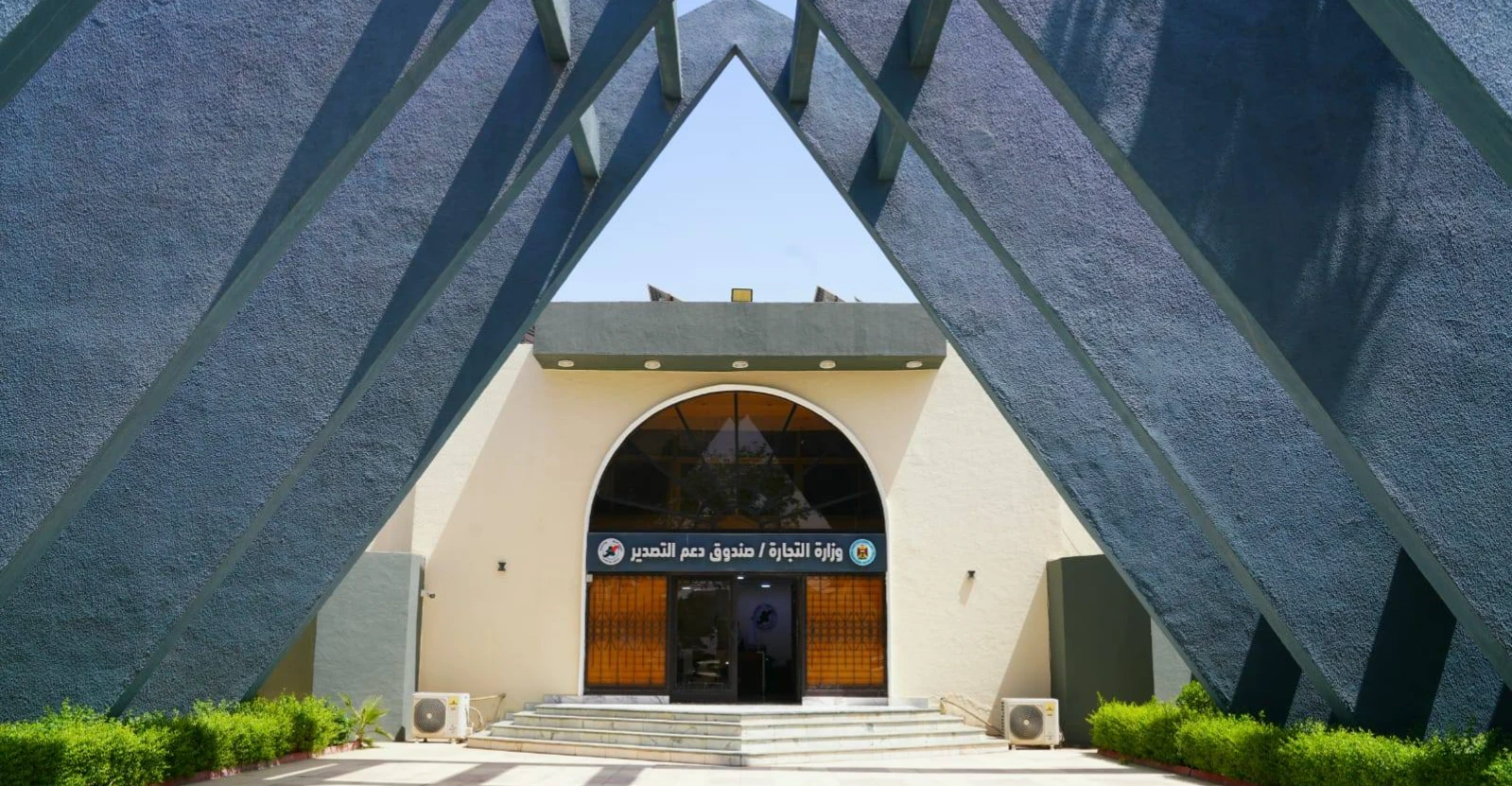 Shafaq News – Baghdad
Minister of Trade Dr. Atheer Dawood Al-Ghurairi affirmed that the ministry is proceeding with the implementation of its programs aimed at developing non-oil exports and expanding the base of local production by activating the role of the Export Support Fund, describing the fund as one of the main pillars in supporting the economy and enhancing the ability of Iraqi products to compete in global markets.
The minister explained in a statement received by Shafaq News Agency that the Export Support Fund’s vision focuses on diversifying income sources, enhancing local production, and creating job opportunities that contribute to achieving sustainable economic growth.
He added that the fund provides comprehensive financial and technical support to Iraqi companies and factories, in addition to facilitating their participation in international exhibitions by bearing part of the participation costs, which contributes to opening new markets and finding commercial partners, as well as promoting the national product through the issuance of introductory guides for Iraqi exports for the years 2023, 2024 and 2025.
For his part, the Prime Minister’s Advisor for Financial Affairs, Mazhar Muhammad Saleh, confirmed earlier today that the government is moving towards reducing unemployment rates in the country by expanding the base of local production, through supporting the agricultural and industrial sectors and enhancing the role of the private sector in absorbing the workforce.
Saleh told Shafaq News Agency that “current economic policies focus on revitalizing the agricultural and industrial sectors as two essential pillars for creating job opportunities,” explaining that “the agricultural track includes supporting grain production by purchasing crops at prices exceeding global levels, in addition to providing production inputs and implementing the agricultural calendar to protect the local product.”
He added that “the government is working in parallel to support the industrial sector through a package of measures that includes allocating industrial lands, providing fuel, and facilitating the import of modern technology, as well as activating financing initiatives to support the operation and expansion of national factories, especially in the private sector.”
Saleh also noted that “the number of supported industrial projects exceeds 1,300 projects, with more than one trillion dinars allocated as sovereign guarantees that enable the private sector to obtain loans from foreign banks to finance projects linked to various economic sectors, including construction and industrial value chains.”
He explained that “the launch of the Leadership Bank will constitute an important financing platform to support small projects and youth initiatives, which will contribute to expanding the base of productive activity,” stressing that “these measures aim in their entirety to reduce unemployment rates, which are about 13%, by creating real job opportunities and strengthening the link between economic sectors.”
This comes in conjunction with what the head of the “Iraq Future” Foundation for Economic Studies and Consultations, economic expert Manar Al-Obaidi, revealed yesterday, Saturday, about a sharp decline in the actual production of industrial projects in Iraq compared to the high rate of imports of foreign goods, stressing the inability of this sector to absorb more local labor due to its deterioration.
Al-Ubaidi said in a post that official reports indicate that the total number of industrial projects (medium and large) in Iraq is about 1,200 projects; distributed between 900 large private projects and about 300 medium projects, indicating that despite this number, the actual production value of these projects does not exceed 7 trillion Iraqi dinars, which is a “shocking” figure when compared to an annual import bill that exceeds 100 trillion dinars.
He considered this “glaring” discrepancy to be the result of the inability of local projects to grow or replace imports, as productive power is concentrated in the construction and food sectors, with a sharp decline in vital manufacturing industries such as clothing, furniture and household goods, which consume the “largest” part of imports.
Al-Obaidi also confirmed that the industrial sector provides only 50,000 job opportunities (and may reach 100,000 when including unregistered workers who are evading social security), describing this number as “very small in the face of a reality in which 500,000 people enter the labor market annually.”
“The 5% growth rate in large projects has not yet succeeded in making industry an influential part of the gross national product.”
shafaq.com
