The war severs a vital trade artery between Iran and the UAE, putting billions of dollars to the test in the Strait of Hormuz.
The war severs a vital trade artery between Iran and the UAE, putting billions of dollars to the test in the Strait of Hormuz.
2026-08-22
 Shafaq News – Special Translation
The war and escalating tensions in the Gulf have pushed economic relations between Iran and the UAE into one of their most difficult phases, after Abu Dhabi announced the suspension of all trade and financial transactions with Tehran until further notice, in a move that could hit one of the most important arteries on which the Iranian economy has relied throughout the years of sanctions.
The UAE decision came after the UAE Ministry of Defense announced on Tuesday evening, August 18, 2026, that it had detected two ballistic missiles launched from Iran. It said that one of them fell outside territorial waters and the other inside UAE waters, and that estimates indicated that the two missiles targeted ships crossing the Strait of Hormuz. Hours later, the UAE Ministry of Foreign Affairs announced the suspension of trade and financial transactions with Iran.
Tehran rejected the Emirati narrative, with Iranian Foreign Ministry spokesman Ismail Baghaei describing the accusation as “a baseless claim,” considering that “this Emirati behavior violates the principle of good neighborliness and hinders ongoing efforts to build trust between the countries of the region and prevent the escalation of insecurity within it.”
An irreplaceable partner
The UAE decision raises a big question mark over the future of an economic relationship that, during the years of sanctions, has become one of Iran’s most important gateways to global markets and the international financial system.
According to Iranian customs data, the UAE topped the list of exporters to Iran during the first nine months of the Iranian year 1404, which extends from March to December 2025, with a value of $13.533 billion, or more than a third of the country’s imports, surpassing China, which came in second with $12.108 billion and a share of 27.4 percent.
The UAE accounts for more than 30 percent of Iran’s total trade, while about 13 percent of Iranian exports go to it.
But the importance of the UAE was not limited to the trade of goods, as it became the most prominent financial and monetary center for Iranian foreign trade, and estimates indicate that about 80 percent of the hard currency needed for Iranian imports was secured through the dirham market.
In many transactions, the Chinese yuan was first converted into dirhams in the UAE, and then into dollars or other currencies.
Iranian or Iranian-linked companies registered in Dubai and free zones have also formed a wide network of intermediaries, exchange offices, shipping and trade finance services, which have played a pivotal role in circumventing sanctions through re-export.
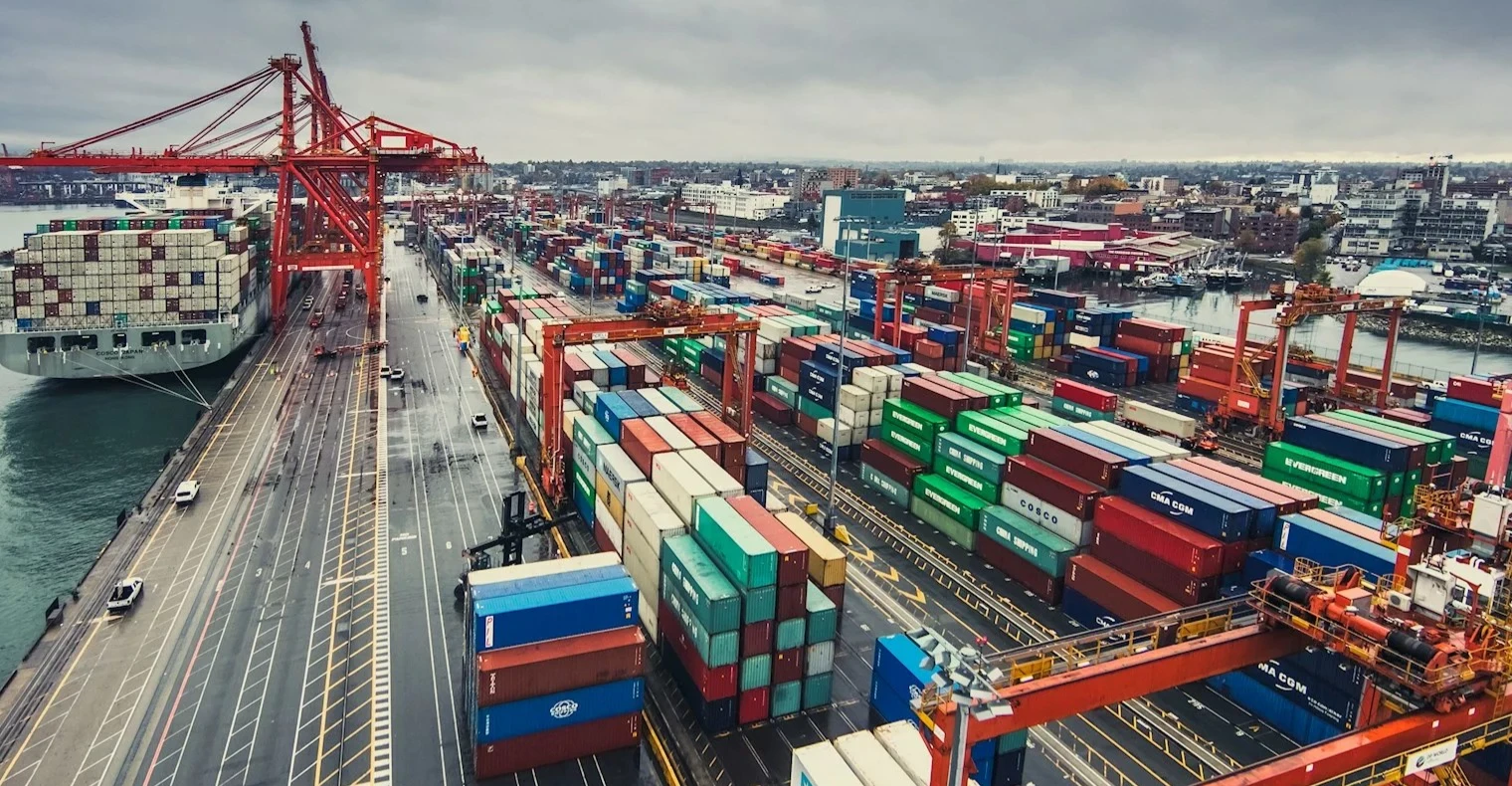
A large portion of the goods destined for Iran were first unloaded at Jebel Ali port before being transported to Iranian ports.
Farshid Farzangan, the former president of the Iran-UAE Chamber of Commerce, says in a report by the Iranian newspaper Shargh , translated by Shafaq News Agency, that the disruption of relations between the two countries is “very costly” because replacing the UAE is not easy and places additional burdens on the Iranian economy.
He gives a concrete example, as the cost of transporting a single container from the UAE to Iran was about four thousand dollars before the war, and rose to about eight thousand dollars afterward, amid the turmoil in the Strait of Hormuz.
He adds that Tehran resorted to the Turkish port of Mersin as an alternative to Jebel Ali, but the cost of transporting the container through it is about ten thousand dollars, which means that the Emirati route remains less expensive despite the risks of war.
Farzangan believes that the cost is not one-way, as the UAE is also incurring losses due to the decline in the tourism sector and the volume of Iranian investments there, stressing that “the interests of the two countries are so intertwined that it is difficult for any party to deny them,” and calling for a review of the relationship and preparation for a settlement.
Conversely, he warns of the other side of the equation: the concentration of trading partners. According to customs reports, the number of countries absorbing approximately 80 percent of Iranian exports declined from 21 countries in 1383 AH (2004) to only seven countries in 1402 AH (2023).
Conflicting signals
The Emirati decision came after months of conflicting reports about the course of the relationship.
During the war, Abu Dhabi recalled its ambassador, closed an Iranian hospital and schools on its territory, and widely cancelled the residency permits of Iranians.
Tehran said its strikes targeted US military bases on Emirati soil, accusing Abu Dhabi of violating the principles of good neighborliness.
But with the signing of the US-Iranian agreement for sixty days, signs of de-escalation appeared.
According to the Iranian report, Reuters quoted sources as saying that the UAE had agreed to make billions of dollars available to Iran. Two sources spoke of ten billion dollars, while two other sources spoke of twenty billion.
Flight tracking websites also detected Emirati planes landing at Mehrabad Airport, sparking speculation about the transfer of cash. However, Abu Dhabi denied releasing any frozen Iranian assets or facilitating financial transfers to Tehran.
On June 16, the Fars News Agency announced the resumption of entry for Iranian wooden ships into three ports in Dubai: Deira Wharf, Hamriya Port, and Waterfront Market, following an official circular that specified new conditions and documents.
On June 27, the IRNA news agency quoted Mohammad Sadegh Ghanadzadeh, deputy for commercial services at the Iranian Trade Development Organization, as saying that trade through the Jebel Ali port had been reactivated, noting that Iranian containers had been piling up there during the war and were being cleared as relative calm returned.
In parallel, there were repeated reports of Emirati tankers being detained or targeted in the Strait of Hormuz, while Gulf states resorted to tactics to circumvent restrictions on navigation, not limited to the use of overland oil pipelines.
According to the report, Bloomberg stated that Abu Dhabi National Oil Company (ADNOC) used tankers to transport liquefied natural gas with the electronic systems (EIS) switched off while crossing the Strait of Hormuz to avoid detection, allowing exports to continue from Das Island, a method the report said Saudi Arabia had previously used.
With this trade and financial artery suspended, Tehran finds itself facing a costly equation: more distant and more expensive alternatives, and a partner that is difficult to replace, at a time when the outlines of a political way out do not appear clear.
shafaq.com
