The return of dollar shipments… Has al-Zaidi won the bet of American trust?
The return of dollar shipments… Has al-Zaidi won the bet of American trust?
2026-05-03
 Shafaq News – Special Translation
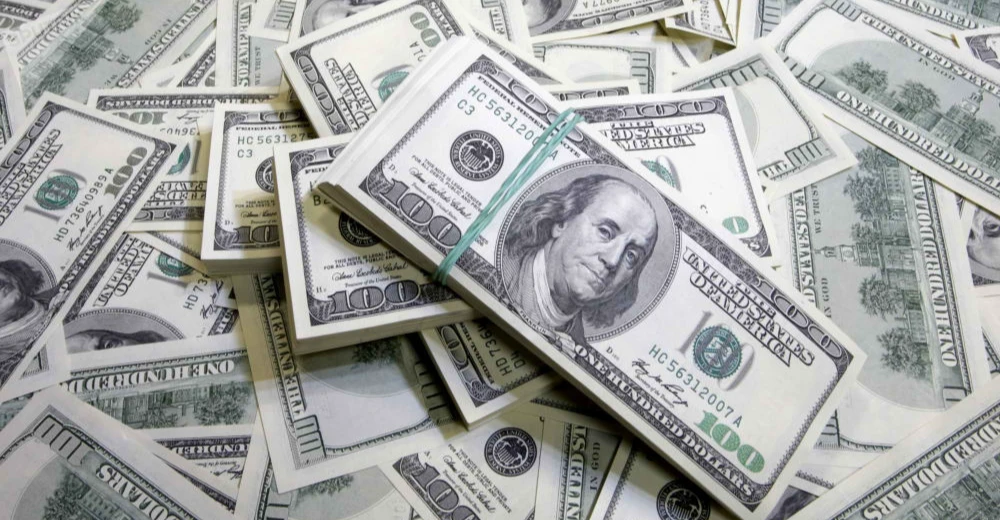
Prime Minister-designate Ali al-Zaidi succeeded in getting a quick response from the United States after he demanded the resumption of sending cash shipments in dollars to Baghdad.
According to the ” Center for Links Research and Strategic Studies ” institute, it carries political and economic significance, and an early message of confidence from the American administration in the Iraqi government that is being formed.
The Amman-based Jordanian Institute stated in a report from Washington, translated by Shafaq News Agency, that the resumption of dollar shipments to Iraq represents the first successful economic test for the new government and reflects its ability to open early channels of understanding with Washington regarding a sensitive issue that affects Iraq’s daily monetary stability.
The report added that the swift American response suggested that the financial relationship between the two sides was still based on coordination, despite regional tensions, noting that the arrival of the first shipment of dollars was not just a banking procedure, but rather an early message of confidence in the new government, and a message of reassurance to the Iraqi markets.
He explained that the arrival of the shipment to Baghdad, after a period of delay, represents an economic moment that carries messages much greater than the value of the shipment itself, indicating that in a country whose economy depends almost entirely on oil, the path of the dollar becomes part of daily financial security, which means that any disruption in it is enough to raise market concerns and increase the sensitivity of the exchange rate.
According to the report, the Iraqi government confirmed the arrival of the shipment after air traffic stabilized and political tensions in the region subsided, in a clear indication that the Iraqi economy is not only affected by supply and demand factors, but also by geopolitical developments, air corridors, and international decisions.
He added that officials explained that these shipments represent only about 5% of the total required cash mass, and that the Central Bank of Iraq keeps the largest share in its vaults. However, the importance of the news lies in its economic symbolism more than the number itself, adding that the continued flow of dollars means that the artery of foreign trade remains open, because Iraq depends on the US dollar to finance imports, settle payments, and calm the exchange market.
On the economic side, the report explained that the resumption of dollar shipments sends three main signals: First, that the central bank still has operational capacity to manage liquidity and prevent any sudden shortage in the market; second, that commercial demand for dollars will remain covered, reducing the chances of the parallel market expanding; and third, a purely psychological signal, as it gives the markets a reassuring message that the financial relationship with Washington remains stable.
However, he pointed out that behind this calm lies a deeper dilemma, explaining that the fact that part of Iraq’s liquidity is linked to external mechanisms reveals the extent to which the country depends on a financial system that it does not fully control.
He also pointed out that any political turmoil, regional tension, or change in banking compliance rules could quickly turn into internal pressure on the dinar and prices.
The report concluded by saying that the real challenge facing Iraq is not just about securing dollars, but about building an economy that does not falter whenever a cash flight is delayed or a region becomes tense, stressing that strong countries are not measured only by the size of their reserves, but by their ability to access them without worry.
shafaq.com
