“The Hormuz Crisis”: A government advisor says Iraq’s foreign reserves are its first line of defense in the war.
“The Hormuz Crisis”: A government advisor says Iraq’s foreign reserves are its first line of defense in the war.
2026-03-04 01:51
 Shafaq News – Baghdad
The Prime Minister’s Advisor for Financial and Economic Affairs, Mazhar Muhammad Salih, affirmed on Wednesday that Iraq possesses fundamental coordination flexibility at three levels between monetary, fiscal, and oil policies, which can form an important umbrella of resilience in the event that regional tensions escalate and exports through the Strait of Hormuz are affected.
Saleh told Shafaq News Agency that “activating these policies in a coordinated and participatory manner gives the national economy the ability to absorb shocks,” explaining that “resorting to land transport of oil containers – although it represents only between 10% and 15% of the average oil exports passing through the Strait of Hormuz – can constitute a complementary option to secure part of the export flows.”
He added that “the rise in oil prices as the war intensifies gives Iraq what is known as the opportunity cost to maximize added value, even with the decrease in quantities, the increase in transportation costs, and the costs of some large fields ceasing to operate,” indicating that “managing exported quantities flexibly is integrated with managing global prices to achieve the best possible return for the general budget.”
Saleh stressed that “foreign reserves represent the most important pillar of stability in such circumstances, as they play a pivotal role in supporting monetary and financial stability, and providing the necessary cover for financing foreign trade and maintaining the stability of the exchange rate.”
He pointed out that “borrowing to support public finances, if managed wisely, can be an important alternative to support the liquidity of the general budget and ensure the continuity of operational and investment spending,” noting that “the national economy currently possesses real resilience against potential external shocks.”
He concluded by saying that “the time factor remains the strategic determinant in crisis management, as good time management and enhanced coordination between economic policies, along with maintaining the financial and living stability of citizens, will transform the shock from a prolonged crisis into a manageable and controllable challenge.”
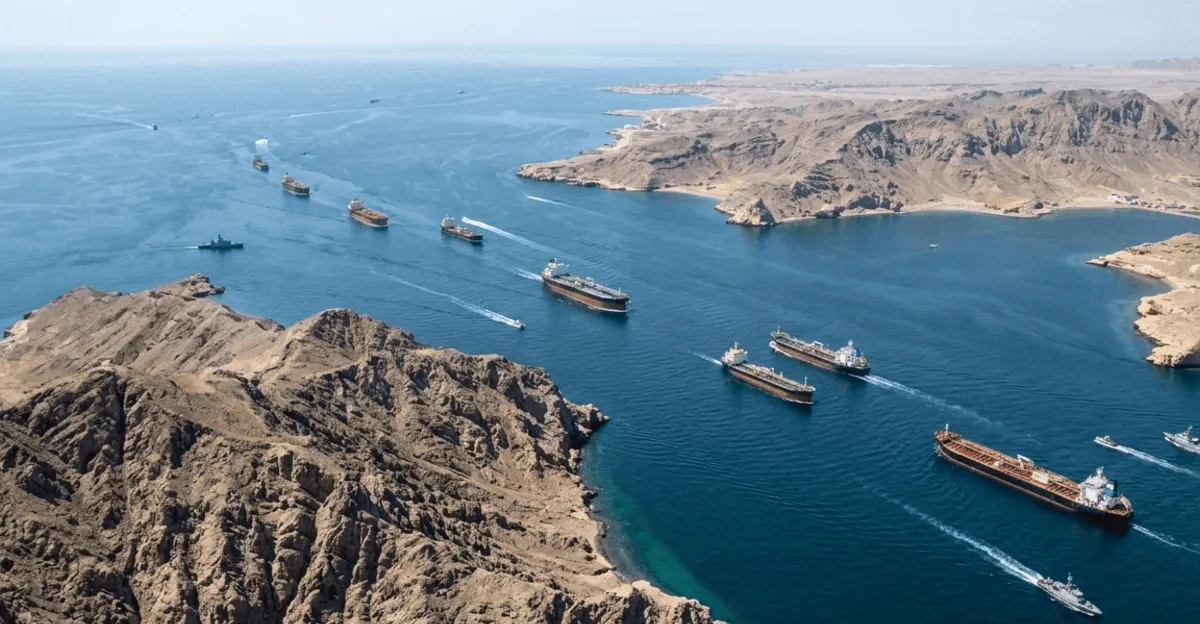
Ship tracking websites revealed earlier on Wednesday that dozens of oil tankers were stopped on both sides of the Strait of Hormuz after the Iranian Revolutionary Guard announced it had taken full control of the strait and closed it.
Today, Iraq is facing one of the most severe economic and geopolitical shocks in its modern history, with the region entering the throes of a “total war” that has brought the country’s only lifeline to a complete standstill.
While Baghdad was struggling to establish the foundations of its financial stability, the closure of the Strait of Hormuz and the cessation of insurance companies’ coverage of tankers signaled the beginning of the “oil strangulation” phase, which put the general budget at the mercy of the wind.
Iraq’s daily losses exceed $128 million, and there are direct threats to the world’s largest oil fields, such as the Rumaila field, whose fires were forcibly extinguished due to the tanks being full and exports being impossible.
shafaq.com
