Romanowski warns of a “vacuum” after the end of the coalition’s mission: Disarming the factions is a complex challenge.
Romanowski warns of a “vacuum” after the end of the coalition’s mission: Disarming the factions is a complex challenge.
2026-09-10
 Shafaq News – Washington/Mustafa Hashim
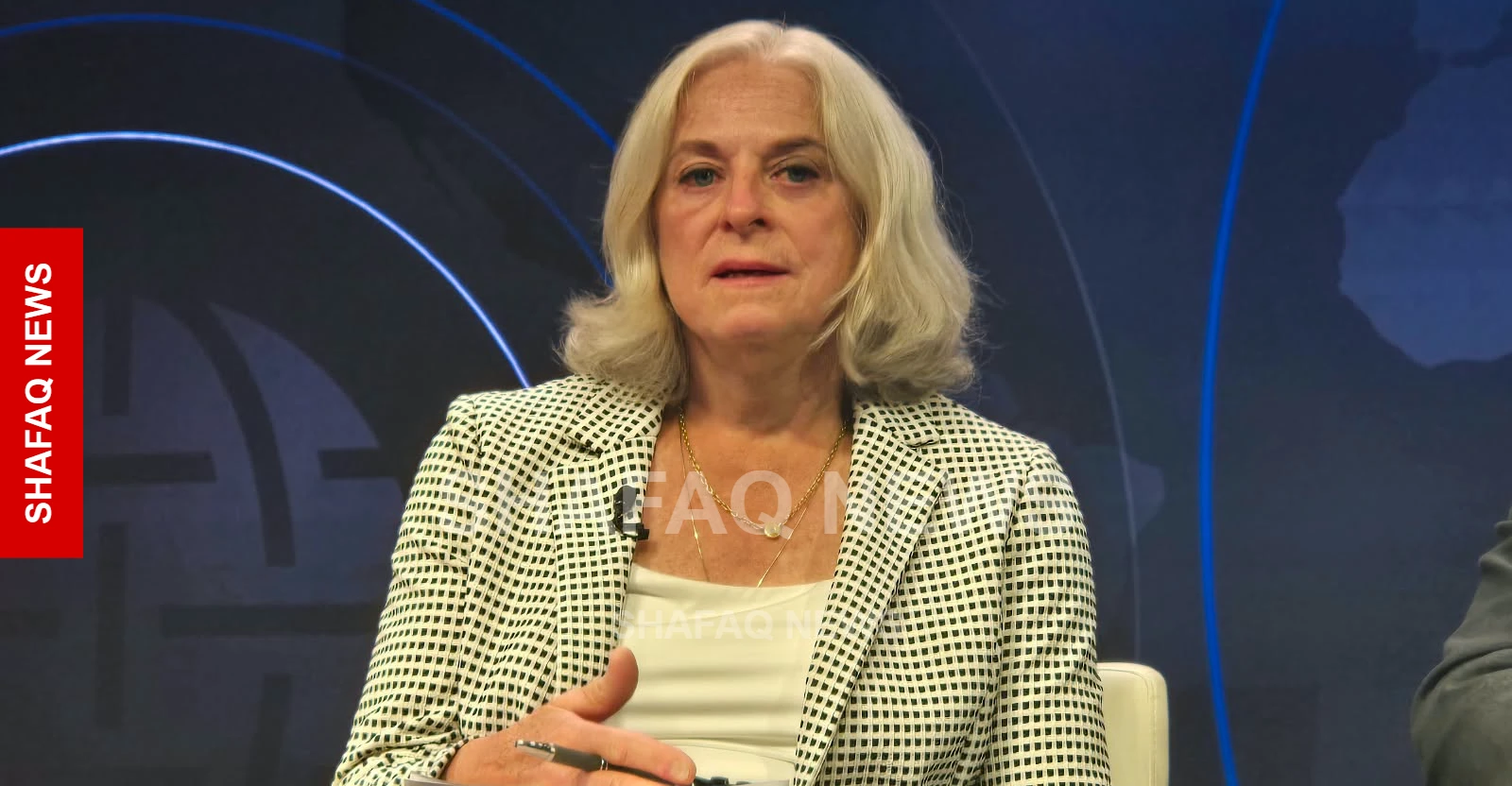
Former US Ambassador to Baghdad, Alina Romanowski, affirmed on Thursday that ending the military mission of the international coalition against ISIS requires building alternative and sustainable security partnerships that ensure no security vacuum is left that could threaten the stability of Iraq and the region as a whole.
This came during her participation in a discussion session organized by the Atlantic Council in Washington, which was attended by a correspondent from Shafaq News Agency, where she explained that the commitment to ending the coalition’s missions by the end of September represents an agreed step, stressing that Washington’s main goal has always been to achieve an orderly transition and avoid any uncalculated withdrawal, in order to allow for the formulation of bilateral security relations with Baghdad.
Romanowski pointed out that the most prominent challenge facing the Iraqi government is the issue of armed factions, considering that efforts to disarm them and confine weapons to the hands of the state face extreme complications in light of the refusal of some parties to engage in security system reforms.
It also warned that the scope of attacks by these groups could widen to include neighboring countries and the region, which undermines Baghdad’s stated desire to distance itself from regional tensions.
The former ambassador concluded by emphasizing that reducing the military presence does not mean abandoning the American commitment, but rather requires redirecting it towards intelligence support, training, and counter-terrorism, noting that maintaining a stable security environment remains an indispensable condition for attracting investments and developing economic and bilateral cooperation between the two countries.
In September 2024, Iraq and the United States agreed to end the military mission of the US-led international coalition against ISIS in Iraq, as part of a phased plan to move the security relationship between the two countries from the framework of the coalition to a bilateral partnership.
The first phase of the mission ended in September 2025, while forces remained in the Kurdistan Region to support operations against the organization in Syria, with the final phase to be completed by the end of September 2026.
The international coalition was formed in 2014 to assist Iraqi forces in confronting ISIS, which at the time controlled large areas of Iraq and Syria. The mission of the coalition forces later shifted primarily to training, advising, and intelligence support, while Baghdad asserts that its forces are now capable of assuming responsibility for security and pursuing the organization’s cells.
shafaq.com
