“Raging for Years”: US-Chinese Competition Over Investments in Iraq
“Raging for Years”: US-Chinese Competition Over Investments in Iraq
2025-10-06 04:43
 Shafaq News – Translation
Iraq represents a vital battleground and an “economic prize” in the face of multipolar geopolitical competition, particularly between the United States and China, with their divergent and competing investment approaches to the opportunities Iraq offers, while Baghdad…
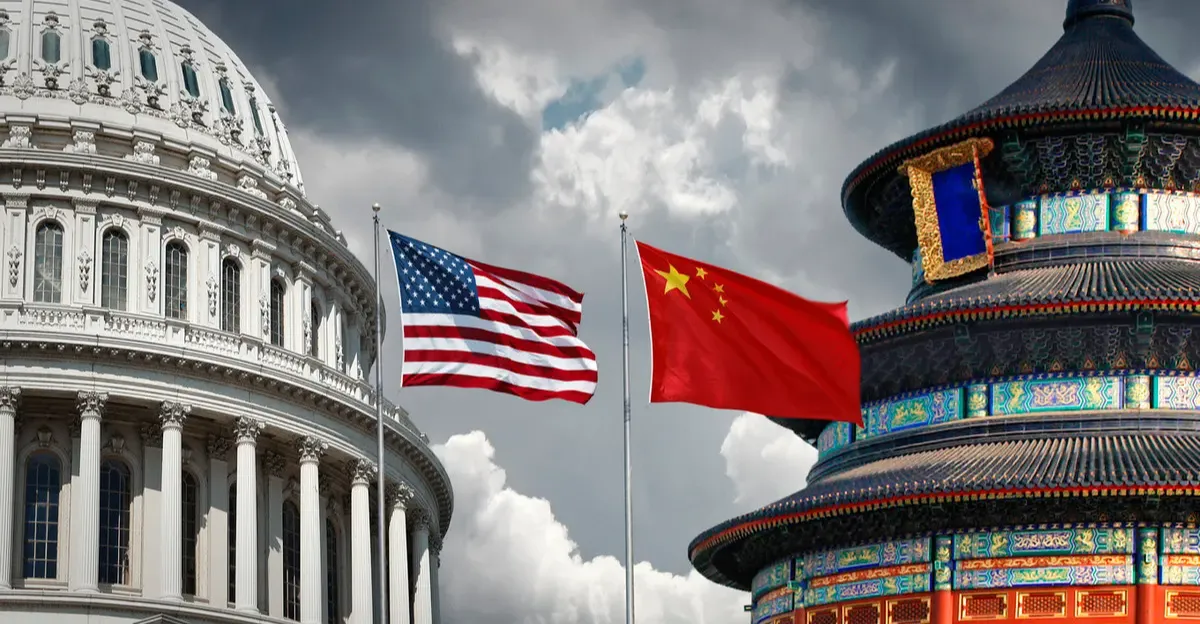
According to a report by the American investigative website “Fair Observer”, translated by Shafaq News Agency, titled “Power Beneath the Sand: The US-China Investment Approach to Iraq,” Iraq is pivotal in the ongoing rivalry between the United States and China, as it attempts to strike a balance between the US-led approach to security and reforms and China’s approach of rapid state-led infrastructure investments.
He believed that Iraq’s success, given China’s dominance of foreign investment in the country, hinged on its ability to combine China’s capacity to implement its projects with American institutional support, along with ensuring oversight, knowledge transfer, and combating corruption, so that Iraq can achieve sustainable development amidst competition from major powers.
The report explained that Iraq represents a vital battleground, noting that its location connects the spheres of influence of Iran, Turkey, and the Gulf states. In addition, its vast oil reserves and OPEC membership, which represents approximately 80% of the world’s oil reserves, make Iraq an “economic prize” within the multipolar battlefield.
He added that the relative stability in Iraq following its fight against ISIS represents an investment opportunity for Chinese and American companies in reconstruction and development efforts, with the subsequent significant influence this will have on both Beijing and Washington.
The report also stated that both the federal government in Baghdad and the Kurdistan Regional Government have been involved in investment attraction efforts since the declaration of victory over ISIS in December 2017, citing the example of the “Resettlement Fund,” which Baghdad established in October 2024 as part of an agreement with the Egypt-based Elsewedy Electric Company to attract foreign investment in strategic projects in non-oil industries, with the aim of diversifying its portfolio.
He stated that while the US and Chinese investment models are significantly different, Iraq has demonstrated the potential to leverage both models, thereby enhancing development and reconstruction potential. He added that the US investment approach emphasizes transparency, regulatory reform, and civil society engagement, while China’s investment approach prioritizes investment suitability and the delivery of large-scale infrastructure projects through state-directed capital with minimal political conditions, a point often highlighted in Chinese government publications.
The report explained that the US approach often includes public-private partnerships and market liberalization, while Chinese investment typically occurs through state-owned enterprises and soft loans, a phenomenon particularly evident in oil-for-infrastructure agreements in Iraq.
After referring to the rules of the American playbook, he argues that since the 2003 invasion, the United States has taken a multifaceted approach to engagement in Iraq, first by establishing military bases to support the new transitional government, and second by relying heavily on both development institutions and American government organizations, such as the World Bank and the United States Agency for International Development, as well as supporting International Monetary Fund loans that financed reconstruction while encouraging financial reforms.
According to the report, the US development strategy in Iraq relied on creating business-friendly environments through security and financial reform to facilitate private investment. The report indicated that the role of private investment in Iraq’s modernization process did not take off in earnest until security returned to the country, not before that.
As for China, its strategy has been much more flexible. Beijing, which has not hesitated to invest in unstable countries, saw Iraq as a golden opportunity to access oil and strategic infrastructure in the Middle East. He noted that Iraq has received more than $10 billion in investments from Chinese companies through the Belt and Road Initiative since 2015, making it the fourth-largest recipient of such investments.
The report continued, stating that China was Iraq’s largest export destination annually between 2019 and 2023, with 99.3% of its exports being oil. It emphasized that Chinese investments, unlike private American investments, have not been hindered by the security situation in the country.
He points out that the state-owned China National Petroleum Corporation (CNPC) purchased some of the first oil licenses issued to foreign companies after the 2003 invasion. He adds that China has invested in road, telecommunications, and education projects, including Huawei, China’s largest company, which has investments in Iraq. However, CNPC was the largest foreign investor in Iraq.
In November 2008, the China National Petroleum Corporation (CNPC) also won a $3.5 billion contract to develop the Ahdab field, and by 2014, CNPC was the largest foreign investor in Iraq, with China investing in roads, telecommunications, and education.
The report went on to say that Chinese companies are estimated to hold 7.27% of oil and gas development projects in Iraq, the largest share of any country other than Iraq, while American companies hold less than 2% of these investments. China has positioned its approach as distinct from the United States, consistently emphasizing its non-interference in Iraq’s internal affairs, and its officials consistently highlight their commitment to “protecting national sovereignty…and territorial integrity,” a key message reiterated by the State Department.
This framework was a strategic advantage, potentially giving China an edge over the United States in securing investment opportunities in Iraq, according to the report. The report also emphasized that while the two models differ, Iraq has the potential to benefit from both simultaneously by leveraging China’s rapid infrastructure development to meet pressing needs, such as roads, energy, and housing, while simultaneously leveraging U.S. partnerships to strengthen institutional capacity, foster entrepreneurship, and improve transparency.
However, the report called on the Iraqi government to develop a clear national investment strategy that aligns short-term projects with long-term development goals, while strengthening regulatory oversight and diversifying funding sources. It also called on Iraq to implement a knowledge transfer law for every project and to form a special committee to combat corruption in foreign-funded projects, within the framework of the Integrity Commission.
The report concluded that if Iraq’s strategy succeeds, it could serve as a model for other countries on how to navigate the “US-China” competition in a “win-win” manner.
However, the report noted that China, unlike the United States, does not have a controversial military history in Iraq, which represents a significant advantage for Beijing. It explained that this perception will ultimately influence how the Iraqi government navigates the ongoing power competition between the United States and China and determines an investment model that ensures sustainable reconstruction and development that Iraqis can trust.
shafaq.com
