Private banks in Iraq: Numerous banks and a lack of trust hinder genuine investment of funds.
Private banks in Iraq: Numerous banks and a lack of trust hinder genuine investment of funds.
2026-02-03 02:39
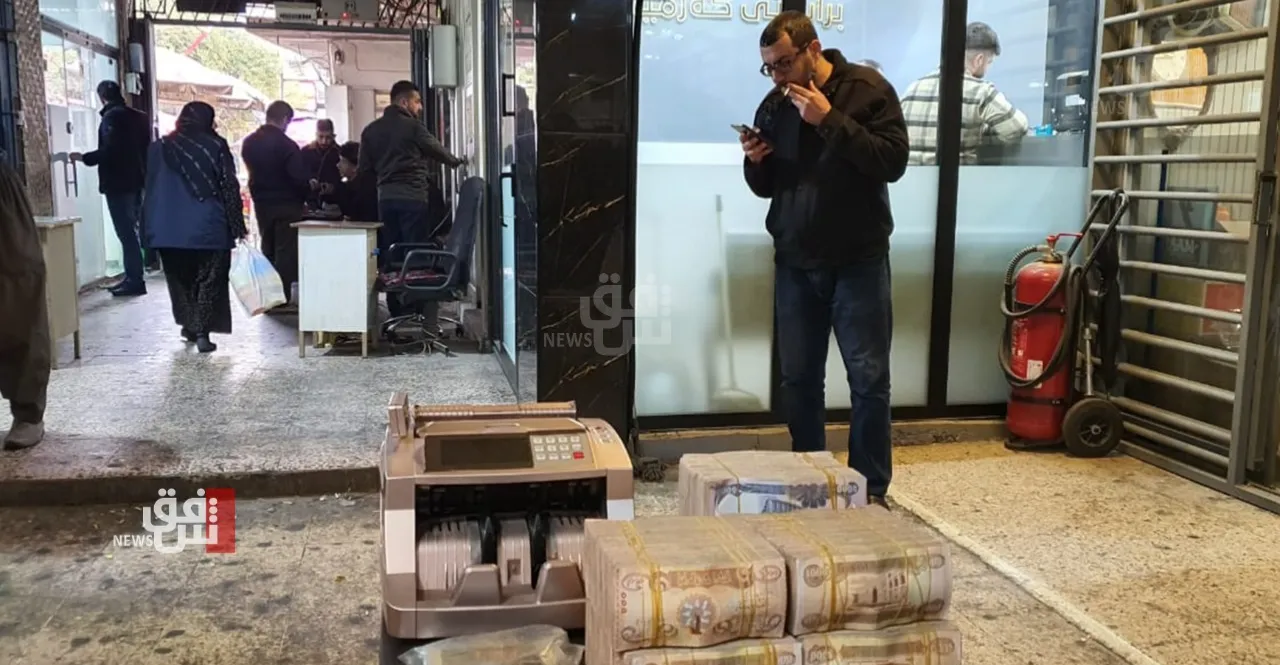 Shafaq News – Baghdad
Despite the significant increase in the number of private banks operating in Iraq and the expansion of their capital in recent years, their contribution to credit activity remains limited in relation to the size of the local economy and its financing needs, as well as being much less than what is offered by banks in neighboring countries and even government banks.
At a time when bank credit is supposed to be a key tool for driving the economy, through financing productive projects, supporting the private sector and creating job opportunities, local banks are still concentrated on low-risk activities and quick returns, which limits their ability to perform their developmental role.
This reality reflects an imbalance in the structure of financial intermediation and a weakness in directing savings towards real investment, which raises economic questions about the efficiency of credit policy, the level of risk, and the role of regulatory bodies in promoting a more effective and sustainable banking environment.
Government control over deposits
Financial expert Mahmoud Dagher told Shafaq News Agency that “government banks hold 85% of total deposits, and the remaining 15% is for the 60 private banks, and therefore these banks are not playing their role in the banking process correctly.”
Dagher, who was a general manager at the Central Bank, pointed out that “Iraqi society, Iraqi money, and even salaries are mostly governmental, because Iraqi society and Iraqi money are mostly governmental, and this is a problem in the banking system in Iraq,” adding that “private banks granted more credit than governmental banks in 2025.”
There are 83 banks operating in Iraq, including 8 government banks, 24 commercial banks, and 31 Islamic banks, in addition to 17 branches of foreign commercial and Islamic banks and three representative offices of foreign banks.
Lack of capital
For his part, economist Hilal Al-Taan told Shafaq News Agency that “the most important reasons for the inability of private banks to play their role in the development process are the weakness of the economic and investment environment in Iraq due to the complete instability of the political and security situation in Iraq, which has weakened the ability of private banks to enter into long-term investments due to increased financial risks.”
He explained that “the lack of capital in private banks and their inability to contribute to the development process as required has weakened their credit work, as well as the government banks’ acquisition of the banking sector, especially Al-Rafidain and Al-Rasheed banks.”
He pointed out that “the weakness of the banking legal environment in Iraq is due to weak financial governance, in addition to another factor in the weakness of private banks.”
Currency exchange banks
For his part, economist Dirgham Muhammad Ali told Shafaq News Agency that “many private banks in Iraq were established for the purpose of participating in the currency window and obtaining a portion of it without engaging in other banking activities, which has confused customers and weakened their confidence in most of the banking system.”
Mohammed added that “the Central Bank’s directives on two banks and the freezing of people’s deposits have reinforced fears of dealing with private banks, but the increase in financial inclusion, linking the purchase of housing units to banks, and the cooperation of bank owners with real estate investors have boosted the effectiveness of some private banks and made them contributors to the credit market.”
Financial expert Adnan Hatem told Shafaq News Agency that “in most countries of the world, private banks are a fundamental pillar in the fields of reconstruction and investment in several sectors, but in Iraq we find that banks are far removed from these priorities.”
He added that “Iraq has a very high percentage of private banks compared to other countries in the Middle East, but most of these banks are ineffective and their activities are concentrated on the currency sales window and low-risk activities with quick returns.”
Bank restructuring
On the other hand, the Deputy Governor of the Central Bank, Ammar Al-Ithawi, pointed out that “there is a restructuring of private banks operating in Iraq that included 3 paths: remaining in the market through compliance with standards, or merging, or exiting the market.”
Al-Aithawi explained to Shafaq News Agency that “most private banks in Iraq adhered to the first and second paths, either continuing alone while adhering to these standards, or merging, but a small number of them chose to leave automatically, and they are a small minority that does not exceed 5 banks.”
Al-Ithawi acknowledged that “financial inclusion is relatively low in Iraq compared to neighboring countries, and the use of cash is still widespread.”
In April 2025, the Central Bank of Iraq launched a private banking reform plan in cooperation with the American company Oliver Wyman. The plan focuses on enhancing and deepening financial inclusion, raising the efficiency and productivity of the private banking sector, and creating a fair and healthy competitive environment in the market while improving the sector’s resilience and ability to withstand risks.
shafaq.com
