Prime Minister’s Office in Iraq
Prime Minister’s Office in Iraq
2026-05-31 04:56
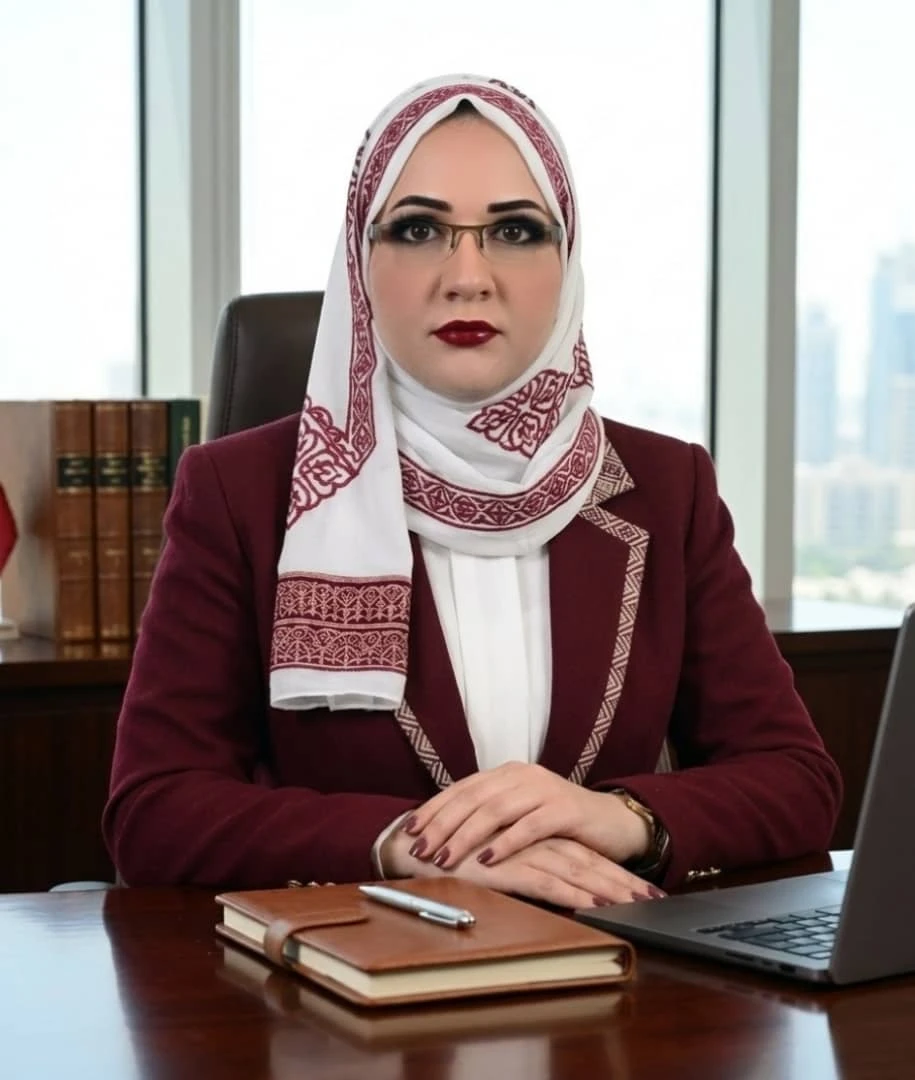 Duaa Hazzaa Al-Jabri
The Iraqi Prime Minister’s Office: Changing faces, but a closed system perpetuating corruption.
Since the collapse of the Iraqi state structure in 2003, public positions have no longer been merely places to serve the people or temporary national responsibilities, but have gradually turned into open political spoils, the value of which is measured by the privileges, salaries, protections, contracts and influence they generate. Thus a new political class has emerged, which often does not fight over principles or programs as much as it fights over sources of political “milking and feeding,” as the state has turned into a huge cow whose udders are distributed among parties, groups, movements and influential people.
In most modern countries, membership in parliament or the ministry is viewed as a temporary public assignment, subject to accountability and oversight, and its privileges remain within reasonable limits that do not make the position a project for enrichment or political investment. In Iraq, however, the privileges have ballooned to the point that many positions have become like lucrative commercial projects, bought and sold and managed according to the logic of quotas and loyalties.
Over the years, electoral competition has become less about visions and plans and more about a struggle to reach “political feeding centers”; that is, positions that give their owners the ability to distribute benefits, buy loyalties, and feed networks of influence. From here, the phenomenon of quotas has expanded, not only as an administrative flaw, but as an integrated economic and political system that lives on recycling privileges and sharing spoils.
Even more dangerous is that this culture did not stop at the limits of the political class, but rather seeped into society itself, until many came to view public office as an opportunity for milking rather than serving, and the state as a source of sustenance for parties, cronies, and those close to them, rather than as a comprehensive national entity. Thus, politics was transformed from the management of public affairs into a large market for bargaining, in which the value of people is measured by their ability to bring in gains rather than by competence or integrity.
Perhaps one of the cruelest paradoxes is that countries called “developing” often grant their officials privileges that exceed those of their counterparts in more advanced and stable countries. In many established democracies, a minister or deputy leaves his post to return to being an ordinary citizen without armies of guards, lavish processions, or fantastical pensions. In Iraq, however, some positions have turned into permanent gateways to influence and wealth, to the point that the scramble for them has stripped them of their national identity and turned them into a cheap political bazaar.
The most dangerous outcome of “political milking and breastfeeding” is not only the depletion of public funds, but also the distortion of the very meaning of the state. When power becomes a means of mutual feeding among influential forces, the entire nation becomes merely an open farm for fattening corruption, weakening institutions, and impoverishing people. At that point, politics is no longer the art of managing states, but rather the art of managing milking.
shafaq.com
