Local and Iranian drones… Details of Asaib Ahl al-Haq’s weapons handover to the state (exclusive)
Local and Iranian drones… Details of Asaib Ahl al-Haq’s weapons handover to the state (exclusive)
2026-08-21
 Shafaq News – Baghdad
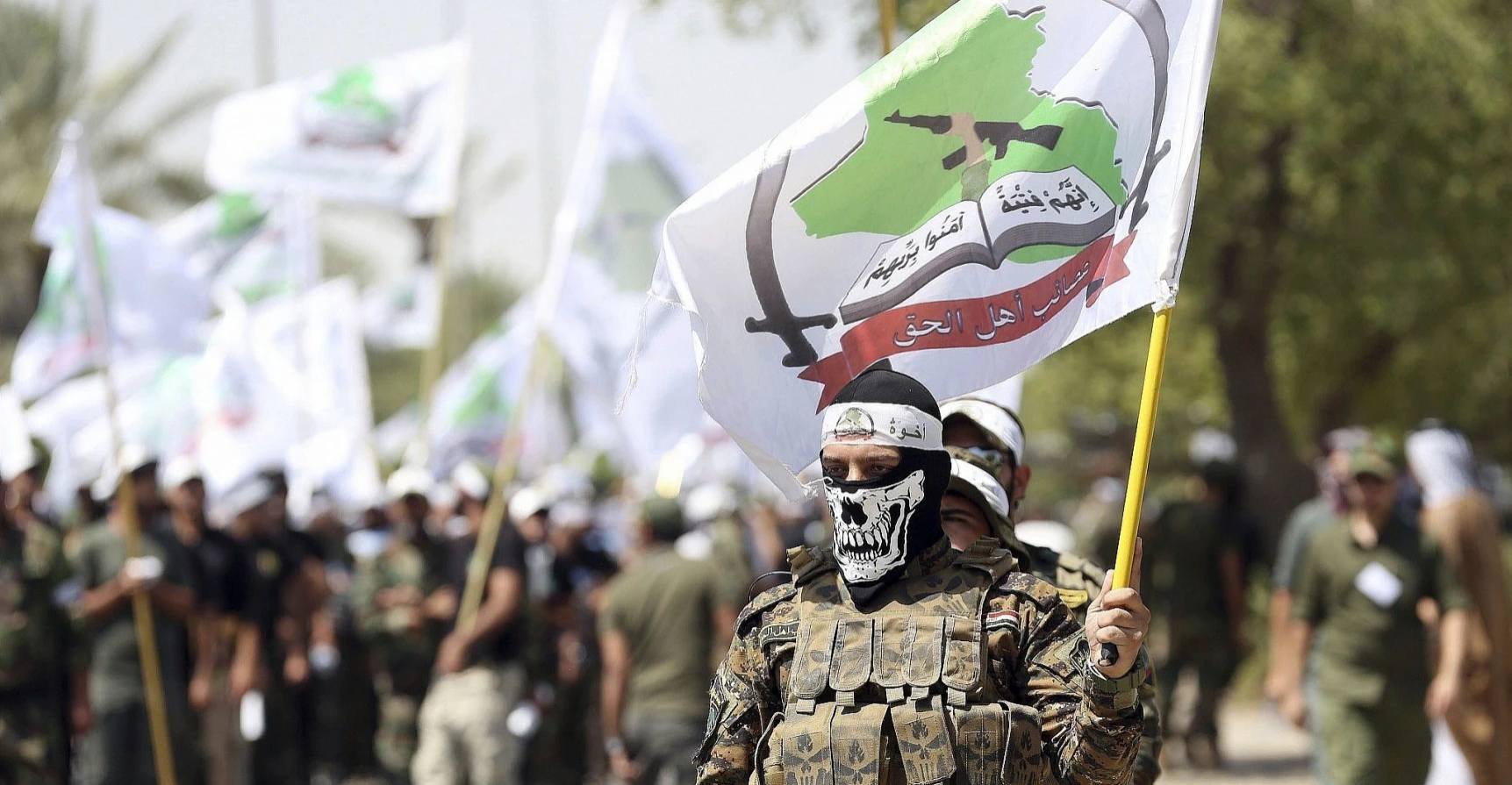
On Friday, a source familiar with the inner workings of the factional movement in Iraq revealed details of the process by which one of the factions handed over its weapons to the state, confirming that there are positive signs regarding the issue of restricting weapons to the state.
The source told Shafaq News Agency that “Asa’ib Ahl al-Haq, which expressed its support for what Prime Minister Ali al-Zaidi proposed regarding restricting weapons to the state, handed over weapons that it had in one of its headquarters in the Yusufiyah district, south of Baghdad, two days ago.”
He explained that “the weapons belong to the 41st and 42nd Brigades, which recently merged into the Popular Mobilization Forces, and therefore the handover process represents the completion of the stage of joining the official institution,” indicating that “the weapons that were handed over included locally made drones and others of Iranian origin, with a number of less than 10 drones, all of which were without ammunition, in addition to other various weapons.”
The source added that “the handover process took place in the presence of the committee overseeing the receipt of weapons from the factions, which includes representatives from the Ministries of Interior and Defense, the National Security Advisory, and the Popular Mobilization Forces,” stressing that “the process was officially documented.”
The source denied receiving any missiles as part of the operation, explaining that “the missiles required to be delivered, according to the committee’s mechanism, are missiles with a range of 300 kilometers or more.”
Regarding the progress of the weapons inventory and management file, the source indicated that “the file will proceed without major complications or problems, given the positive signals received by the framework committee concerned with dialogue with the leaders of the factions refusing to hand over weapons.”
He continued, saying that “the inventory and management of weapons will proceed after the final withdrawal of US forces from Iraq, in accordance with the security agreement concluded between Baghdad and Washington,” indicating that “the process of managing weapons will take place after the withdrawal of all US and foreign forces from the country.”
According to the source, the American and foreign withdrawal will send reassuring messages to the Iraqi resistance factions, which may contribute to advancing the issue of restricting and managing weapons to more advanced stages.
Regarding the bringing of private security companies by American investment and economic firms to Iraq to implement projects, the source pointed out that “economic partnership with Washington is not problematic, but rather welcome, with the exception of any military or security presence or partnership with the United States.”
The issue of armed factions is one of the most sensitive issues facing the Iraqi government, with the approach of September 30, which the main political forces have set as the deadline for restricting weapons to official institutions.
The State Administration Coalition, which includes the most prominent Shiite, Sunni and Kurdish political forces, stressed during its meeting on August 5 the need to restrict weapons to the state, and considered the parties that carry out activities that threaten the security of the country outside the framework of official institutions as “outlaws and must be fought.”
The coalition warned that any armed activity outside the framework of the state after September 30 would be dealt with according to the anti-terrorism law.
Following this, Iraqi security and military forces raised their readiness level throughout the country, and the leave of a number of commanders and officers was cancelled, while security agencies began implementing field movements and exercises in anticipation of any emergency or friction that might develop into an armed confrontation.
Last week, Baghdad witnessed hours of security tension coinciding with threats by armed factions to retaliate against Saudi Arabia after strikes targeted Popular Mobilization Forces sites, before it ended with contacts and a dawn meeting between Prime Minister Ali Faleh al-Zubaidi and Badr Organization leader Hadi al-Amiri, which led to a mutual calming and opened the way for diplomatic action to address the crisis.
Al-Amiri later called on the “Islamic Resistance” factions to postpone any military response against Saudi Arabia and to prioritize “Iraq’s higher interest,” but he returned and stressed during a meeting with a number of Popular Mobilization Forces leaders the importance of maintaining a high level of readiness.
The plan to restrict weapons does not have a unified stance from the armed factions.
While some forces expressed a willingness to reorganize their military and security relationship with the state, other factions, including Kataib Hezbollah, Harakat al-Nujaba and Kataib Sayyid al-Shuhada, announced their refusal to relinquish their military capabilities, and linked any discussion about their weapons to the end of the presence of foreign forces and ensuring the protection of Iraq from external attacks.
September 30th also coincides with the deadlines related to ending the international coalition’s military presence in Iraq, which some factions use as a basis for linking the future of their weapons to the withdrawal of foreign forces.
shafaq.com
