Lack of alternatives and existing risks: Iraq faces the Hormuz crisis.
Lack of alternatives and existing risks: Iraq faces the Hormuz crisis.
2026-06-22
 Shafaq News – Baghdad
Warnings from economic experts in Iraq converge on the fact that any prolonged disruption in the Strait of Hormuz represents not just a passing transport or shipping crisis, but a direct threat to one of the most oil-dependent economies in the region, at a time when the country still depends on crude oil to secure about 90% of its public revenues, while the majority of its oil exports and commercial imports pass through the Gulf.
These warnings come amid uncertainty in global energy markets following repeated threats to close the Strait of Hormuz again and conflicting statements regarding shipping traffic through it, amid fears that the world’s most important maritime route for oil trade could become a geopolitical pressure tactic with profound effects on the Iraqi economy.
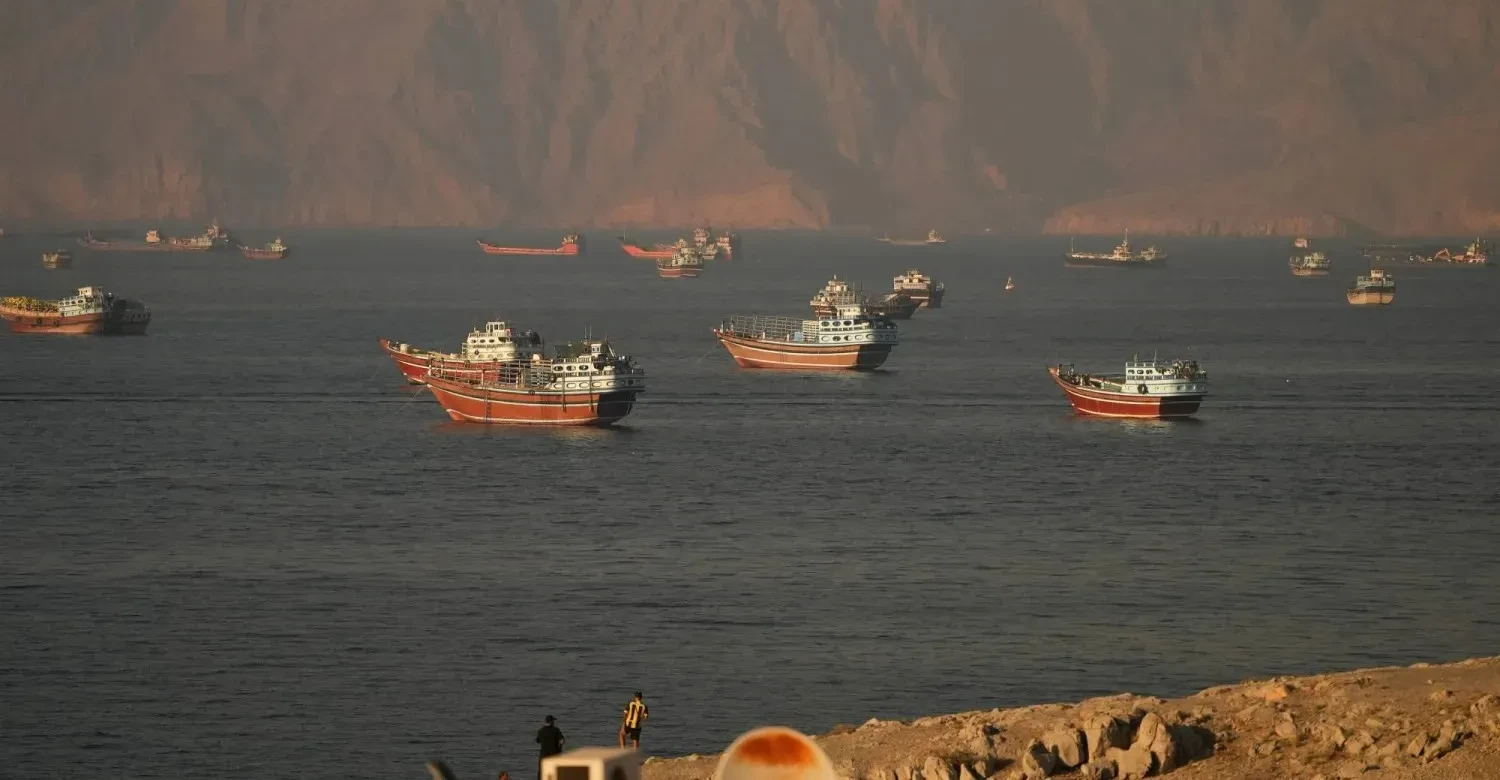
Iraq relies on the Strait of Hormuz to export between 96 and 97% of its crude oil, while a large proportion of goods and merchandise imported into the country arrive via the Gulf and Basra ports, making any disruption to shipping traffic a double impact on oil revenues and trade supply chains simultaneously.
Economic estimates indicate that Iraq lost about 350 million barrels of export opportunities in recent months as a result of the disruptions that accompanied the Strait crisis, with a value approaching $37.7 billion. This figure reveals the extent of the risks posed by almost complete dependence on a single export outlet and a single economic resource at the same time.
Iraqi import artery
In this context, economist Safwan Qusay says that more than 70% of Iraqi imports depend on the southern ports, especially the port of Umm Qasr, explaining that any disruption to navigation in the Gulf basin or any disruption to oil exports directly affects the financial and economic stability of the country.
Qusay adds to Shafaq News Agency that the disruption of supply chains leads to bottlenecks in preparation and delays in the arrival of imported materials, noting that relying on alternative routes to transport goods coming from China and Asian countries towards the port of Aqaba requires more than 15 additional days, in addition to the significant increase in insurance and shipping costs and the risks associated with transportation operations.
According to Qusay, the daily losses resulting from this fluctuation are no less than $30 million, even with the continued use of alternative routes, due to the high costs of transportation and insurance and the decline in the efficiency of trade.
The concerns are not limited to the import movement alone, as specialists believe that the greatest danger lies in the threat to oil revenues, which represent the backbone of the general budget, at a time when salaries and operating expenses consume the largest part of government spending, while the contribution of non-oil sectors to the gross domestic product remains limited.
In this regard, economic researcher Ahmed Eid says that the continued threats to close the Strait of Hormuz again represent one of the most prominent risks facing the Iraqi economy, given the country’s dependence on oil exports passing through the Gulf to secure the largest part of its financial resources.
Eid explains to Shafaq News Agency that any restriction on tanker movement or disruption to navigation raises increasing concerns about declining oil exports and lower government revenues, which is reflected in public spending levels and the financing of projects and basic services.
He points out that the repercussions of the crisis are not limited to oil alone, but extend to foreign trade, as the ongoing disruptions lead to higher shipping and marine insurance costs, as well as potential pressure on the exchange market and dollar flows if the crisis continues for long periods.
These concerns reveal a deeper problem facing the Iraqi economy, which is the continued dominance of oil in sources of income, despite repeated calls to increase the contribution of non-oil revenues by reforming border crossings, developing the tax system, activating electronic automation, and reducing waste and financial corruption.
Hormuz Strait Shock
Experts believe that the recurring crises related to oil prices or export methods have proven that the Iraqi economy remains highly sensitive to external shocks, whether resulting from fluctuations in global markets or from geopolitical tensions in the region.
For his part, international economic expert Nawar Al-Saadi says that any actual closure of the Strait of Hormuz would represent a major economic shock for Iraq, because it targets the main source of the state’s public revenues.
In an interview with Shafaq News Agency, Al-Saadi confirms that the Iraqi economy is still highly dependent on oil revenues, and therefore any disruption to exports directly affects the government’s ability to finance the budget, operational and investment spending.
He points out that the repercussions of the crisis extend to public finances, the labor market, investment and foreign trade, as the budget is under severe pressure as a result of the decline in revenues, while government projects and levels of development spending are affected, in addition to repercussions on monetary stability and the purchasing power of citizens if the crisis lasts for a long time.
Although tensions in the Strait have driven up global oil prices, Al-Saadi asserts that Iraq has not been the biggest beneficiary of these price increases, as it has been unable to export sufficient quantities of oil, meaning that the price increase has not compensated for the loss of exports.
Amid these developments, experts agree on the need to move quickly towards strategic alternatives that reduce the vulnerability of the Iraqi economy to maritime straits crises. This includes accelerating pipeline projects and alternative export outlets, expanding trade routes, strengthening regional connectivity projects, as well as encouraging local production and reducing dependence on imports of goods that can be produced domestically.
Qusay continues, saying that “Iraq needs to open new export and import outlets away from the Strait of Hormuz,” warning that “the disturbances related to the waterway will continue for long periods depending on the course of the negotiations currently underway in Switzerland and the political and security tensions in the Gulf region.”
US President Donald Trump threatened the Iranians, coinciding with the talks between the US and Iranian delegations in Switzerland on Sunday, saying, “If you close the Strait of Hormuz, you will not have a country, and you will not even be able to return to it,” after the Iranian threat to close the strait again in response to the continued Israeli escalation in southern Lebanon.
According to Trump, during an interview with Fox News, “We may take control of the Strait of Hormuz if we have to,” explaining that “if we do not reach an agreement with Iran, we will impose transit fees in the Strait of Hormuz.”
These threats prompted the Iranian negotiating delegation to halt talks with the American side in protest against Trump’s statements directed at Tehran, after the end of the first round of negotiations.
shafaq.com
