Iraq’s liquidity crisis: A “worst-case scenario” is expected, with government attempts to exploit “loopholes” to allow borrowing.
Iraq’s liquidity crisis: A “worst-case scenario” is expected, with government attempts to exploit “loopholes” to allow borrowing.
2026-01-29 04:42
 Shafaq News – Baghdad
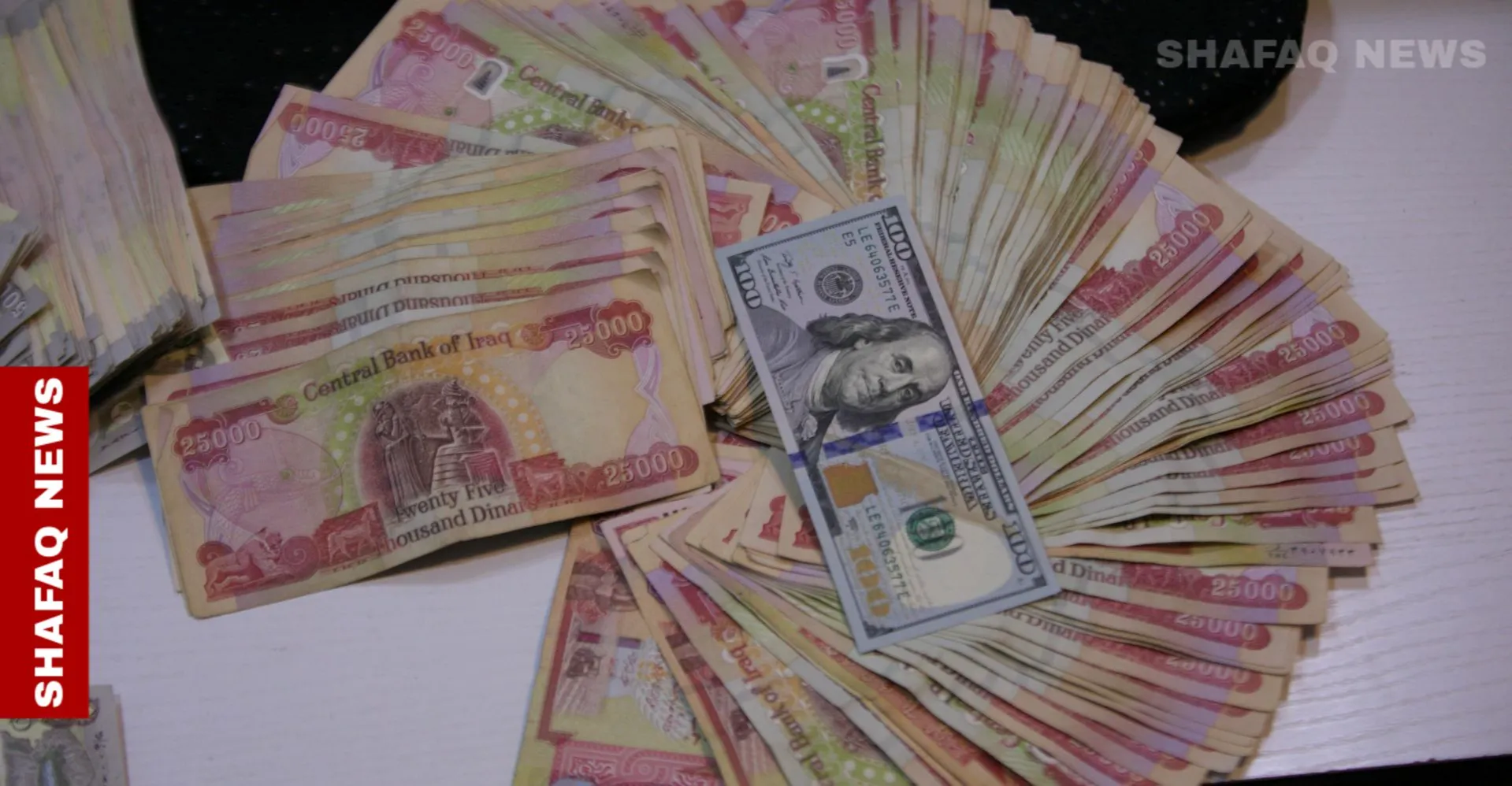
Economic assessments vary regarding the country’s ability to overcome the liquidity crisis, especially with the growing anxiety and discontent among state employees due to the delay in releasing their monthly salaries.
While economic analyst Nabil Al-Marsoumi warned of widening financial turmoil and the continuation of the salary crisis in the absence of a fully empowered government, the Prime Minister’s advisor, Mazhar Muhammad Saleh, confirmed the existence of legal loopholes that allow the government to resort to limited and temporary domestic borrowing to secure basic expenses, based on the Federal Financial Management Law.
Al-Marsoumi told Shafaq News Agency that “Iraq, in any case, needs a new government to replace the caretaker government,” noting that “the formation of the government may be delayed, especially after what he described as the (American veto) on Nouri al-Maliki, which may also be reflected in the delay of approving the 2026 budget.”
Al-Marsoumi added that “this delay will increase the state of financial and economic turmoil in the country,” indicating that “there is no hope of resolving the financial crisis except through a rise in oil prices.”
He explained that “oil prices are currently heading towards $70 a barrel,” but he considered this rise “temporary and linked to geopolitical changes and security disturbances in the region.”
He pointed out that “once these tensions subside, prices will return to their previous levels,” noting that “any increase in oil revenues will not reach Iraq for at least two months, which means that financial risks are likely to worsen, especially with the absence of a fully empowered government.”
Al-Marsoumi stressed that “the failure to form a new government means the absence of legal cover for the caretaker government to borrow from government banks,” noting that “the delay in salary payments that occurred recently may continue during the coming months, and may even worsen.”
In addition, the advisor to the outgoing Prime Minister, Mazhar Muhammad Saleh, told the agency that “it is legally possible for the government to resort to borrowing in the event that the general budget is not approved and there is a temporary shortage of liquidity, provided that this borrowing is limited, temporary and directed exclusively to secure mandatory priority expenditures, foremost among them the salaries of employees, pensions and social welfare benefits.”
He added that “this type of borrowing is a tool for managing liquidity and ensuring regular spending, and is not classified as financing a structural financial deficit, based on what is allowed by the amended Federal Financial Management Law No. (6) of 2019, and in accordance with the provisions of Article (29) thereof.”
He continued: “It is also required that the borrowing in this case be internal and short-term, without entering into long-term commitments or financing new investment expenditures, and that it be settled later after the general budget is approved.”
Saleh stressed that “maintaining the regularity of salary and pension payments is a fundamental element of economic and social stability, and enhances confidence in the state’s fiscal and monetary policy. Accordingly, Article (29) permits the government to use temporary and short-term financing, such as treasury advances or limited domestic borrowing, to ensure the continued disbursement of the state’s basic needs in the event of a delay in approving the budget or a temporary shortage of liquidity,” noting that “this financing must not turn into a permanent obligation or an unjustified expansion in spending.”
It is noted that most ministries and state institutions have not yet received the salaries of their employees due to a lack of financial liquidity, despite completing the procedures and sending the payroll lists to the Ministry of Finance, which has led to a delay in disbursing the dues in light of the scarcity of cash at government banks.
The employees’ salaries have not been released as of Thursday, the 29th of the month, even though they are usually disbursed between the 20th and 25th, which has caused concern and resentment among the employees.
An informed source attributed the failure to receive salaries to “a shortage of financial liquidity,” despite the completion of the lists and procedures related to financing, which caused a delay in disbursing entitlements in light of the limited cash available at government banks.
According to a document issued by the office of the Minister of Finance, obtained by Shafaq News Agency, the directive was based on the directive of the Minister of Finance, and includes the General Administration and all branches, with attendance to be during official working hours and after them until the distribution of salaries is completed.
The Federal Ministry of Finance launched on Thursday the funding for employee salaries in state institutions, while directing that the disbursement be in the form of meals.
shafaq.com
