Iraq’s Internal Debt in Numbers: From Currency Printing to the Three-Year Budget
Iraq’s Internal Debt in Numbers: From Currency Printing to the Three-Year Budget
2025-10-21
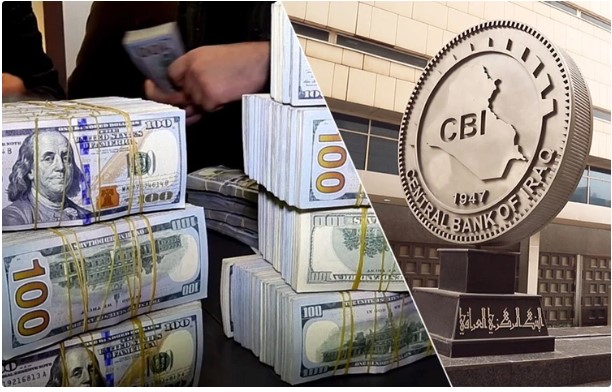 Since 2003, Iraq has been trapped in a vicious financial cycle, plagued by recurring crises and changing governments. The only constant, however, is its reliance on domestic debt as a temporary savior during every financial crisis or oil price downturn. Whenever revenues dwindle, the state resorts to financing through banks or the central bank to cover the deficit, pay salaries, and continue spending, without generating new resources or restructuring the economy.
This policy, which began as an exceptional option, has over the years become a permanent approach, with domestic debt becoming part of the state’s financial structure, rather than a temporary remedy.
From the war on ISIS to the COVID-19 pandemic, to the massive budgets under the government of Mohammed Shia al-Sudani, domestic debt has doubled dramatically, exacerbating the fragility of the economy. This debt has become a direct reflection of the absence of institutional reform and the weak coordination between fiscal and monetary policy.
Economic expert Nabil Jabbar Al-Tamimi, in a clarification posted on his official Facebook page and followed by Baghdad Today, believes that Iraq’s domestic debt has, over the past two decades, been a financial emergency tool used by successive governments in every crisis, given the absence of sustainable economic alternatives. He points out that the government typically borrows from three main sources: private banks through bonds or limited facilities, national bonds directed to the public, and treasury transfers provided by the Central Bank through liquidity injections or money printing.
Al-Tamimi identifies three stages in which domestic debt rose significantly:
War on ISIS (2014–2017)
During this period, domestic debt jumped from approximately 5 trillion dinars in 2013 to 48 trillion dinars in 2017, before gradually declining to 38 trillion dinars in 2019.
According to Al-Tamimi, this is due to the state’s need to secure liquidity following the collapse in oil prices and the costs of war. The central bank was the primary financier, printing money to cover massive operational and military expenses.
This financing facilitated the state’s continuity, but it triggered the first real wave of inflation after 2003 and reopened the debate about the limits of central bank independence.
COVID-19 pandemic (2020–2022)
With the outbreak of the pandemic and the decline in demand for oil, domestic debt rose again from 38 to 70 trillion dinars.
Analysis of this period shows that the monetary policies adopted by the government—including adjusting the exchange rate and financing expenditures through domestic debt instruments—provided a temporary respite, but they increased the cost of living and weakened confidence in monetary policy.
Debt here has become not only a means of financing, but a reflection of the fragility of the financial structure that relies on oil as the basis for survival.
Al-Sudani’s government and the three-year budget (2023–2025)
Al-Tamimi believes that the domestic debt increased during Al-Sudani’s government from 70 to approximately 91 trillion dinars, as a result of financing the deficit in the largest budget in Iraq’s history.
Data shows that the bulk of the debt came from the central bank, while borrowing from private banks and national bonds constituted a small percentage.
This financial expansion, despite rising oil prices, reveals the continued reliance on domestic debt to cover operating expenses rather than stimulate productive sectors, making debt an economically unproductive tool.
According to Al-Tamimi’s analysis, the discrepancy between the policies of the Central Bank and the government reflects a lack of institutional coordination. The former seeks to curb inflation by controlling liquidity, while the latter continues to borrow to secure its monthly obligations.
This contradiction has transformed domestic debt from a means of financial balance into a source of economic pressure that threatens long-term monetary stability.
Most domestic debt is not investment debt that can reproduce wealth or create jobs. Rather, it represents short-term operational obligations that “pain the pain, not cure the disease,” as economists describe it.
Without genuine institutional reform, domestic debt will remain a closed loop between the treasury and the central bank, expanding with each crisis and temporarily extinguished with each rise in oil prices.
burathanews.com
