Iraq possesses 20,000 oil tankers capable of holding 4 million barrels per day… Experts present 3 “emergency” alternatives to the Strait of Hormuz
Iraq possesses 20,000 oil tankers capable of holding 4 million barrels per day… Experts present 3 “emergency” alternatives to the Strait of Hormuz
2026-03-09 | 04:27
 SumerianNews-Economy
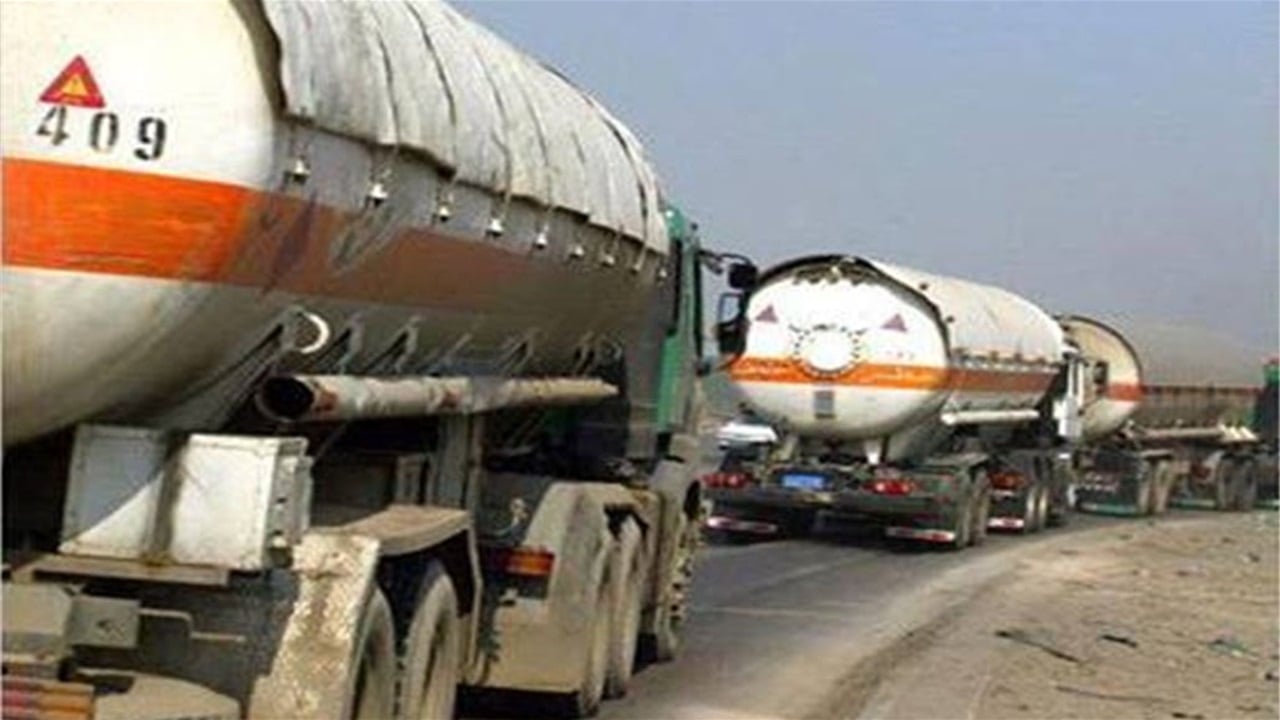
Economic experts reviewed on Monday the possible alternatives for Iraq to export its oil away from Strait of Hormuz They discussed the possibility of using the large fleet of Iraqi tankers to transport oil from the southern fields to export platforms via the ports of neighboring countries or via the Ceyhan Turkish port pipeline.
He says Khaled Al-Jabri President of the Foundation As a foundation for economic development, there are three realistic paths that can be pursued as alternatives to the Strait of Hormuz, the first of which is Land transport “With tankers, political negotiation to ensure a safe passage, and thirdly, military escort for the tankers.”
He pointed out that Iraq The country possesses a significant overland transport capacity, estimated at around 20,000 oil tankers. This capacity could provide a temporary alternative route for oil transport should traditional routes become disrupted, according to the state-run Al-Sabah newspaper. The
report explained that “a tanker typically has a capacity of between 30,000 and 40,000 liters, or approximately 200 barrels of oil on average. Theoretically, this capacity could reach about four million barrels per cycle.” However, it clarified that overland transport does not operate on a continuous flow model like pipelines or maritime tankers. Each tanker requires a complete cycle encompassing loading, overland transport, unloading, and return. This cycle can take several days, resulting in a significantly lower daily transport capacity than the theoretical one. Even under optimal logistical conditions, actual transport might not exceed one million barrels per day. The
report acknowledged that “this option presents clear challenges, including significant strain on the road network, the need for extensive security and logistical arrangements, and a substantial increase in transport costs compared to pipelines or maritime shipping.” It emphasized that tankers remain a temporary solution to mitigate the impact of disruptions and are not a complete replacement for oil exports.
Regarding the second option (political negotiation to secure a safe passage), he saw Al-Jabri Oil in the Middle East is not merely an economic commodity; it is part of a complex web of political balances. Therefore, the least costly and most rational option in crises remains negotiation to ensure the stability of maritime routes, especially if tensions are linked to these routes. Gulf Reaching an understanding with influential parties in the region could aim to establish a safe shipping lane that allows oil tankers to pass without escalation. Regarding the advantages of this option, he explained that it maintains the flow of oil along natural routes, reduces economic costs, and mitigates the potential for military escalation. He noted that the global economy is heavily reliant on the stability of energy flows, and therefore, various parties often share a common interest in avoiding disruptions to these flows.
As for the third option, military escort, he explained that in this scenario, tanker traffic is organized into maritime convoys escorted by naval forces to minimize risks while transiting sensitive waterways. However, this solution is not without its high costs, as it typically leads to a significant increase in marine insurance premiums, higher shipping and transportation costs, and a slowdown in trade. He emphasized, however, that it remains a means of ensuring the continued flow of oil when halting oil trade becomes impossible.
alsumaria.tv
