Iranian currency suffers another collapse: Dollar nears 300,000 tomans and inflation approaches 90%
Iranian currency suffers another collapse: Dollar nears 300,000 tomans and inflation approaches 90%
2026-11-25
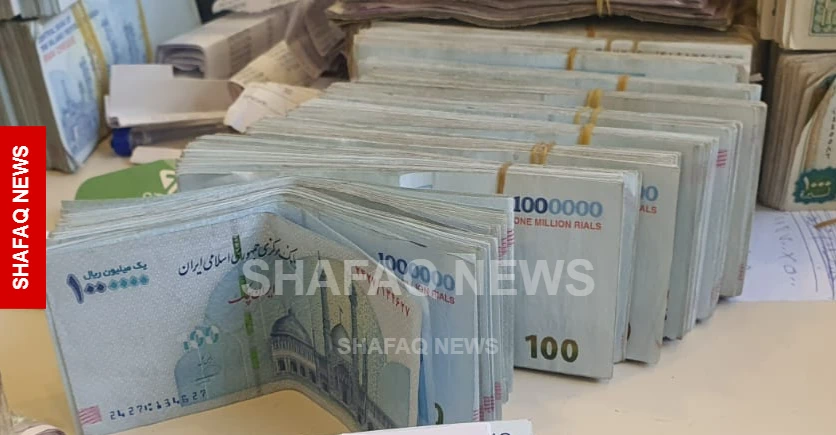 Shafaq News – Tehran
The Iranian currency plunged to a new record low against the US dollar on Wednesday, exceeding 293,000 tomans in the free market, two days after Washington imposed sanctions targeting financial networks and exchange institutions that Tehran relies on to secure foreign currency and finance its foreign trade.
Data from Iranian platforms specializing in monitoring exchange rates, which were followed by Shafaq News Agency, showed that the price of the dollar rose to 293,200 tomans, equivalent to 2,932,000 Iranian rials, during today’s trading, at the highest level recorded by the American currency in at least a year.
The dollar rose from 274,700 tomans on Monday to 284,900 tomans on Tuesday, before continuing its rise today, recording an increase of about 9.7% in one week.
The dollar was trading at 113,350 tomans a year ago, meaning its price has increased by more than 158%, while the Iranian currency lost about 61% of its value against the US dollar during the same period.
The latest wave of decline came after the US Treasury Department announced on Monday that it was imposing sanctions on more than 20 exchange companies and front companies, as well as a number of individuals linked to what Washington describes as Iranian “shadow banking” networks.
The sanctions targeted companies operating in the UAE, Turkey and Hong Kong, as well as Iran’s currency and gold swap center, as part of the US administration’s efforts to restrict Tehran’s access to its foreign trade revenues and foreign currency.
The U.S. Treasury Department’s Financial Crimes Enforcement Network (FinCEN) has uncovered $14.7 billion in financial transactions potentially linked to Iranian parallel banking networks between January 2025 and August 2026.
The currency collapse coincides with a worsening cost-of-living crisis in Iran, as data from the Iranian Statistics Center showed that consumer prices rose by 88.7% year-on-year in October, while food and beverage prices jumped by 112.6%.
In an attempt to contain the repercussions of the crisis, Iran’s First Vice President, Mohammad Reza Aref, announced on Wednesday that the government is seeking to prevent a rise in the prices of basic commodities for at least three months, stressing that his country is not worried about the US naval blockade, given the increased flow of goods through other border crossings.
shafaq.com
