From Basra to Ceyhan: A long road to exporting 90,000 barrels per day
From Basra to Ceyhan: A long road to exporting 90,000 barrels per day
2026-04-05
 Shafaq News – Kirkuk
Oil sources revealed on Sunday that quantities of Basra crude oil have begun to be transported to Kirkuk province, in preparation for exporting it via the Kurdistan Region pipeline towards the Turkish port of Ceyhan, in an effort to raise export rates and compensate for the challenges facing some traditional outlets.
A responsible source in the North Oil Company told Shafaq News Agency that “the operations to increase pumping towards the Ceyhan port have been completed, as about 90,000 barrels of Basra crude oil were transferred to the company’s pumping stations in Kirkuk, in order to include them in the export system through the region.”
He added that “this step would raise the total amount of oil exported through this route to about 340,000 barrels per day, after it had been less than that during the past period,” noting that “the operation comes within a plan to enhance the flexibility of Iraqi oil exports and expand their outlets.”
According to the source, the company has completed the technical preparations to receive the additional quantities of Basra crude and include them in the export system without affecting the ongoing operations.
He pointed out that “transport and pumping operations are carried out according to precise mechanisms that ensure the preservation of the quality of the crude and the continuity of the flow, while adhering to the approved technical standards in this field.”
The Iraqi government relies on several routes to export oil, most notably the southern ports in Basra, in addition to the pipeline that extends through the Kurdistan Region to the Turkish port of Ceyhan.
However, this line has experienced previous stoppages and legal and technical challenges, which have affected export volumes from the Kirkuk fields.
In light of these challenges, the option of transporting Basra crude to the north emerged as a practical solution to compensate for the shortage, and to take advantage of the infrastructure available in Kirkuk and the region’s pipeline, which would contribute to achieving relative stability in exports.
The North Oil Company plays a pivotal role in managing production and transportation operations in the Kirkuk fields, where it oversees pumping stations and pipeline infrastructure.
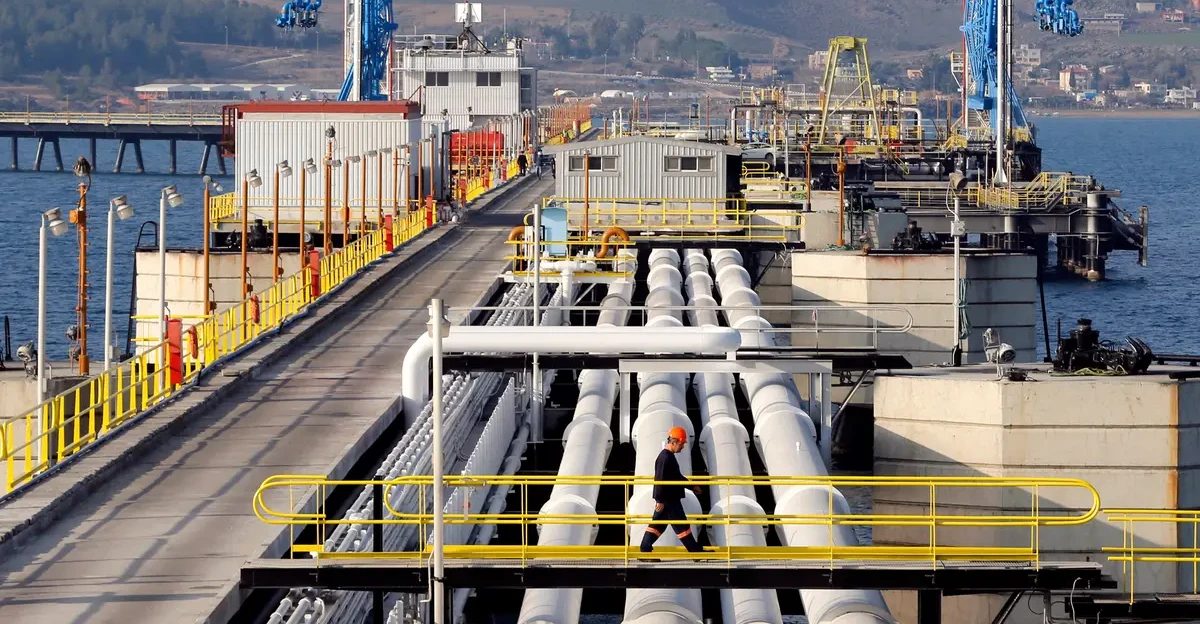
The pipeline extending through the Kurdistan Region to the Turkish port of Ceyhan represents one of the strategic outlets for exporting Iraqi oil, especially from the northern fields, as this pipeline allows Iraq to access global markets via the Mediterranean Sea, giving it an important geographical and economic advantage.
The increased pumping through this pipeline comes at a time when Baghdad is seeking to diversify export outlets and reduce reliance on a single route, especially in light of regional tensions and logistical challenges that may sometimes affect shipping operations.
Oil experts believe that raising export volumes to 340,000 barrels per day through this route is a positive step that will enhance the state’s financial revenues, especially given Iraq’s heavy reliance on oil as a primary source of income.
According to experts, the transfer of 90,000 barrels of Basra crude to Kirkuk represents an important turning point in managing the export file, reflecting a trend towards integration between the southern and northern fields, and investing the available capabilities to achieve the highest possible economic benefit.
In other developments, Bloomberg reported earlier on Sunday that an oil tanker carrying Iraqi crude appeared to be crossing the Strait of Hormuz, a day after Iran announced it was granting Iraq a special exemption to use the waterway despite continued restrictions on most countries.
shafaq.com
