Expert: Closing the Strait of Hormuz costs Iraq $280 million per day
Expert: Closing the Strait of Hormuz costs Iraq $280 million per day
2026-03-02 02:57
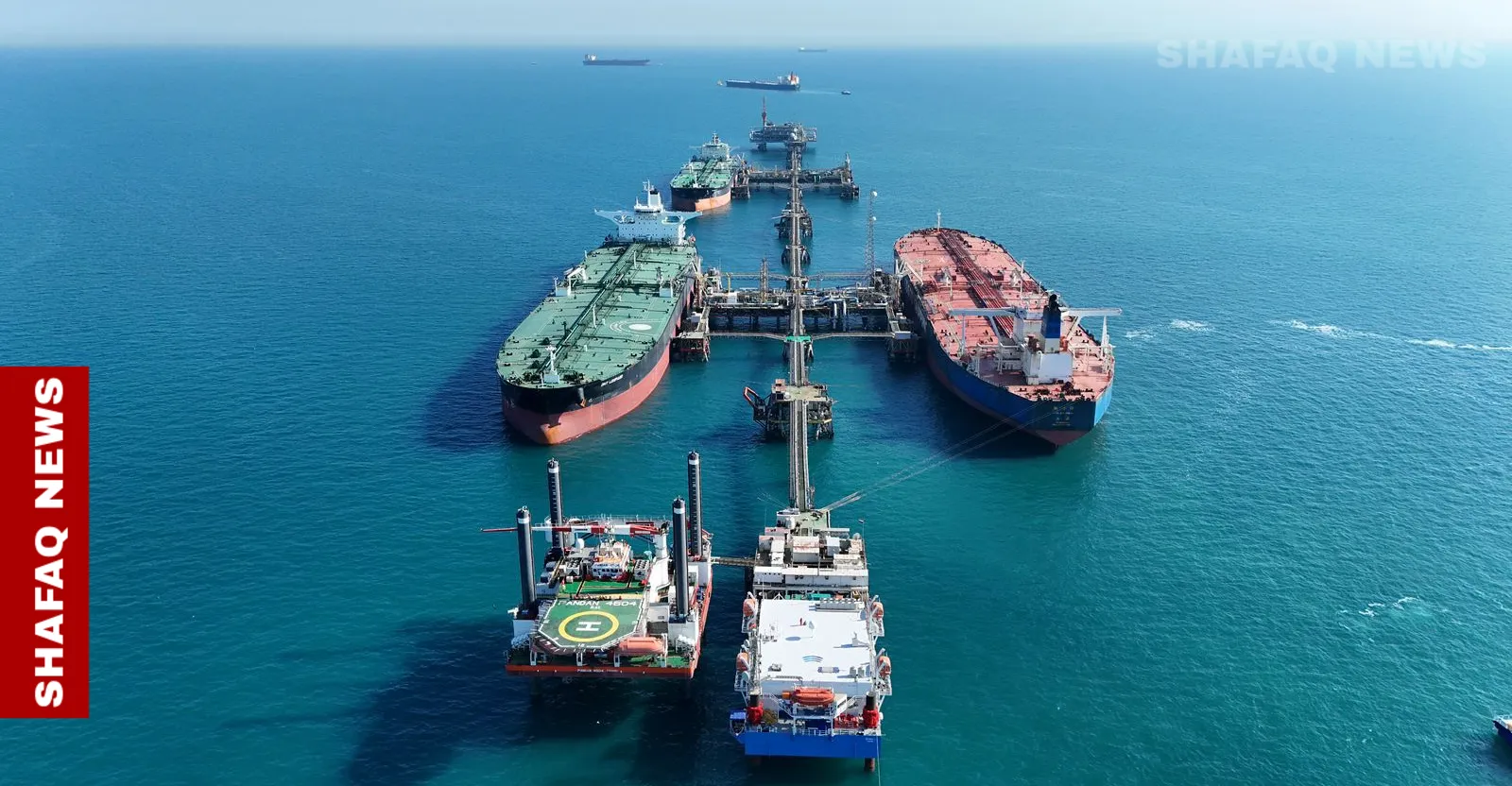 Shafaq News – Baghdad
Iraqi economist Mohammed al-Hassani confirmed on Monday that the closure of the Strait of Hormuz threatens Iraq’s oil exports, noting that the southern storage tanks are not sufficient to accommodate production for a long period, and that the continued halt in exports may necessitate a gradual reduction in production.
Al-Hassani told Shafaq News Agency that Iraq “relies almost entirely on export outlets linked to the operations of the Basra Oil Company, which are connected to tanks and storage facilities in the areas of Faw, Khor Al-Zubair, and the Zubair oil depots, in addition to the Rumaila and West Qurna facilities. These are operational tanks that aim to regulate the flow of exports and not for long-term strategic storage.”
He explained that “the available storage capacity in southern Iraq is not sufficient to accommodate production for more than a limited period in the event of a halt in exports,” indicating that “Iraq produces more than four million barrels per day, while the actual storage capacity is limited, which means that the warehouses will be full within a few days or weeks if the tankers stop.”
He added that “the filling of the Faw, Khor Al-Zubair and Al-Zubair reservoirs will force operating companies to gradually reduce production, and may even lead to the temporary closure of some wells, which may cause technical challenges and increase the costs of restarting operations later.”
Al-Hassani pointed out that Iraq does not have the external storage flexibility that some Gulf oil countries enjoy, explaining that countries such as Saudi Arabia, the United Arab Emirates and Kuwait have storage depots and oil facilities outside their borders, especially in Asian countries, which gives them greater ability to maneuver and manage supplies in times of crisis.
He explained that “these countries can draw on their foreign reserves or redirect shipments flexibly, while Iraq lacks such tools, making it more vulnerable to shocks in the event of the Strait being closed.”
He pointed out that the theoretical alternative is to reactivate the northern export line through the Turkish port of Ceyhan, which is linked to the operations of the North Oil Company, but its capacity is limited and only compensates for a small part of the southern exports.
He stressed that if exports of about 3.3 to 3.5 million barrels per day were to stop, assuming an average price of $80 per barrel, Iraq could lose between $260 and $280 million per day in oil revenues, which is more than $8 billion per month.
Oil prices rose by about 7% in trading on Monday, hitting their highest levels in several months, amid escalating geopolitical tensions in the Middle East and growing fears of supply disruptions through vital crude oil transport routes.
Brent crude rose to $82.37 a barrel, while West Texas Intermediate (WTI) crude climbed to $75.88 a barrel, supported by investor concerns about disruptions to oil flows from the Gulf region.
The Strait of Hormuz is one of the most important strategic waterways for global energy flow, as about 20% of the world’s oil supply passes through it, making any disruption to maritime traffic a direct factor in driving crude oil prices up.
On Sunday, the Iraqi Ministry of Oil held an “emergency” meeting to discuss solutions that would ensure the continued export of Iraqi oil to global markets.
Iraq also participated in the emergency meeting of the OPEC+ alliance to discuss increasing oil production, in light of the disruption of shipments through the Strait of Hormuz as a result of the American-Israeli war on Iran, and the suspension of operations by a number of shipping companies in the maritime passage through which about 20% of global crude oil consumption passes daily.
Reuters reported yesterday, citing shipping data, that more than 150 oil and gas tankers were stopped in the Gulf waters outside the Strait of Hormuz, following the escalation of tensions after the US-Israeli attack on Iran, while ship tracking data showed that most commercial traffic on both sides of the strait had been suspended.
The Financial Times reported that war risk insurance companies have sent notices canceling policies for ships crossing the strait, with expectations of significantly higher insurance premiums, increasing the cost of sea voyages.
Advisory reports also mentioned warnings issued to some ships regarding navigation in the area, and a number of them avoided crossing the strait after assessing the risks.
It is worth noting that the Iranian army and Revolutionary Guard had previously announced the closure of the Strait of Hormuz, and warned ships that the route was unsafe in light of the mutual attacks between Iran, the United States and Israel.
shafaq.com
