Exclusive: Meeting between al-Zaydi, al-Amiri, al-Fayyad, and “Abu Fadak” to contain the escalation with Kataib Hezbollah
Exclusive: Meeting between al-Zaydi, al-Amiri, al-Fayyad, and “Abu Fadak” to contain the escalation with Kataib Hezbollah
2026-11-12 05:41
 Shafaq News – Baghdad
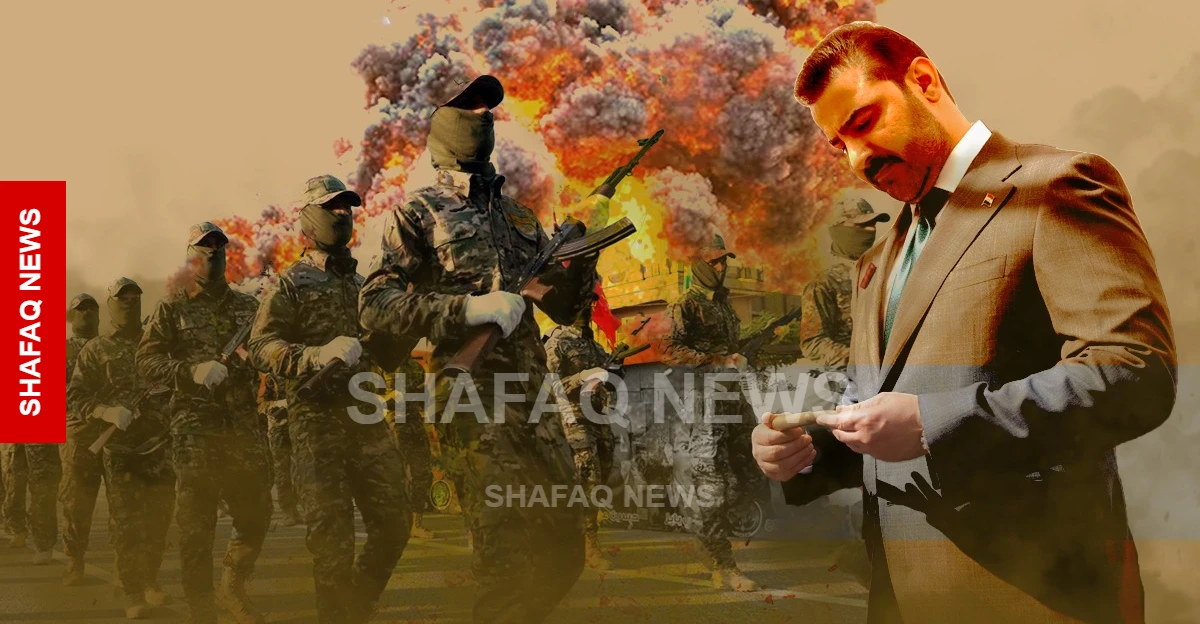
An informed source revealed on Thursday that a meeting that lasted more than three hours took place at the Government Palace in Baghdad, bringing together Prime Minister Ali al-Zubaidi, Badr Organization leader Hadi al-Amiri, Popular Mobilization Forces chief Faleh al-Fayyad, and the head of the Popular Mobilization Forces, Abdul Aziz al-Muhammadawi, known as “Abu Fadak,” to discuss mechanisms for dealing with Kataib Hezbollah, in light of escalating disputes over restricting weapons to the state.
The source told Shafaq News Agency that Al-Zaydi stressed during the meeting “the need to deal with outlaws in accordance with the applicable Iraqi laws,” while Al-Amiri and Al-Fayyad put forward a proposal to give the concerned parties an opportunity to rearrange their situations and return to the table of dialogue and negotiation, with the aim of reaching a settlement on the issue of weapons.
The source added that the proposal included the continuation of the work of the Quartet Committee tasked with negotiating with the armed factions, in order to reach an agreement that ends the existing disputes and addresses the issue of weapons in a way that serves the public interest and maintains internal stability.
The meeting comes days after a planned meeting of the leaders of the Coordination Framework with the Prime Minister, scheduled for Monday evening, was disrupted due to disagreements over how to deal with Kataib Hezbollah, as well as the lack of progress by the Quartet Committee in its negotiations with armed factions to confine weapons to the state.
An informed source revealed to Shafaq News Agency that some parties within the framework expressed their dissatisfaction with al-Zaydi’s escalation towards the brigades, amid fears that the continuation of the confrontation would lead to other armed factions joining them, which could threaten the collapse of the ongoing negotiations regarding weapons.
The dispute between the government and Kataib Hezbollah has escalated in recent days, against the backdrop of political, security and economic issues, including mutual media disputes and government measures that included activating arrest warrants issued against a number of wanted individuals linked to the group.
The disagreements extended to the mechanism for managing the negotiations itself, after sources told Shafaq News that some members of the Quartet Committee, including Al-Amiri, had reservations about Al-Zaidi holding separate meetings with leaders of factions that refuse to hand over their weapons, fearing that these moves would negatively affect the course of the negotiations.
These developments prompted leaders within the coordination framework, including the leader of the Wisdom Movement, Ammar al-Hakim, and the head of the Supreme Islamic Council, Humam Hamoudi, to make contacts and mediations to contain the tension between the government and the brigades, and to prevent the dispute from moving from political and media debates to a field confrontation.
The issue of restricting weapons to the state is one of the most prominent challenges facing the Al-Zaidi government, in light of the insistence of armed factions, including Kataib Hezbollah, Harakat Al-Nujaba and Kataib Sayyid Al-Shuhada, on maintaining their military capabilities, in contrast to the government’s insistence on extending state authority and ending the manifestations of weapons outside its institutions.
shafaq.com
