Exclusive: Iraqi government: The state has not resorted to external borrowing and the financial situation will be resolved soon.
Exclusive: Iraqi government: The state has not resorted to external borrowing and the financial situation will be resolved soon.
2026-06-21
 Shafaq News – Baghdad
The official spokesman for the Council of Ministers, Haider al-Aboudi, confirmed on Sunday that the Iraqi state is not heading towards external borrowing to address the current financial challenges, indicating that the financial situation will be addressed soon.
Al-Aboudi said, in response to a question from a Shafaq News Agency correspondent during a press conference, that “the government has alternatives to address the current financial pressures,” stressing that “Iraq is not resorting to external borrowing at the present time.”
In the details of the conference, Al-Aboudi explained that “the Ministry of Oil is adopting a well-thought-out plan to find alternatives that enhance financial revenues,” indicating that “exploring an oil well in northern Iraq would contribute to increasing the state’s financial resources.”
He noted that “Prime Minister Ali al-Zaidi, during his meeting with company representatives, affirmed the government’s support for the private sector and its commitment to providing the necessary requirements to ensure the continued operation of companies, especially those operating in the Kurdistan Region.”
Regarding the appointments file, Al-Aboudi explained that “the matter is related to the general budget,” noting that the 2027 budget will be a program budget, and will include coverage for employee salaries.
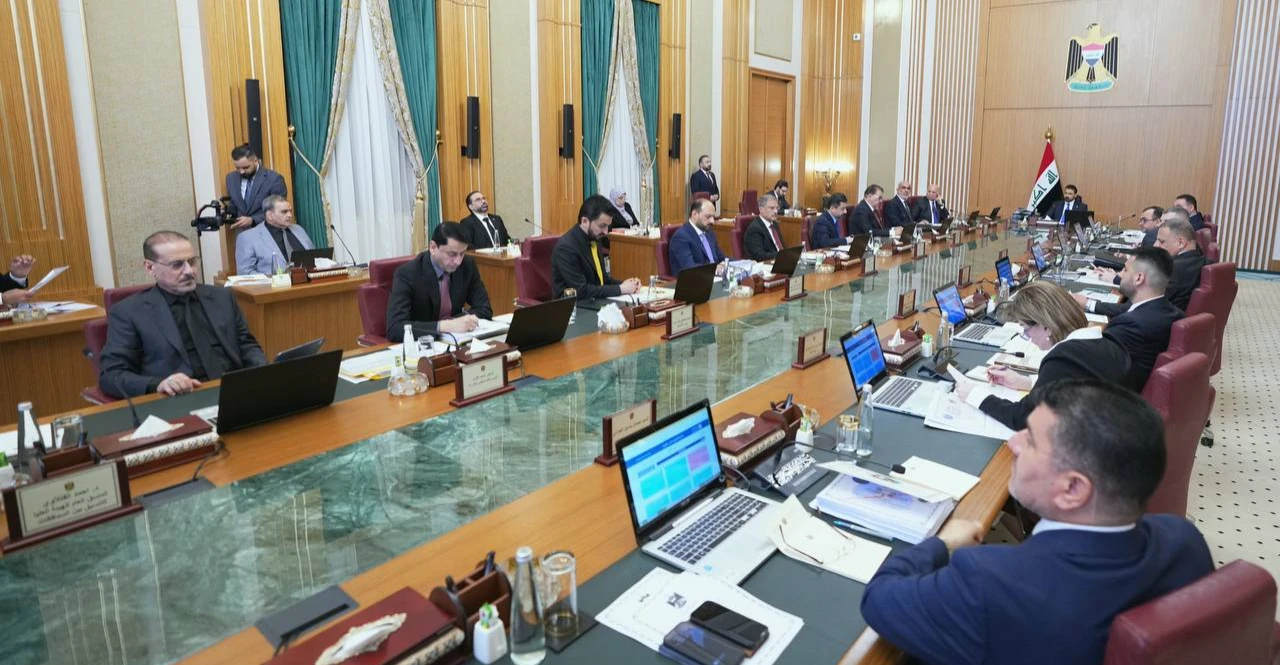
Regarding corruption cases, he pointed out that “the Integrity Commission and the executive authority are following up and auditing all files,” adding that “the Prime Minister directed that all contracts be followed up, and during the Cabinet session yesterday, Saturday, he issued a directive to stop some projects that had reached a 50% completion rate.”
Regarding the administrative changes, Al-Aboudi continued, saying that “changing positions is not a punishment, but rather comes within a new governmental approach aimed at empowering institutions and enhancing their efficiency,” explaining that “the government is proceeding with making changes in various institutions, especially security ones.”
Regarding the electricity file, he concluded by saying that “the Prime Minister confirmed during the Cabinet session that this file represents a priority for the government and will receive special attention,” noting that “the 2027 budget will be a program budget that focuses on the energy and electricity sectors as they are among the most prominent priorities of the government.”
The Iraqi economy is almost entirely dependent on oil, which accounts for about 90 to 95% of budget revenues, making any disruption to exports a direct challenge to the government’s ability to finance operating expenses, especially salaries, pensions and social welfare, with a monthly need estimated at about 9 trillion dinars ($6.8 billion).
Experts suggest that the continued halt or decline in exports may push Iraq to rely on part of its foreign reserves, which could affect monetary stability if the crisis lasts for a long time, given the limited reliance on export alternatives or non-oil revenues.
The war between the United States and Israel on one side and Iran on the other has caused a near-complete paralysis of navigation in the Strait of Hormuz, leading to a decrease in Iraqi exports to less than 800,000 barrels per day and losses estimated at about $128 million per day, according to the Eco Iraq Observatory, amid rising shipping and insurance costs and increasing fears of global economic repercussions due to the importance of the strait through which about 20 million barrels of oil pass per day.
shafaq.com
